Restoring Hope Through Nature: How Grassroots Action Is Reviving Wetlands and Strengthening Livelihoods in Western Kenya
Published: 30 October 2025
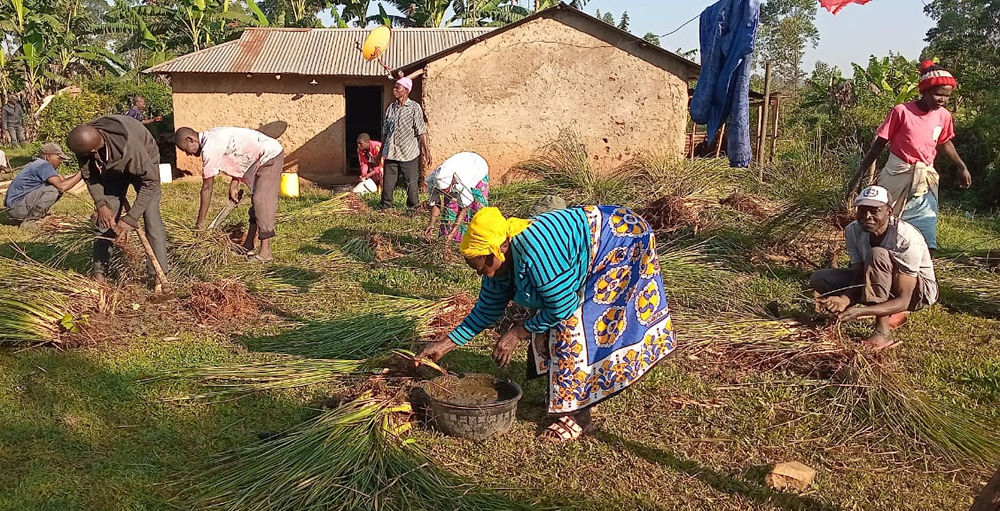
Local community members sorting Grass in preparation for planting during an Eco-system conservation activity at Shiatsala center, in Kakamega county (Photo credit: Zablon Indakwa)
From the lush fields of Nyando to the riverbanks of Butere and the wetlands of Nyatike, communities across Western Kenya's Nile Basin are taking action to heal the environment. Faced with deforestation, pollution, and unpredictable climate patterns, they are turning to nature-based solutions to restore degraded ecosystems and strengthen livelihoods.
In September 2025, the Kenya Nile Discourse Forum (KNDF), in collaboration with the Community Empowerment and Media Initiative in Kisumu (CEMI-K) and Eshinamanyuli Community-Based Organization (CBO), documented inspiring efforts by local residents to manage wetlands sustainably. These initiatives are not only restoring the environment but also rebuilding food security, livelihoods, and community resilience.
Transforming Swamps into Sustainable Farms
In Kakmie community of Nyando Sub-basin, residents have turned once-degraded swamps into productive agricultural zones. Crops like arrowroots, sweet potatoes, and vegetables now thrive, improving both nutrition and household income.
Local farmer Lorine Ouma shared: "Our swamp now provides clean water and a place where we can farm arrowroots, sweet potatoes, and vegetables. We do land use activities that are resilient to climate change for the purpose of improving people's livelihoods."
With technical and training support from CEMI-K, this initiative demonstrates how nature-based solutions can simultaneously enhance food security, restore wetlands, and build resilience against climate shocks.
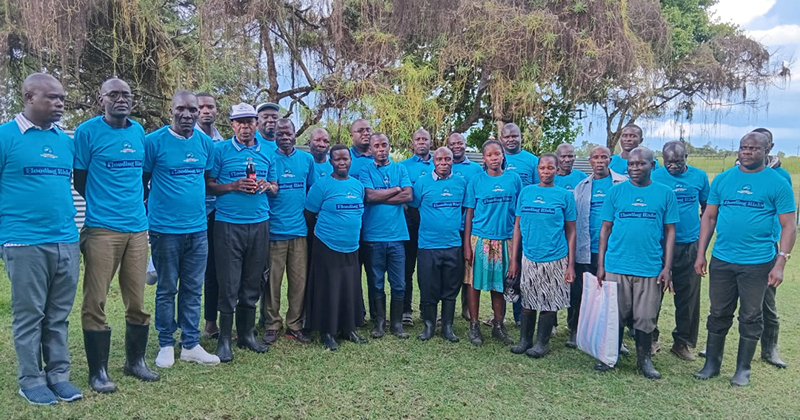
Angugo community members of Nyatike sub-county in a group photo after training on Flood RiskCommunication and Nature conservation
Reclaiming Riverbanks, Rebuilding Ecosystems
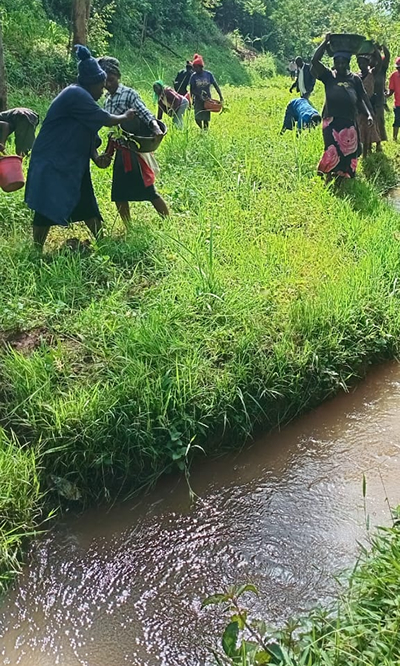
Planting assorted indigenious tress along river Firatsi in Butere of Kakamega county.
Along River Firatsi in Butere Sub-county, communities led by Eshinamanyuli CBO are reforesting riverbanks and promoting agroforestry. These actions have reduced soil erosion, improved soil fertility, and increased tree cover.
Community member Zablon Indakwa explained:
"Our tree planting efforts have reduced erosion and scaled up agroforestry, deforestation control, and landscape restoration activities."
These initiatives show that with collective action and local leadership, environmental restoration can go hand in hand with improved livelihoods.
Spreading Awareness and Mobilizing Communities
Beyond fieldwork, CEMI-K has amplified conservation efforts through radio talk shows, digital outreach, and training workshops promoting climate-smart agriculture and wetland protection. Information is shared through Facebook, WhatsApp, and community forums, ensuring even remote villages can access environmental education.
Meanwhile, Eshinamanyuli CBO continues to mobilize youth and women's groups to lead restoration, monitor biodiversity, and engage decision-makers in advocating sustainable land use. By blending traditional knowledge with digital tools, these grassroots movements are nurturing a new culture of environmental stewardship.
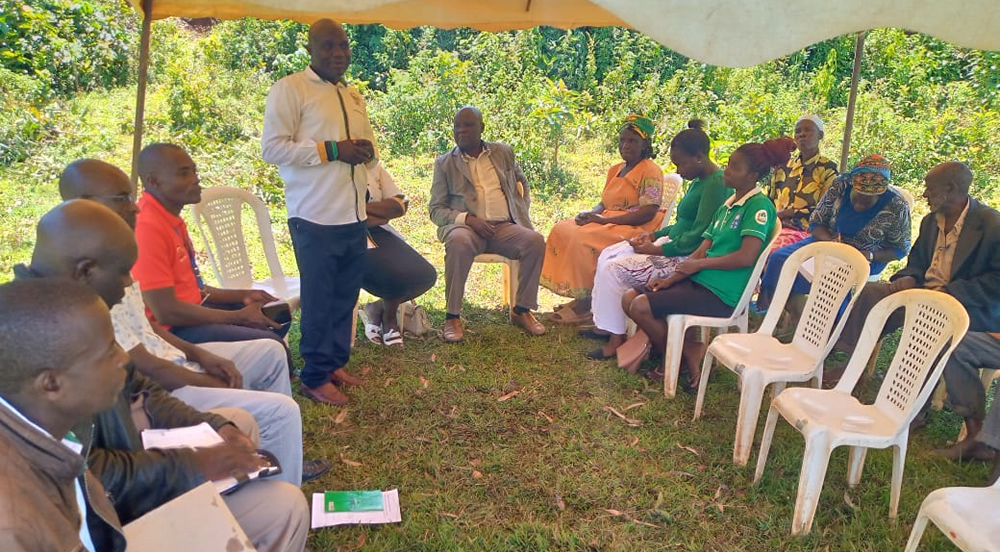
EYCBO members during signing of voluntary wetland protection and conservation agreement with farmers whose land boarder river Firatsi in Butere sub-county, of Kakamega county.
Challenges on the Path to Sustainability
Despite these achievements, several obstacles persist. Communities face:
- Environmental pressures such as deforestation, pollution, and erratic rainfall
- Socio-economic constraints like poverty, limited resources, and insecure land tenure
- Governance gaps including weak enforcement, fragmented policies, and poor coordination among stakeholders
These challenges limit the scalability of nature-based solutions, yet the determination of local actors continues to drive progress.
A Hopeful Future for the Nile Basin
The success stories from Kakmie, Firatsi, and Angugo show that nature-based solutions work not just for the environment but for people's lives. Restoring wetlands has brought cleaner water, better harvests, and renewed hope.
However, lasting impact will require stronger policy alignment, sustained funding, and inclusive, community-led planning. Expanding awareness through local media and digital platforms will be key to scaling success.
By combining indigenous wisdom with modern conservation techniques, communities in Western Kenya's Nile Basin are proving that when people and nature thrive together, resilience follows. Their story is one of hope, restoration, and the power of collective action.
Related Stories
Key Resources
Author bio