TPL_YOOTHEME_SKIP_TO_MAIN_CONTENT
Small-scale miners in Tarime adopt safer gold processing methods using water tanks instead of washing directly in streams and rivers — a vital step toward reducing pollution and protecting the Mara River ecosystem.

Safeguarding Water and Livelihoods: SHIMATA Leads a New Era of Responsible Artisanal Mining in Tarime

Shirika la Maendeleo Tarime (SHIMATA) in rural Tanzania is transforming artisanal and small-scale mining into a safer and more sustainable practice. SHIMATA empowers local communities to protect water sources, reduce mercury use, and enforce environmental safeguards. Through awareness sessions, community by-laws, and trained local champions, the initiative is improving both livelihoods and environmental health. Women and youth are at the forefront, driving lasting change in mining practices. This community-led effort is proving that responsible mining and water security can go hand in hand.

In the heart of Tanzania's gold belt, where artisanal and small-scale miners depend on the land and rivers for survival, a remarkable transformation is redefining what responsible artisanal mining looks like. As a member of NBD's Tanzania National Discourse Forum (TNDF), Shirika la Maendeleo Tarime (SHIMATA) is applying the skills and mentorship it has gained in Water Resources Management and Climate Change Action to lead a local movement that makes artisanal and small-scale mining safer for people and for nature.

For decades, mining provided jobs but left behind contaminated rivers, degraded soils, and health risks. Today, through SHIMATA's leadership, the same communities are writing a different story - one of empowerment, innovation, and environmental recovery.

Empowering Communities for Sustainable Development

SHIMATA's mission is simple but powerful: to support and empower communities for sustainable development and better living standards. Since 2022, the organization has been part of the TNDF network, amplifying its reach in environmental advocacy and community-driven conservation.

In 2024, SHIMATA launched a two-year project titled "Strengthening Environmental Safeguards for Water Security with Artisanal and Small-Scale Miners." The project focuses on two major mine sites - Kibaga (Kenyamanyori Ward) and Kewamamba (Kiore Ward), benefiting over 4,900 community members directly and indirectly.

From Awareness to Real Impact

Through 18 awareness creation sessions, SHIMATA educated miners, women, and youth on mercury risks and water source protection. Working with leaders and the local community, the organization co-created by-laws to regulate mining practices and safeguard rivers and wetlands.
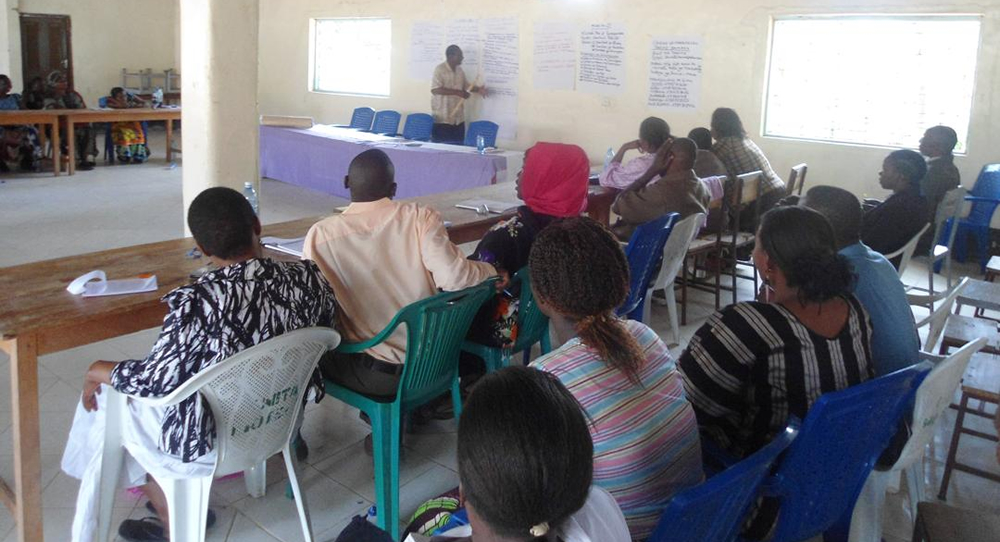
A stakeholder Engagement meeting organised by SHIMATA at Kibaga, Kenyamanyori ward.
Local Champions Leading the Way

Sustainability is central to SHIMATA's model. The project trained eight local champions (four from each mine) to maintain environmental monitoring and awareness. These champions, linked with Ward and District Environmental Officers, ensure continued accountability even after the project ends.

Results speak volumes:
  • Relocation of crushing sites away from residential zones and water sources - a transformative move that improved household safety, reduced pollution, and restored community health.
  • Household ore crushing reduced by 50%.
  • Community environmental committees are conducting monthly inspections.
  • Local by-laws on buffer zones around water sources are being actively enforced.
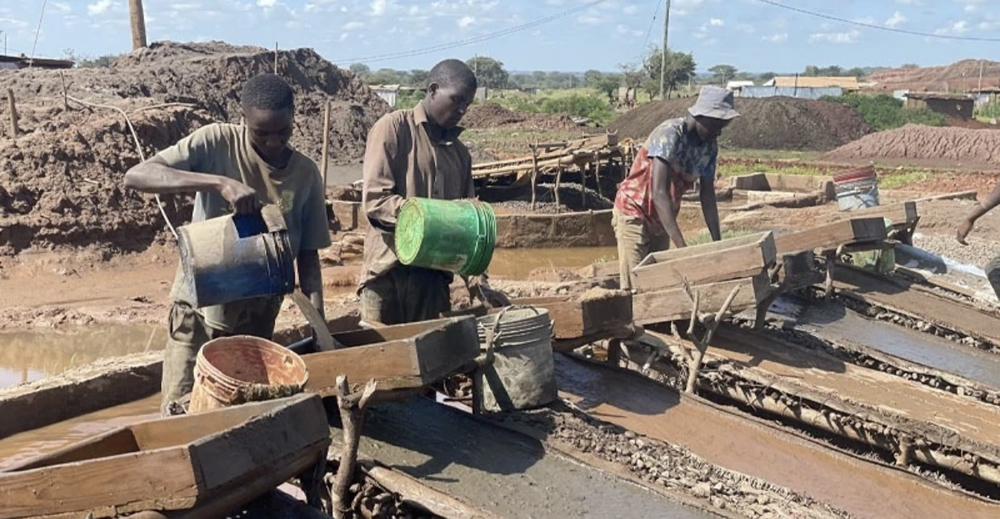
Gold processing activities relocated to designated sites away from residential areas in Kiore Ward — improving community safety and reducing environmental pollution.


Empowering Women and Youth: Agents of Safer Change

SHIMATA's interventions recognize that women and youth often face the highest risks in artisanal mining. By providing them with knowledge and simple technologies for safer ore processing, the project has reduced their exposure to mercury and opened new avenues for leadership and entrepreneurship.

This inclusive approach has sparked a multiplier effect; as trained individuals adopt new habits, others follow. A cultural shift toward safer, more sustainable mining is taking root across Tarime's artisanal mining communities.

Key Lessons for a Sustainable Future
  • Co-creation works: Locally developed solutions gain stronger community ownership.
  • Designated spaces save lives: Moving crushers away from homes protects families and water.
  • Partnerships sustain progress: Collaboration between miners, local communities, local leaders, and government ensures ongoing oversight.
  • Empowerment ensures continuity: Local champions keep momentum beyond project timelines.


A Shared Vision for the Nile Basin

This initiative to protect freshwater ecosystems and promote equitable, sustainable use of shared water resources in Tarime is part of a broader vision shared by TNDF and NBD at the regional level. The achievements in Tarime demonstrate that community-led environmental stewardship can drive lasting change. By linking grassroots action with basin-wide environmental goals, SHIMATA's work is helping shape a future where development and conservation coexist. 


Launching the Africa Women in Climate Change Award Project in Bugesera District - April 2025

Grassroots Women Leading Rwanda’s Climate Action: Building Resilience and Better Livelihoods

Rwanda's grassroots women are redefining climate action by leading community-driven initiatives that restore ecosystems and strengthen livelihoods. Through the Africa Women in Climate Change Award (AWAC) Project, local cooperatives are transforming environmental challenges into opportunities for resilience and growth. Their stories reflect a powerful truth, when women lead, communities flourish and the environment heals.

Rwanda’s women are stepping to the forefront of climate resilience, turning local challenges into opportunities for transformation and sustainability. Determined to make women the driving force of climate adaptation and mitigation, the Rwanda National Discourse Forum (RNDF) is leading a transformative shift in how communities confront climate change.

Working through its member organization BENIMPUHWE, in partnership with the Center for Economic and Policy Priorities (CEPP), RNDF launched the Africa Women in Climate Change Award (AWAC) Project with support from the Australian Government. Though initiated in April 2025, the project is already generating powerful stories of empowerment and environmental impact across Rwanda.

Women as Active Agents in Climate Change

The Africa Women in Climate Change Award Project has mobilized more than 400 women and 50 men smallholder farmers actively engaged in climate adaptation and mitigation initiatives. Since April 2025, the project has supported the establishment of 10 women’s cooperatives across five districts (two in each).

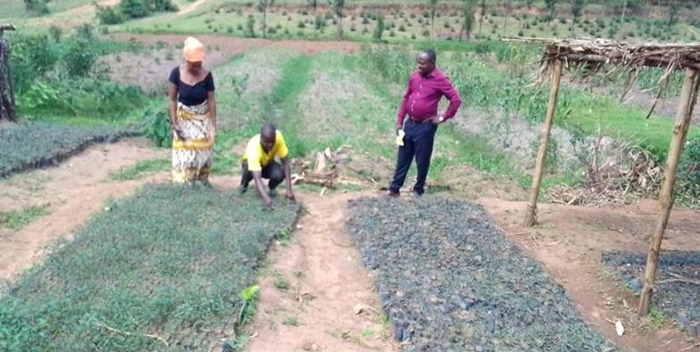
In Bugesera District (Eastern Province), Kaju Cooperative and KOTMR Cooperative run tree nurseries and supply seedlings, including exotic species for community planting. Members are also active in environmental awareness and are seeking support to enhance seedling quality and water access for irrigation.

Dufatanye Cooperative members in Gisagara District working at their tree nurseries to expand agroforestry and promote climate-smart farming practices.

In Gisagara District (Southern Province), Tuganeheza Cooperative focuses on agroforestry tree multiplication, while Dufatanye Cooperative promotes crop production and edible tree cultivation.

In Kicukiro District (City of Kigali), the Kicukiro Female Ex-Combatants Cooperative specializes in tree nursery production for environmental restoration, urban greening, and climate resilience, while creating sustainable income for its members. The second cooperative, Ururabo Niboye Cooperative, engages in flower cultivation for urban beautification and home gardening, enhancing Kigali’s green spaces and household income.

In Musanze District (Northern Province), Sane Environment Deals and Skills (SEDS) and Iwacuheza Cooperative promote environmental conservation, tree nursery development, reforestation, and eco-tourism.

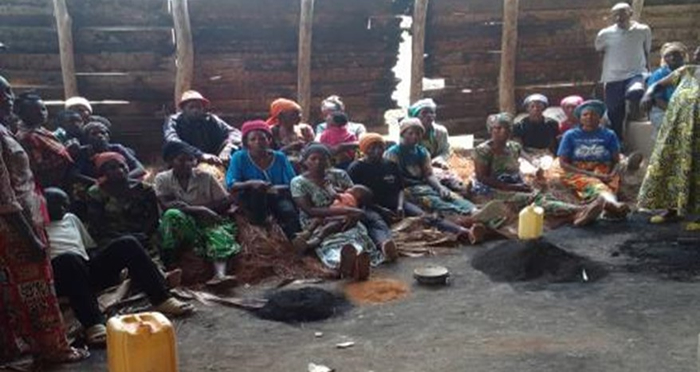
In Nyamasheke District, Duhagurukire Umurimo Gihombo Cooperative produces charcoal from biodegradable waste, offering an eco-friendly alternative to traditional wood charcoal. Abahujumugambi Kilimbi Cooperative leads reforestation and community awareness campaigns, blending indigenous knowledge and modern techniques to restore degraded land and promote sustainable forest management.

Members of Abahujumugambi Kilimbi Cooperative in Nyamasheke District during hands-on training on producing charcoal from biodegradable waste, an eco-friendly alternative to wood-based fuel.

While training needs remain in pest control, nursery management, marketing, and climate-smart agriculture, many women’s cooperatives are already generating income. Mukarwego Bonifilde, a member of KAJU Cooperative in Bugesera District where the project was officially launched on 14 August 2025, shared her experience:

" You cannot believe that, in just one week you can get 20,000 RWFs from selling tree seedlings; moreover, this is not even our main activity; we do it in the evening after our daily farm work. "

Her gratitude extended to local leaders and the Government of Rwanda for creating an enabling environment for cooperatives to partner with development stakeholders, underscoring how local initiatives can drive adaptation, resilience, and livelihoods.

A Call for Continued Support

At the official project launch in Bugesera District, RNDF leaders and local officials commended the cooperatives’ innovation and commitment. Ms. Verdiane Nyiramana, Chairperson of RNDF, called for greater investment in women-led climate initiatives, emphasizing that “investing in women yields quick and lasting results.”

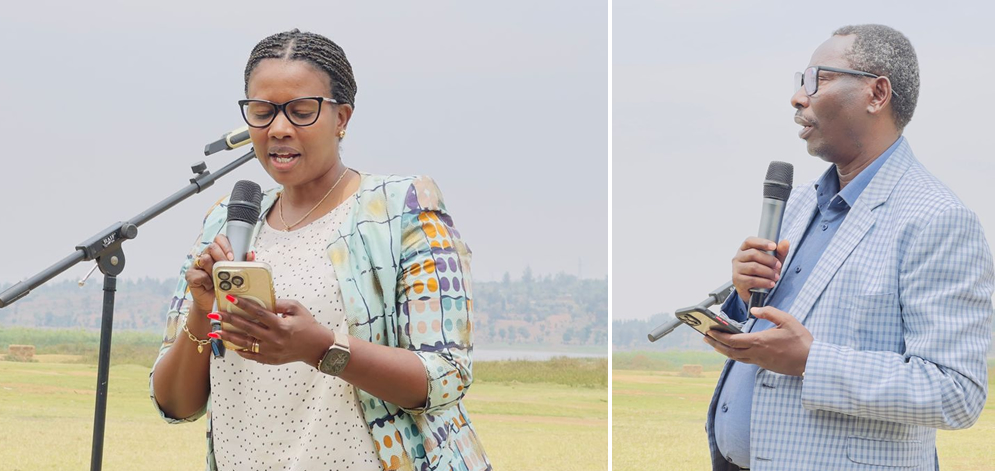
Ms. Verdiane Nyiramana, Chairperson of RNDF (left), and Mr. Faustin Vuningoma, National Coordinator of RCCDN (right), address participants during the official launch of the AWAC Project in Bugesera District, emphasizing women’s leadership in climate resilience.

Mr. Faustin Vuningoma, National Coordinator of the Rwanda Climate Change and Development Network (RCCDN), urged the dismantling of cultural biases that limit women’s participation in climate initiatives. He highlighted the contribution of women’s cooperatives to Rwanda’s green economy targets through solar energy, tree planting, and sustainable agriculture.

Government officials, including Mr. Thaddée Twagirimana, Director General of the Ministry of Environment, and representatives from the Ministry of Gender and Family Promotion, reaffirmed government commitment to linking gender equality with climate resilience. They praised the project for complementing national strategies and promised continued government support for women’s leadership in climate action.

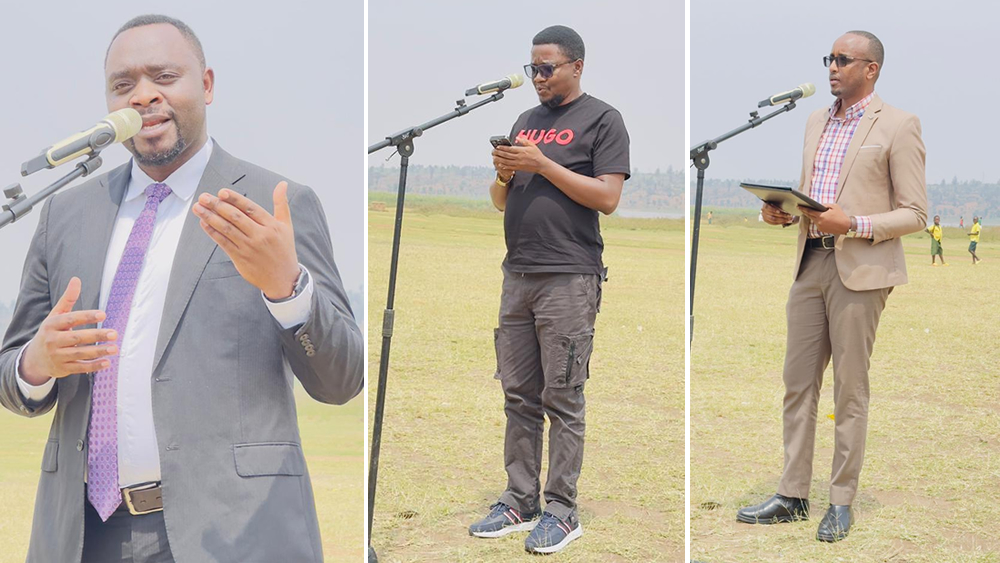
Government representatives - Mr. Thaddée Twagirimana, Director General at the Ministry of Environment (left); Mr. Silas Ngayabosha, Director General at the Ministry of Gender and Family Promotion (center); and Mr. Richard Mutabazi, Mayor of Bugesera District (right) - express government commitment to gender-responsive climate action at the AWAC Project launch.

Transforming Communities, Strengthening Resilience

From restoring degraded lands to improving household incomes, the AWAC Project demonstrates how empowered women can drive both environmental sustainability and community resilience. Local governments, once sceptical of community-led initiatives, are now providing logistical and financial support to expand cooperative activities.

As the Mayor of Bugesera District noted: “The district values the hard work of women’s cooperatives. Their fight for a greener Bugesera is our fight too.

Key Lessons
  • Women’s empowerment is central to effective climate adaptation and mitigation.
  • Community-led action fosters ownership, innovation, and sustainability.
  • Partnerships between civil society, government, and development agencies amplify impact.
  • Small investments in women’s initiatives can yield large-scale transformation in livelihoods and ecosystems.


In essence, Rwanda’s experience under the AWAC Project reinforces the principle that “when women lead, communities flourish, and the environment recovers.” The project is more than a pilot; it’s a blueprint for inclusive, community-driven climate action across Africa.


Ms. Uzamukunda y'Ukunda, President of the IABM Cooperative briefing delegation on how the cooperative empowers local farmers and drives community impact.

Building Capacity, Driving Change: Empowering Communities for Climate Resilience in Makera Watershed, Muhanga District, Rwanda

During the first CIWA/World Bank Implementation Support Mission of the NCSCR Project, NBD showcased how its regional learning, capacity building, and partnerships are transforming livelihoods at community level. A field visit to Rwanda’s Muhanga District offered firsthand insights into the tangible results of NBD’s work through its member networks.
The first CIWA/World Bank Implementation Support Mission (ISM) of the Nile Civil Society for Climate Resilience (NCSCR) project was held (9th - 11th Oct. 2025) in Kigali, Rwanda. The mission combined indoor meetings and a field visit to Muhanga District, designed to showcase NBD’s community-level impact; particularly on how NBD’s work in capacity building, knowledge sharing, and partnerships translate into tangible livelihoods improvement for local communities.

Spotlight on Local Impact: SDHA and IABM Cooperative
At the centre of the Muhanga field visit was the work of Sustainable Development & Humanitarian Action (SDHA), a civil society organisation and member of the Rwanda National Discourse Forum (NBDF Rwanda), the national forum for NBD members in Rwanda. SDHA is committed to strengthening community-based climate resilience and promoting sustainable livelihoods, goals that are closely aligned with NBD’s mission across the Nile Basin.

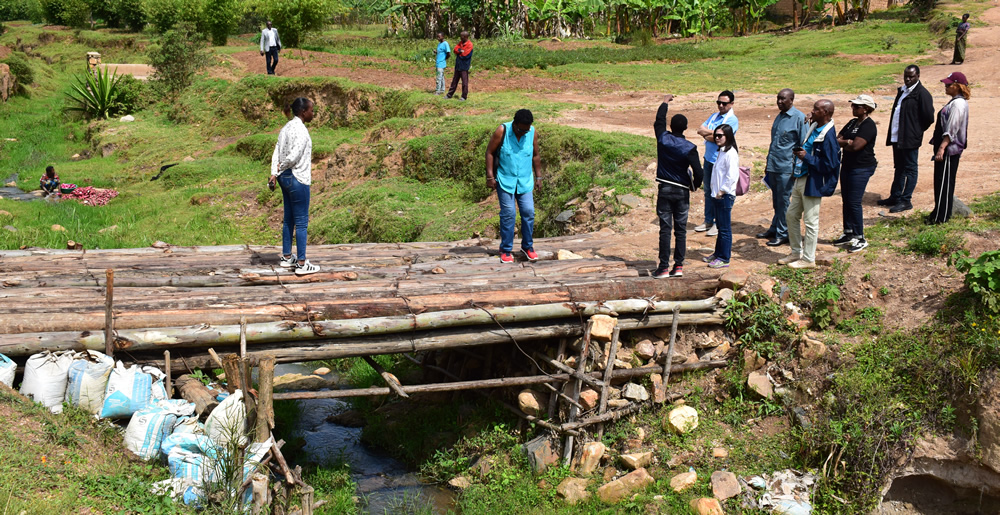
Eng. Jean Pierre Hakizimana, the National Legal Representative of SHDA, addresses the delegation on SHDA’s interventions with the IABM Cooperative
Eng. Jean Pierre Hakizimana, the National Legal Representative of SDHA, addresses the delegation on SHDA’s interventions with the IABM Cooperative.
Over the years, SDHA has benefited from NBD-led capacity-building programmes, peer learning exchanges, and experience-sharing platforms. Leveraging the skills and knowledge gained through these engagements, SDHA is now supporting Iterambere ry’Abahinzi Borozi Ba Makera (IABM) cooperative, a community-based group of more than 1,600 smallholder farmers cultivating in the Makera Watershed of Muhanga District.

SDHA supports IABM cooperative through offering sustainable agriculture extension services, mentorship, and technical guidance in value chain development. These interventions aim to improve food security, build climate resilience, and increase the income and capacity of small-scale farmers.

Policy Influence and Land Access
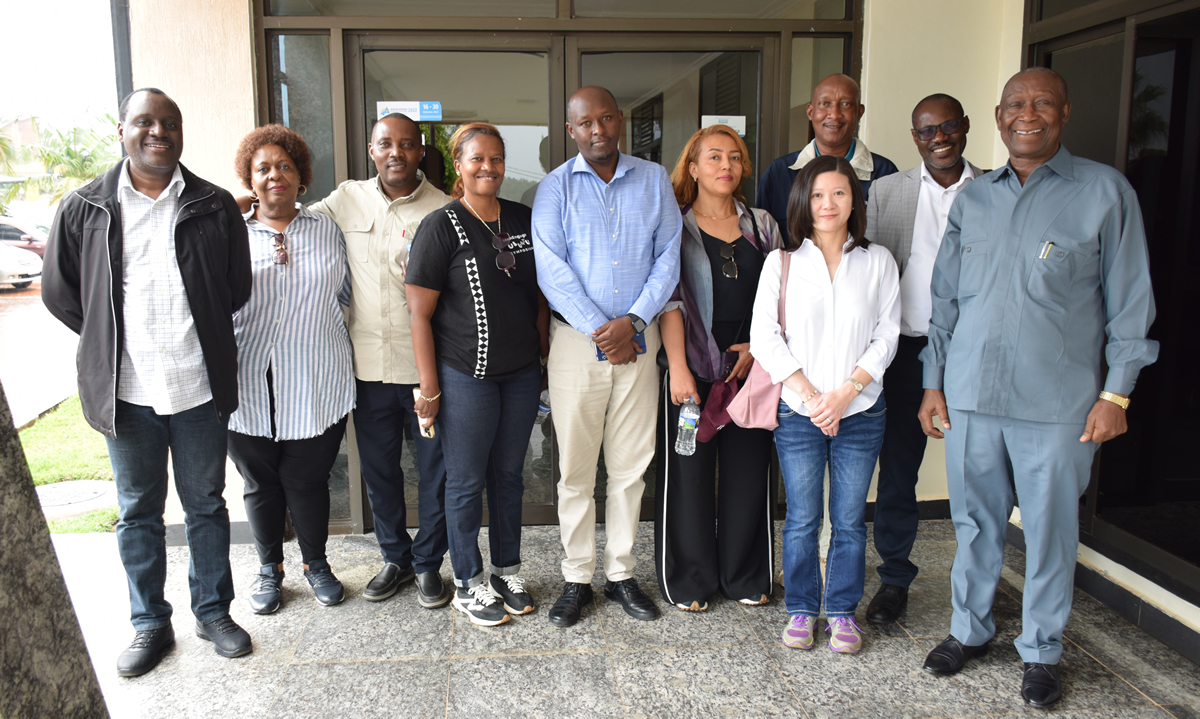
Mr. Eric Bizimana, Deputy Mayor for Economic Development (centre, in blue shirt), welcomed the delegation at Muhanga District Headquarters and highlighted the strong collaboration between the District, NBDF Rwanda and SDHA
The Deputy Mayor for Economic Development, Mr. Eric Bizimana (centre, in blue shirt) welcomed the delegation at Muhanga District Headquarters and highlighted the strong collaboration between the District, NBDF Rwanda and SDHA
One of the most significant outcomes of SDHA’s work in partnership with Muhanga District was the completion of a feasibility study that explored the relationship between climate change and food insecurity among smallholder farmers in the Makera watershed area. The study offered in-depth analysis and strategic recommendations to increase resilience and reduce vulnerability to climate change within the Watershed.

As a direct result of this evidence-based engagement, the Government of Rwanda allocated 200 hectares of marshland in Makera to the IABM cooperative. This land is now being used for sustainable agriculture, providing secure access to resources and enabling long-term planning for food production and income generation for the members of the cooperative.

Livelihood Improvements and Market Access
The impact of SDHA’s work is already visible. Today, IABM members are involved in the production of hybrid maize seeds, vegetable farming, and grain processing. A portion of their produce is now being exported through the National Agricultural Export Development Board (NAEB),
fffff
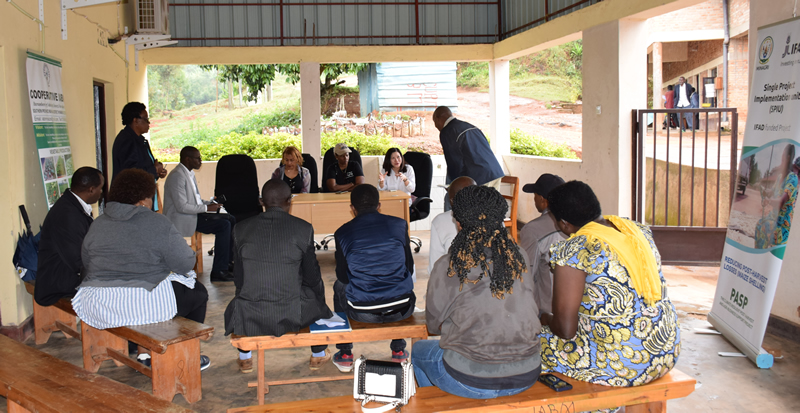
The meeting with representatives of the IABM Cooperative at their offices in Makera, Muhanga District.
connecting smallholder farmers to national and international markets. As a result of these efforts: Incomes for over 1,000 cooperative members have doubled; Farmers now have better access to training and technical support; and The cooperative’s organisational capacity and collective action have been significantly strengthened.

To ensure long-term sustainability, SDHA is working with the Rwanda National Discourse Forum (RNDF) to support the cooperative in developing a strategic plan to scale IABM’s impact.

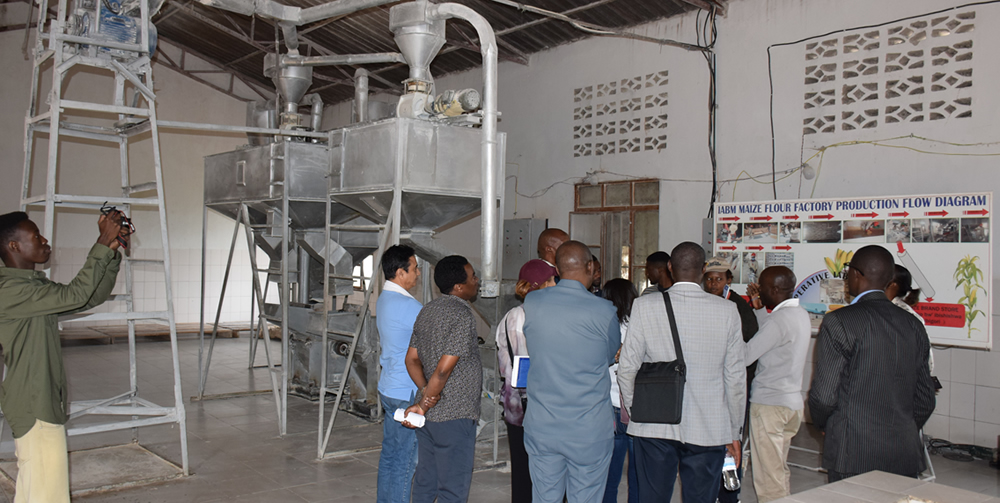
During the site visit, the delegation gained insights into the maize milling process, including cleaning, processing, and packaging, with the facility’s operations clearly visible in the background.
During the site visit, the delegation gained insights into the maize milling process, including cleaning, processing, and packaging. In the background stands the maize milling factory assembly.
Community-Led Solutions to Climate Change
The CIWA/WB delegation had the opportunity to interact directly with IABM members during the field visit. The interaction focused on local innovations that help communities adapt to the impacts of climate change and the challenges that communities face. These included Soil conservation techniques, Small-scale irrigation systems, Rainwater harvesting, and Other climate-smart agriculture practices. These practical solutions are improving resilience and livelihoods while showcasing the power of community-driven action backed by technical support and policy engagement.

Alt text
D
The NBD implementation Model
The field visit demonstrated NBD’s multi-level operational structure, from its Regional Secretariat, through national-level platforms like NBDF Rwanda, and down to grassroots implementation through member organisations like SDHA.
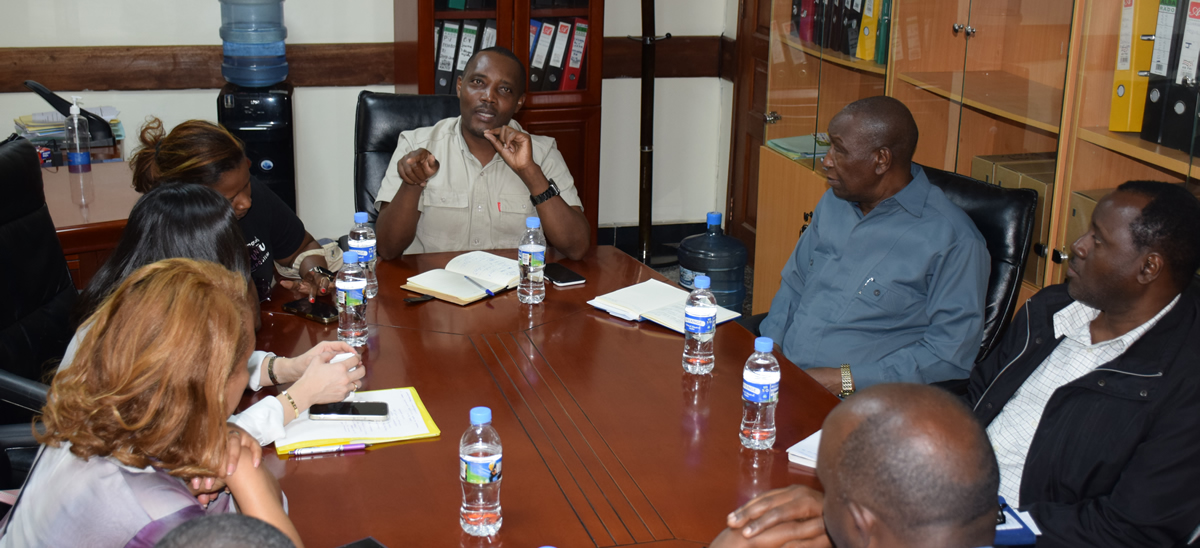
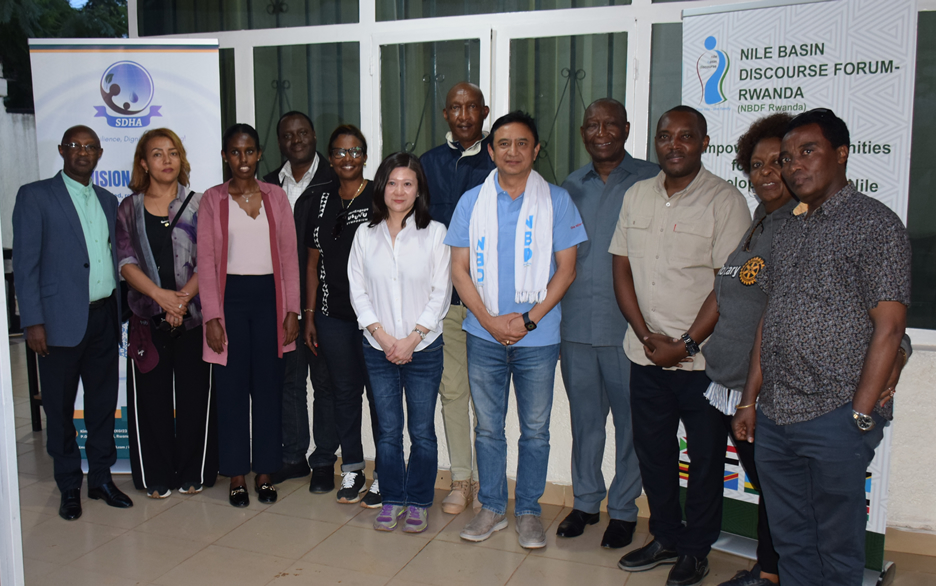
The delegation visited the NBDF Rwanda offices, hosted at the RDHA premises, to engage with the team and learn more about their collaborative efforts in advancing community-driven development.
The delegation visited the NBDF Rwanda offices, hosted by NBD member organisation SDHA, for an engaging exchange on ongoing initiatives.
The CIWA/WB team praised the effectiveness and relevance of this structure and expressed appreciation for the collaboration and interdependence between the NBD Secretariat, national discourse forums, and their member organisations since some NDFs' offices are actually hosted by their own member organisations as it is for NBDF Rwanda.

They also shared valuable insights on how the IABM success story witnessed in Muhanga can be scaled across other countries in the Nile Basin. The delegation expressed strong interest in visiting National Discourse Forums in other countries to learn of the initiatives they are undertaking and their impact in the community.