TPL_YOOTHEME_SKIP_TO_MAIN_CONTENT

Discourse Blog

The NBD Chairperson Ms. Aynalm Ashebir delivers her remarks at the 20th Regional Nile Day Commemoration, Juba, Republic of South Sudan, 22 February 2026

Remarks by the NBD Board Chairperson at the 20th Regional Nile Day Commemoration - Juba, Republic of South Sudan, 22 February 2026

Remarks by the NBD Board Chairperson at the 20th Regional Nile Day Commemoration, Juba, Republic of South Sudan, 22 February 2026


  • Your Excellency,
  • Honourable Nile-COM Chair,
  • Honourable NEL-COM Chair,
  • Honourable Ministers and members of Nile-COM present,
  • Honourable members of the Nile Technical Advisory Committees,
  • Distinguished senior representatives of the Government of the Republic of South Sudan,
  • Executive Director of the Nile Basin Initiative Secretariat,
  • Senior Advisor to the NBI Executive Director,
  • Acting Executive Director for ENTRO,
  • Regional Coordinator for NELSAP-CU,
  • Members of the diplomatic corps,
  • Development Partners,
  • Staff of the NBI Centres,
  • Members of Civil Society,
  • Members of Media,
  • Distinguished Guests, Ladies and Gentlemen,
  • All protocols observed.

It is both an honour and a profound privilege to stand before you today as we commemorate the 20th Regional Nile Day, here in Juba, at the heart of the White Nile. We gather not only to celebrate a shared river, but to reaffirm a shared destiny — one rooted in cooperation, mutual respect, and collective responsibility.

Allow me first to express my sincere appreciation to the Government and people of the Republic of South Sudan for hosting this important milestone and for the warm welcome and generous hospitality extended to me and my team. South Sudan’s central position in the basin and stewardship of the Sudd wetlands remind us of both the opportunities and responsibilities we share in managing this great river.

Today marks 27 years since the establishment of the Nile Basin Initiative — a bold and visionary step taken in 1999 to transform the Nile from a potential source of conflict into a driver of cooperation, peace, and shared prosperity.

Nile Day is therefore more than a celebration. It is a moment of reflection — on how far we have come — and a moment of recommitment to where we must go together.

The theme for this year, “Voices of the Nile: Community, Youth and Women Engagement in Water Governance,” reminds us that sustainable water governance cannot be achieved without the voices of those who live along the river, depend on its waters, and safeguard its future.

The Nile Basin Discourse stands here today as the collective voice of over 600 civil society organizations across the basin. For more than two decades, NBD has worked tirelessly to ensure that communities — especially women, youth, and marginalized groups — are not only beneficiaries of Nile cooperation, but active participants in shaping it.

We are proud to serve as a bridge between citizens and decision-makers. Through our grassroots networks in the 10 Nile Basin countries, we have amplified community voices into national and regional platforms, ensuring policies and investments are informed by real experiences on the ground.

We firmly believe that sustainable decisions are those that are inclusive and informed by ground realities. Over the years, NBD has contributed through:

  • Evidence-based advocacy and citizen engagement shaping policy and transboundary project design.
  • Providing community perspectives and social insights for decision-making.
  • Supporting early warning systems through community mobilization and adaptation strategies.
  • Supporting water quality investment prioritization across pollution hotspots.
  • Promoting transboundary cooperation and peacebuilding through dialogue and trust-building.

The strength of Nile cooperation lies in partnerships. The partnership between NBD and the Nile Basin Initiative is both unique and exemplary. Guided by a Memorandum of Understanding renewed since 2014, and with a new five-year MoU covering 2026–2030, NBD remains fully committed to this collaboration.

NBD is currently implementing the Nile Civil Society for Climate Resilience Project, supporting citizen-led data generation. Through citizen science, communities in pilot basins are generating localized data to:

  • Inform national and regional planning,
  • Complement scientific systems,
  • Strengthen early warning mechanisms, and
  • Support inclusive decision-making.

As we look ahead, the challenges facing the Nile Basin — climate change, population growth, and competing demands — require stronger collaboration than ever before. Governments, institutions, civil society, private sector, and communities must work together to sustain life, livelihoods, and peace.

Allow me to reaffirm, on behalf of the Nile Basin Discourse:

  • Our unwavering commitment to support the Nile Basin Initiative.
  • Our dedication to strengthening inclusive water governance.
  • Our resolve to amplify the voices of communities, youth, and women.
  • Our readiness to contribute to climate-resilient and equitable development.

The Nile is not just a river. It is our heritage, our lifeline, and our shared future.
Let us continue to listen to the voices of our people. Let us continue to strengthen our partnerships. Let us continue to build a future where cooperation flows as freely as the waters of the Nile.

We remain: One Nile – One Family!

I thank you.

Aciro draws water from the storage drum she previously relied on (left), while a woman and girls fetch water from a community-managed water point established under the Safe Water Initiative, now serving more than 300 families in Juba (right)

A Drop of Hope: Easing a Mother’s Daily Struggle for Family Survival in Water-Scarce Juba

In Juba, where only 30% of residents have reliable access to clean water, Achiro Concy’s daily struggle to secure water for her family reflects a deepening crisis intensified by extreme heat and rising costs. Her life took a positive turn when community-led initiatives, supported by Nile Basin Discourse Forum, JICA, and the Ministry of Water Resources and Irrigation, introduced sustainable water solutions. Today, her story stands as a powerful example of how community-driven approaches can transform lives, improve health outcomes, and build resilience in water-stressed regions.

In the scorching heat of Juba, where reliable access to clean water remains out of reach for many, daily life can become a relentless struggle. For Achiro Concy, a 28-year-old mother of three living in Luri, securing water for her family once meant long, exhausting journeys under the sun and difficult choices between cost, safety, and survival.

With only about 30% of residents able to access safe and reliable water, most households depend on private water vendors who deliver untreated or poorly treated water by truck. For Achiro, this water was not only expensive but often unsafe posing constant health risks to her children. Each day, she stored the little she could afford in 100 to 150-liter drums, carefully rationing it for cooking, cleaning, and drinking, knowing it would rarely be enough.

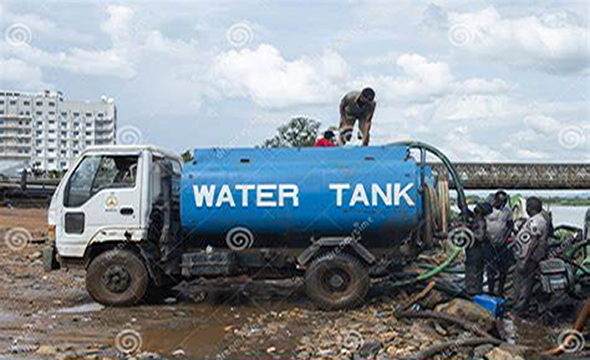
Water supplier truck drawing water from the River Nile. ©Dreamstime (http://www.dreamstime.com)
Water supplier truck drawing unsafe water from the River Nile. ©Dreamstime (http://www.dreamstime.com)

Achiro’s daily struggle for her family’s survival

Before change came, Achiro’s routine was defined by uncertainty. Water sources were inconsistent, streams had dried up due to prolonged heat, and the cost of water fluctuated unpredictably. Time spent searching for water meant less time caring for her children or pursuing income-generating activities. Like many women in her community, the burden of water collection fell squarely on her shoulders; physically draining and emotionally taxing, with direct consequences for her family’s well-being.

The Day Things Began to Change Through Community Action

Achiro’s life began to shift when she attended a community meeting organized by the Nile Basin Discourse Forum – South Sudan (NBDF-SS), focused on sustainable water solutions. The meeting brought together local leaders, government representatives from the Ministry of Water Resources and Irrigation, and development partners including JICA, Action for Children, and Women Organization (ACWO). What started as a discussion quickly became a catalyst for action. Motivated by the possibilities, Achiro joined a community committee dedicated to improving water access through locally driven solutions. Together, they implemented rainwater harvesting systems, installing rooftop collection structures and developing community water storage points. These efforts significantly reduced the time and effort required to access water.

The transformation in Achiro’s life was made possible through a collaborative approach. NBDF-SS played a central role in mobilizing the community and ensuring local voices shaped the solutions. JICA provided technical expertise and resources, while the Ministry of Water Resources and Irrigation ensured alignment with national priorities and sustainability frameworks. A key outcome of this collaboration was the establishment of a community-managed water tap point, an affordable and safer alternative to water sold by private truck vendors. This initiative directly benefited more than 300 families in Juba, improving both access and affordability of clean water. Local organizations like ACWO further strengthened the effort through community awareness and engagement, particularly around sanitation and safe water practices.

More Than Water - A New Beginning

With improved access to clean water, Achiro’s daily reality changed dramatically. No longer spending hours searching for water, she could dedicate more time to her children and invest in a small craft business to support her household. The health of her family also improved, reflecting a broader community trend - waterborne illnesses dropped by an estimated 40%, easing both emotional and financial strain. Beyond the practical benefits, something less visible but equally powerful emerged: confidence. Achiro found her voice within the community. She became an advocate for sustainable water practices, encouraging other women to participate in local decision-making and income-generating activities. What began as a personal struggle evolved into a shared movement of empowerment.

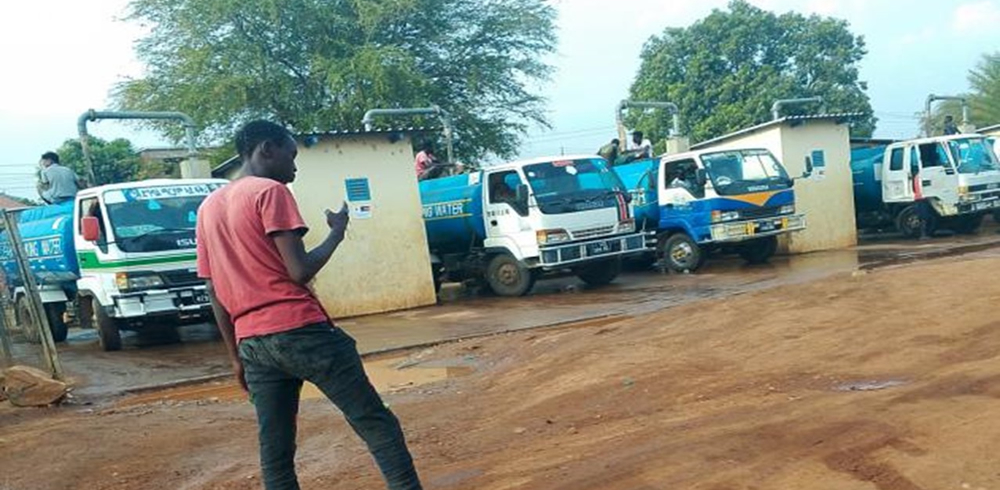
Water tanker trucks line up at a distribution point to fill treated water for supply
Water bowser trucks line up at a distribution point to fill treated water for supply

What Achiro’s Story Teaches Us on Resilience and Sustainability

Achiro’s story highlights a critical truth: sustainable solutions to water scarcity are most effective when they are community-led. By involving residents in the design, implementation, and management of water systems, these initiatives foster ownership, accountability, and long-term viability. Small contributions from community members toward maintenance further strengthen sustainability, ensuring that solutions endure beyond initial project support. In the face of increasing climate pressures, including prolonged heat waves and water shortages, such approaches offer a practical and scalable pathway toward resilience.

Keeping the Momentum Alive

While challenges remain, Achiro’s story demonstrates possibilities when communities are not just beneficiaries, but active partners in shaping solutions. Strengthening community ownership, expanding rainwater harvesting, investing in inclusive water infrastructure, and deepening collaboration between local actors and development partners will be essential to sustaining progress. For Achiro and many others in Juba, access to clean water is no longer just about survival, it is about dignity, opportunity, and hope for a better future.

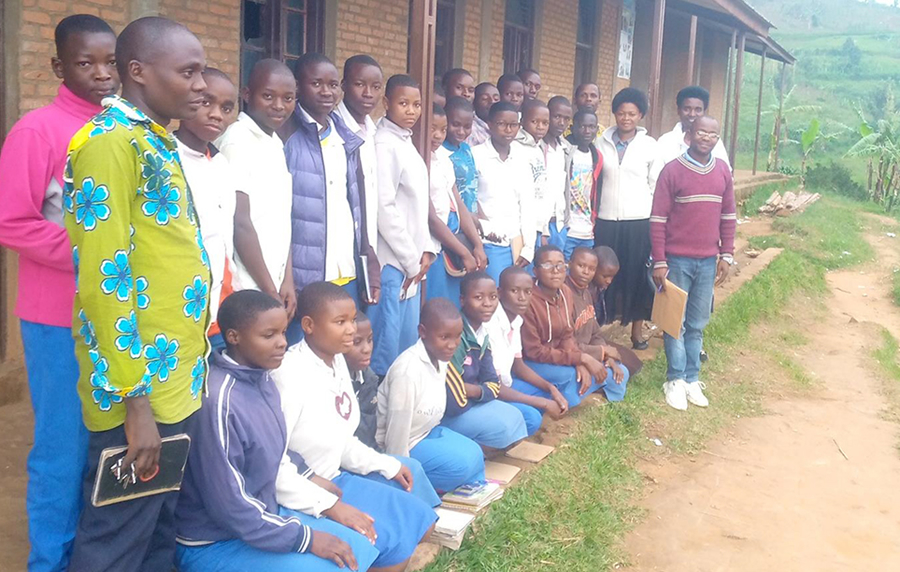
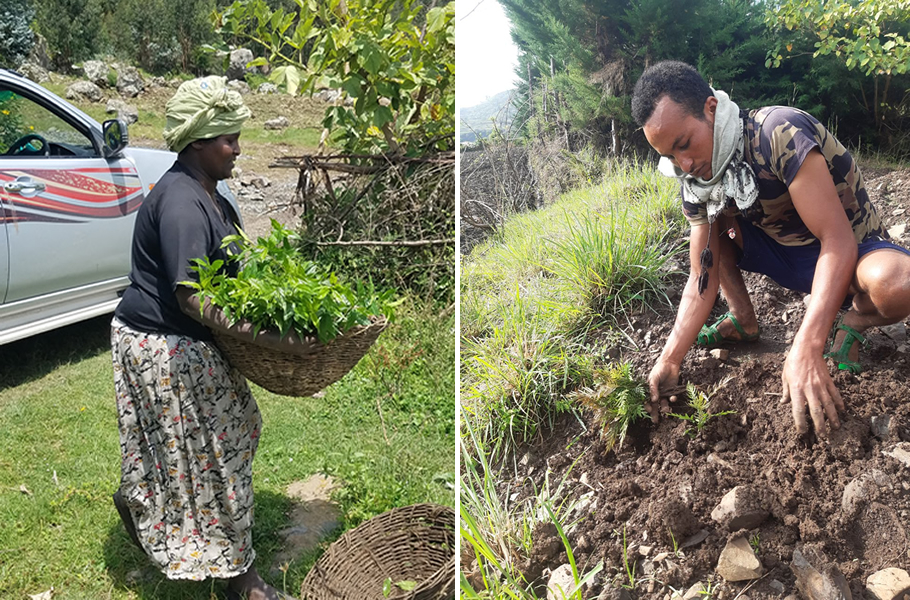
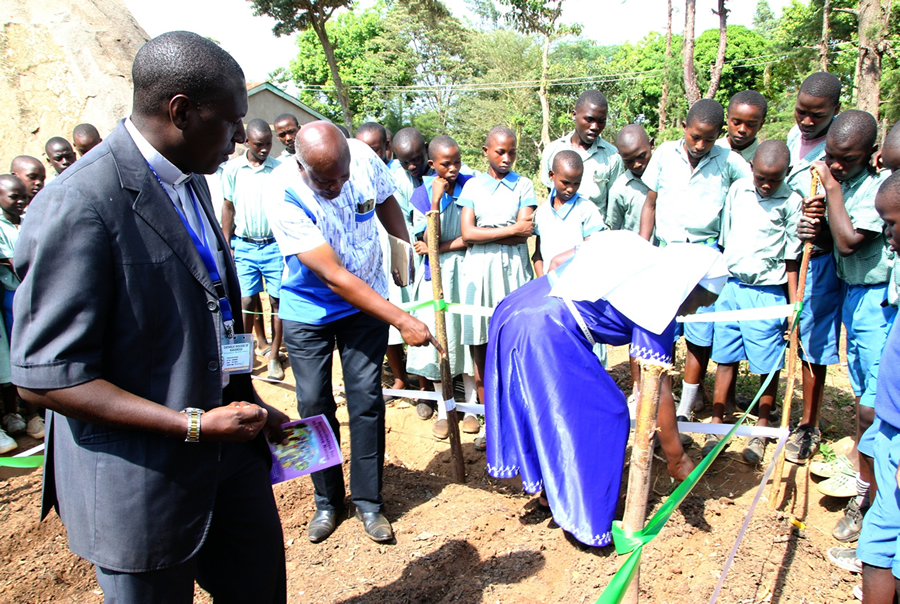
Students of Nyenkarange Blue School hold tree seedlings for planting, following sensitisation on natural resource conservation and biodiversity management - marking a practical step toward youth-led environmental stewardship.

Growing Green Minds: How Blue Schools Are Shaping Burundi’s Next Generation of Environmental Champions

In Burundi’s Nyenkarange hills, Blue Schools are turning students into leaders of environmental change. With support from NBD's Burundi National Discourse Forum (BNDF), young people are learning to protect biodiversity, improve hygiene, and manage natural resources sustainably. The initiative shows how empowering youth can transform schools, communities, and the future.

"The students didn't know how to contribute to managing natural resources. They didn't understand the importance of trees or cleanliness in their environment", recalls a teacher from Nyenkarange School, describing the situation before the BNDF intervened. In the hills of Nyenkarange, Mpanda commune, what was once a community facing deforestation and environmental neglect has transformed into a model of youth-led conservation.

Before BNDF's intervention, the 913 students at Nyenkarange I and II Fundamental Schools had minimal understanding of biodiversity, natural resource management, or environmental legislation. Trees were cut without replanting, school sanitation was poor, and deforestation advanced rapidly. Operating on the principle that "he who educates the youth prepares a better future", BNDF partnered with a local association Dufashanye Dufashanye Barundi and Duteribiti to launch a biodiversity preservation project.

From July 30-31, 2025, BNDF conducted intensive training for 30 students (16 boys and 14 girls) from environmental club, accompanied by four teachers. The training covered natural resource management, biodiversity preservation, hygiene and sanitation including the Blue School concept, Burundi's environmental codes, animal stabilization, and fruit tree maintenance. On October 27, 2025, BNDF provided essential tools including hoes, pickaxes, machetes/pangas, watering cans, scrapers, and dignity kits for girls to integrate ecological actions into daily school life.

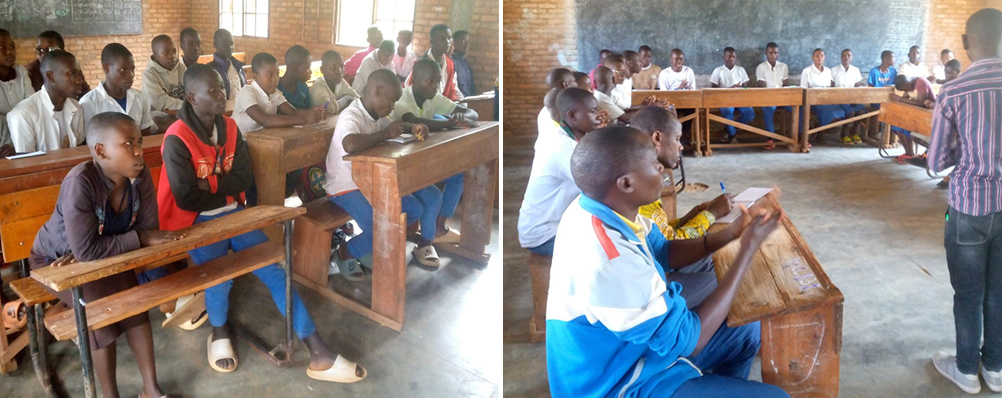
Students participate in a training session on natural resource and biodiversity management, school hygiene and sanitation, and the Blue School approach (left), alongside members of the school environmental clubs following a sensitisation session on natural resource and biodiversity management (right).
Students participate in a training session on natural resource and biodiversity management, school hygiene and sanitation, and the Blue School approach (left); members of the school environmental clubs following a sensitisation session on natural resource and biodiversity management (right).

The school headteacher enthusiastically appreciated: "Thanks to this training supported by BNDF, our school is becoming a true Blue School. The fruit and agroforestry trees we planted will provide shade for studying, improve hygiene, and feed our students. The fruits sold will help finance school needs."

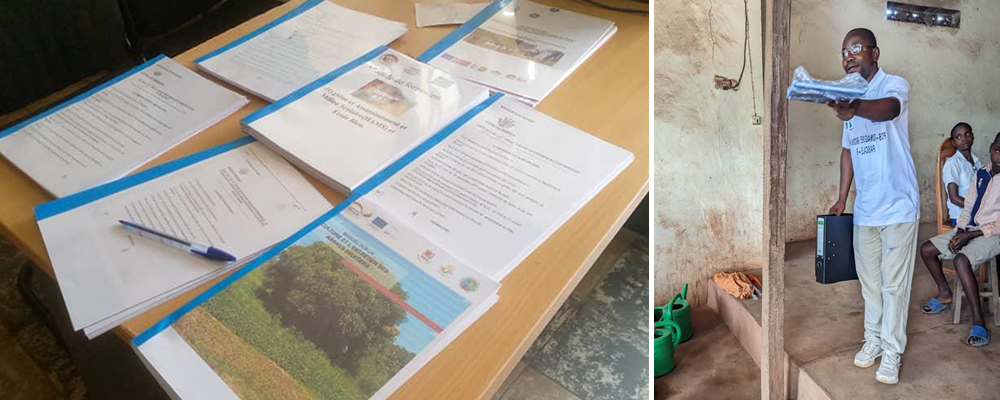
Guides distributed by BNDF to members of school environmental clubs (left), alongside the distribution of learning materials and dignity kits to girls during the outreach activity (right).
Guides distributed by BNDF to the school's environmental club (left), alongside the distribution of learning materials and dignity kits to girls during the outreach (right).

The impact has rippled beyond school walls. One mother shared, "After the training, our children remind us about the importance of cleanliness and encourage us to restore natural resources."

Looking Ahead

While funding constraints limited training to only 30 of the 913 enrolled students, BNDF hopes to extend and scale up this initiative to other schools. "With more funding, we could reach other schools and further strengthen local capacities," said the BNDF coordinator. By placing youth at the heart of environmental protection, BNDF has planted seeds for a greener future.

Today, these students are not only learners but also ambassadors of nature, proving that when youth take action, nature breathes and the future brightens.

Group photo of members of school environmental club following a sensitisation session on natural resource conservation and biodiversity management.
Group photo of  the school environmental club members following the raining on natural resource conservation and biodiversity management.

Coffee seedling distribution as one of the project’s core interventions, supporting climate-resilient livelihoods and strengthening household income through sustainable agricultural practices.

Building Resilient Futures: ERSHA Transforming Rural Livelihoods in Ethiopia

In Asagret, Ambo and Toke Kutaye districts of Amhara and Oromia Regions of Ethiopia Ethiopia, poor women, farmers and youth face persistent challenges of food insecurity, limited water access for agriculture, and climate-induced shocks that exacerbate poverty and reduce nutritional outcomes. Since January 2022, Enhanced Rural Self-Help Association (ERSHA) an Ethiopia Nile Discourse Forum (EthNDF) member has been implementing an Agro-ecology, Child-focused Development and Sustainable Food System project that is transforming lives through practical, sustainable interventions. - This is a story of resilience, women's empowerment, and climate-smart rural transformation

Since its establishment in 1997, ERSHA has been contributing to improved household income, poverty reduction, women empowerment, environmental protection, and the well-being of socially and economically excluded community groups in Ethiopia. They initiated a project in January 2022 aiming to enhance household income, reduce vulnerability, improve food security, and contribute to environmental restoration targeting 3,100 households (1,400 male-headed and 1,700 female-headed) across Amhara and Oromia Regions with integrated solutions that address both immediate needs and long-term resilience.

The Challenge: Overlapping Rural Vulnerabilities

Communities in the project areas were navigating compounded crises; unpredictable rainfall and prolonged dry spells, degraded soils and declining agricultural productivity, limited access to small-scale irrigation, dependence on single-crop farming systems, restricted economic opportunities for women and youth, and poor dietary diversity affecting children’s nutrition. These constraints reinforced cycles of vulnerability, leaving households exposed to climate shocks and market instability.

ERSHA’s Integrated, Multi-Pronged Approach

To break this cycle, ERSHA implemented a comprehensive package of interventions designed to diversify incomes, enhance food systems, and restore environmental health. The interventions include support for shoats (sheep and goats) on a revolving scheme, training on nutritious food preparation, provision of improved crop seeds, development of small-scale irrigation schemes, vermin composting training, vegetable seed distribution, agro-ecology-based environment protection, Enset (false banana) processing technology training, fruit tree plantation, and landscape greening initiatives.

By combining climate-smart agriculture, livelihood diversification, and nutrition-focused programming, the project addresses resilience at household, community, and ecosystem levels

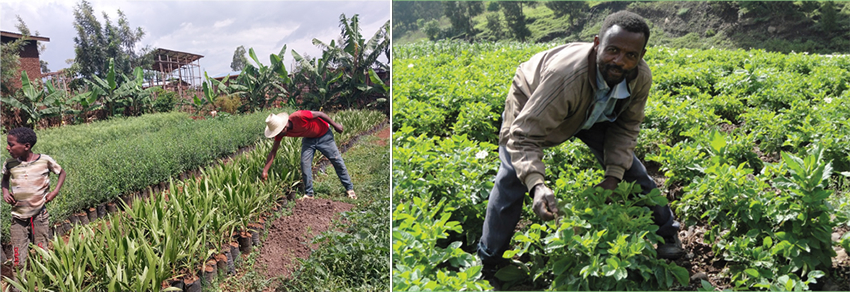
Youth driving sustainable livelihoods: tree seedling production (left) and irrigated potato farming (right)
Tree seedling production by Youths (left) and Potato production using irrigation farming (right)

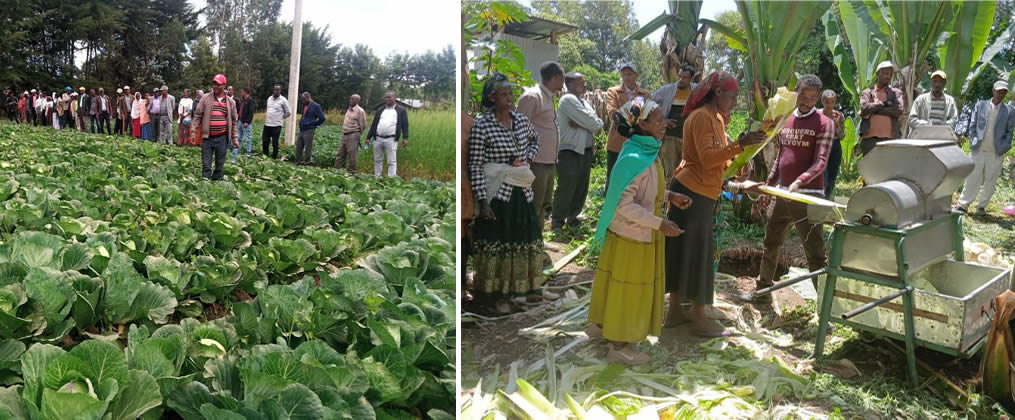
Vegetable production using vermicompost at Guder (left) and Enset food processing technology (right).

Tangible Results: Productivity, Inclusion, and Diversification

The outcomes speak for themselves. Agricultural productivity has improved significantly through irrigation and climate-smart practices, with beneficiaries reporting higher production in seasons where ERSHA supported small-scale irrigation interventions. Households have moved from dependence on single crops to diversified activities combining crops, small businesses, and livestock drastically reducing vulnerability to climate shocks. Farmer groups have been strengthened with improved market linkages, while women and youth now enjoy greater inclusion through economic participation and household decision-making over income. Households that once relied on rain-fed monocropping now operate diversified, climate-adaptive livelihood systems.

A Model That Multiplies: The Sheep Fattening Success Story

In 2024, ERSHA's sheep fattening initiative in Mutulu Kebele (Toke Kutaye Woreda) demonstrated the power of well-designed, women-centered interventions. Seven women received 14 sheep (two per woman) to start a fattening business. The timing was strategic; Ethiopia has over 13 public holidays annually when sheep are in high demand for celebratory slaughter, providing a reliable and profitable market.

Each woman fattened her sheep for one year while participating in training on animal husbandry, feeding, and small business management. They also contributed 100 ETB ($1 USD) per month to a group savings scheme totaling 1,200 ETB ($11 USD) annually per woman, or 16,800 ETB ($155 USD) collectively.

The numbers tell a remarkable story of sustainability. By year's end, each woman repaid an average of 12,000 ETB ($110 USD), bringing total repayment to 84,000 ETB ($778 USD). These funds purchased 14 additional sheep for a second group of beneficiaries in 2025. First-level beneficiaries not only repaid their loans but also reinvested in their own livestock by purchasing more sheep. In May 2026, a third group of women is set to receive sheep, continuing the revolving benefit system without requiring additional external resources.

The revolving structure ensures that impact compounds over time, transforming a single intervention into a self-sustaining enterprise model

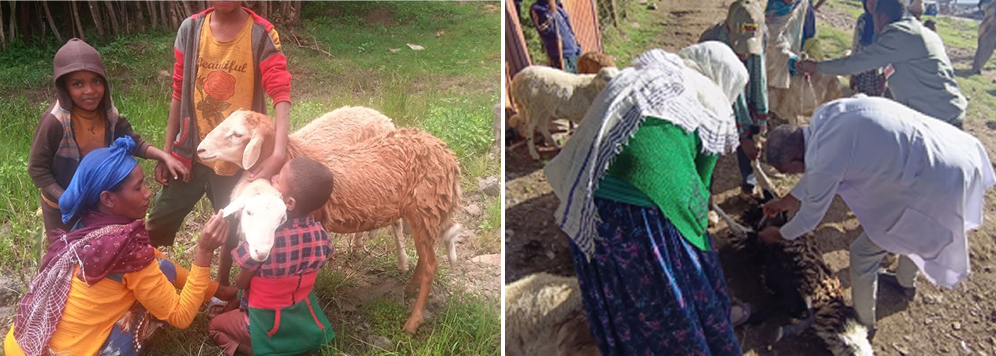
One of the beneficiary families with their sheep(left),Vaccination of sheep to avoid economic losses(right)

Key Lessons for Scaling Impact

The sheep fattening initiative illustrates a core development principle: when revolving capital, technical training, and market timing align, interventions evolve from short-term aid into scalable economic systems. Most importantly, women transitioned from beneficiaries to entrepreneurs, gaining practical skills, financial literacy, and economic agency.

Sustainable development emerges when communities are equipped not only with resources, but with the knowledge, structure, and ownership required to shape their own futures.


About ERSHA:

The Enhanced Rural Self-Help Association is a long-standing civil society organization in Ethiopia dedicated to poverty reduction, women’s empowerment, environmental protection, and inclusive rural development.

Members of a Participatory Forest Management Cooperative (PFMC) showcase graded frankincense at a trade fair in Metema, Amhara Region.

Empowering Communities, Restoring Forests: SUNARMA's Participatory Forest Management Success in Ethiopia

SUNARMA is restoring degraded dryland forests and transforming rural livelihoods in Ethiopia's Amhara Region. Through participatory forest management, SUNARMA empowers local communities in Metema Woreda to co-manage 37,833 hectares of forest, reduce deforestation, promote equitable benefit-sharing, and enhance household incomes from sustainable forest products; proving that conservation and livelihood improvement can go hand in hand..

Across Ethiopia's northwest lowlands, dry forests once teeming with life have been rapidly disappearing; cleared for agriculture, overgrazed by livestock, and scarred by uncontrolled fires. Yet in Metema Woreda, a remarkable turnaround is underway, led by the Sustainable Natural Resource Management Association (SUNARMA).

Founded in 2000, SUNARMA is one of Ethiopia's leading national NGOs championing sustainable natural resource management. Working hand in hand with rural communities, SUNARMA empowers forest-dependent households, pastoralists, women, youth, and people with disabilities to secure their livelihoods through sustainable practices.

Since December 2022, SUNARMA has been implementing a Participatory Forest Management (PFM) project across 37,833 hectares of dryland forest - directly benefiting over 3,000 households in Metema. The project is part of a growing national movement that seeks to make communities the rightful custodians of their forest resources.

The Challenge: Dry Forests Under Threat

The dry forests of Northwest Amhara - dominated by valuable species such as Boswellia papyrifera (the frankincense tree) - have faced severe degradation from agricultural expansion, illegal logging, overgrazing, and uncontrolled fires. With shrinking forest cover came declining biodiversity, soil erosion, and dwindling non-timber forest products (NTFPs) that thousands of rural families depend on for survival.

For many households, this translated into lost incomes, food insecurity, and increasing competition over shrinking resources. Traditional systems of forest protection had weakened, leaving communities vulnerable to both ecological and economic instability.

It was in this context that SUNARMA introduced a co-management approach - bringing local people back into the center of forest governance.

The Solution: Participatory Forest Management (PFM)

PFM empowers local communities to co-own, manage, and benefit from state forests through organized forest cooperatives (PFMCs). Members develop their own management plans, protect against encroachment and fires, and harvest forest products responsibly. SUNARMA's PFM approach in Metema combines ecological restoration with livelihood improvement, creating a powerful model of shared responsibility.

Left: A beneficiary receives Rhamnus prinoides seedlings to restore degraded lands. Right: A community member plants Grevillea robusta - multi-purpose tree species promoted by SUNARMA to strengthen ecosystem resilience and support sustainable agroforestry in Metema.

The results are already transforming landscapes and lives.

Environmental Impact: Forests on the Mend

Scientific monitoring from 2012 - 2023 shows that PFM has dramatically slowed deforestation in Metema's dry forests:

  • Conversion of dense forests to farmland dropped by up to 60%.
  • Deforestation rates are 10% lower in PFM-managed areas compared to nearby open-access forests.
  • Burned forest land has significantly decreased, thanks to community fire patrols and local by-laws.

Forests under PFM also show richer biodiversity, with up to 62% more woody plant species and four times higher densities of mature trees than unmanaged forests. High-value tree species such as Boswellia papyrifera and Pterocarpus lucens are thriving once again.

Livelihood Impact: Forests that Feed Families

Beyond ecological gains, PFM has become a lifeline for rural livelihoods. Member households now earn 9 - 25% of their annual income from frankincense and other NTFPs, providing a steady income stream during dry seasons. The model is pro-poor, enabling resource-limited families to benefit most from sustainable harvesting.

PFM has also diversified local economies. Through beekeeping, fuel-saving stove production, and collective NTFP marketing, families - especially women - are developing new skills and enterprises. These ventures reduce dependency on forest clearance while generating reliable household income.

Women from a local producer group prepare materials for fuel-saving stoves in Metema village, Amhara Region. The initiative promotes alternative livelihoods that reduce pressure on dry forests while empowering women with new income-generating and climate-friendly skills
Women from a local producer group prepare materials for fuel-saving stoves in Metema village, Amhara Region. The initiative promotes alternative livelihoods that reduce pressure on dry forests while empowering women with new income-generating and climate-friendly skills.

Inclusion and Equity: Everyone Has a Stake

SUNARMA's PFM model emphasizes equitable participation. Women hold leadership roles within PFMCs and play active parts in decision-making. Alternative livelihoods tailored for women, such as improved stoves and honey production, are creating new income avenues while reducing forest pressure.  Youth and persons with disabilities are also involved in forest product collection, processing, and cooperative management - ensuring no one is left behind in the forest economy.

Market Access and Value Addition

Through cooperative organization and training, PFMC members now collectively market NTFPs, gaining better prices and fairer trade terms. SUNARMA supports these cooperatives with: Market linkage facilitation, Technical skills training for value addition, and Promotion of underutilized NTFPs like wild fruits and medicinal plants.   These efforts not only raise incomes but also increase the perceived value of standing forests, providing stronger incentives for conservation over conversion.

Lessons for the Future

The SUNARMA - Metema experience offers valuable lessons for sustainable natural resource management:

  • Legal rights empower communities to take real ownership of forest resources.
  • Livelihood support is key to conservation success - people protect what sustains them.
  • Non-timber product-based PFM models reduce deforestation pressure while maintaining biodiversity.
  • Collaboration between communities and government builds trust, social cohesion, and cost-effective conservation.
SUNARMA's work in Ethiopia exemplifies how community-led conservation aligns with the NBD vision - strengthening water and ecosystem security through local empowerment. The approach not only safeguards Ethiopia's dry forests but also contributes to regional resilience and shared environmental stewardship across the Nile Basin.


About SUNARMA

Sustainable Natural Resource Management Association (SUNARMA)founded in 2000 as a national NGO based in Ethiopia. SUNARMA dedicated to sustainable land use, forest management, and rural livelihood improvement. The organization partners with communities, local government, and international agencies to promote environmentally sound and economically viable natural resource use. SUNARMA is a member of the Nile Basin Discourse subscribing through the Ethiopia National Discourse Forum.

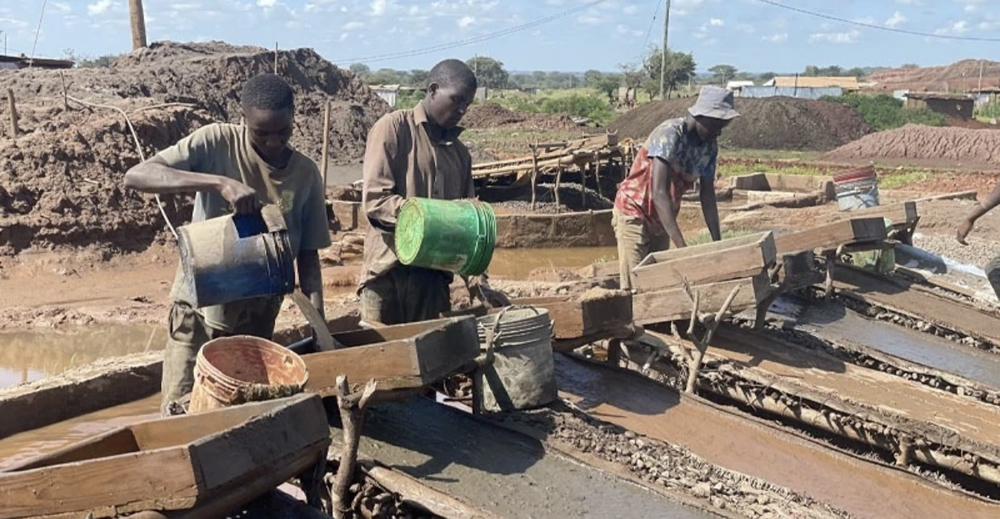
Small-scale miners in Tarime adopt safer gold processing methods using water tanks instead of washing directly in streams and rivers — a vital step toward reducing pollution and protecting the Mara River ecosystem.

Safeguarding Water and Livelihoods: SHIMATA Leads a New Era of Responsible Artisanal Mining in Tarime

Shirika la Maendeleo Tarime (SHIMATA) in rural Tanzania is transforming artisanal and small-scale mining into a safer and more sustainable practice. SHIMATA empowers local communities to protect water sources, reduce mercury use, and enforce environmental safeguards. Through awareness sessions, community by-laws, and trained local champions, the initiative is improving both livelihoods and environmental health. Women and youth are at the forefront, driving lasting change in mining practices. This community-led effort is proving that responsible mining and water security can go hand in hand.

In the heart of Tanzania's gold belt, where artisanal and small-scale miners depend on the land and rivers for survival, a remarkable transformation is redefining what responsible artisanal mining looks like. As a member of NBD's Tanzania National Discourse Forum (TNDF), Shirika la Maendeleo Tarime (SHIMATA) is applying the skills and mentorship it has gained in Water Resources Management and Climate Change Action to lead a local movement that makes artisanal and small-scale mining safer for people and for nature.

For decades, mining provided jobs but left behind contaminated rivers, degraded soils, and health risks. Today, through SHIMATA's leadership, the same communities are writing a different story - one of empowerment, innovation, and environmental recovery.

Empowering Communities for Sustainable Development

SHIMATA's mission is simple but powerful: to support and empower communities for sustainable development and better living standards. Since 2022, the organization has been part of the TNDF network, amplifying its reach in environmental advocacy and community-driven conservation.

In 2024, SHIMATA launched a two-year project titled "Strengthening Environmental Safeguards for Water Security with Artisanal and Small-Scale Miners." The project focuses on two major mine sites - Kibaga (Kenyamanyori Ward) and Kewamamba (Kiore Ward), benefiting over 4,900 community members directly and indirectly.

From Awareness to Real Impact

Through 18 awareness creation sessions, SHIMATA educated miners, women, and youth on mercury risks and water source protection. Working with leaders and the local community, the organization co-created by-laws to regulate mining practices and safeguard rivers and wetlands.

A stakeholder Engagement meeting organised by SHIMATA at Kibaga, Kenyamanyori ward.
Local Champions Leading the Way

Sustainability is central to SHIMATA's model. The project trained eight local champions (four from each mine) to maintain environmental monitoring and awareness. These champions, linked with Ward and District Environmental Officers, ensure continued accountability even after the project ends.

Results speak volumes:
  • Relocation of crushing sites away from residential zones and water sources - a transformative move that improved household safety, reduced pollution, and restored community health.
  • Household ore crushing reduced by 50%.
  • Community environmental committees are conducting monthly inspections.
  • Local by-laws on buffer zones around water sources are being actively enforced.
Gold processing activities relocated to designated sites away from residential areas in Kiore Ward — improving community safety and reducing environmental pollution.


Empowering Women and Youth: Agents of Safer Change

SHIMATA's interventions recognize that women and youth often face the highest risks in artisanal mining. By providing them with knowledge and simple technologies for safer ore processing, the project has reduced their exposure to mercury and opened new avenues for leadership and entrepreneurship.

This inclusive approach has sparked a multiplier effect; as trained individuals adopt new habits, others follow. A cultural shift toward safer, more sustainable mining is taking root across Tarime's artisanal mining communities.

Key Lessons for a Sustainable Future
  • Co-creation works: Locally developed solutions gain stronger community ownership.
  • Designated spaces save lives: Moving crushers away from homes protects families and water.
  • Partnerships sustain progress: Collaboration between miners, local communities, local leaders, and government ensures ongoing oversight.
  • Empowerment ensures continuity: Local champions keep momentum beyond project timelines.


A Shared Vision for the Nile Basin

This initiative to protect freshwater ecosystems and promote equitable, sustainable use of shared water resources in Tarime is part of a broader vision shared by TNDF and NBD at the regional level. The achievements in Tarime demonstrate that community-led environmental stewardship can drive lasting change. By linking grassroots action with basin-wide environmental goals, SHIMATA's work is helping shape a future where development and conservation coexist. 


Local community members sorting Grass in preparation for planting during an Eco-system conservation activity at Shiatsala center, in Kakamega county (Photo credit: Zablon Indakwa)

Restoring Hope Through Nature: How Grassroots Action Is Reviving Wetlands and Strengthening Livelihoods in Western Kenya

From the lush fields of Nyando to the riverbanks of Butere and the wetlands of Nyatike, communities across Western Kenya's Nile Basin are taking action to heal the environment. Faced with deforestation, pollution, and unpredictable climate patterns, they are turning to nature-based solutions to restore degraded ecosystems and strengthen livelihoods.

In September 2025, the Kenya Nile Discourse Forum (KNDF), in collaboration with the Community Empowerment and Media Initiative in Kisumu (CEMI-K) and Eshinamanyuli Community-Based Organization (CBO), documented inspiring efforts by local residents to manage wetlands sustainably. These initiatives are not only restoring the environment but also rebuilding food security, livelihoods, and community resilience.

Transforming Swamps into Sustainable Farms

In Kakmie community of Nyando Sub-basin, residents have turned once-degraded swamps into productive agricultural zones. Crops like arrowroots, sweet potatoes, and vegetables now thrive, improving both nutrition and household income.

Local farmer Lorine Ouma shared: "Our swamp now provides clean water and a place where we can farm arrowroots, sweet potatoes, and vegetables. We do land use activities that are resilient to climate change for the purpose of improving people's livelihoods."

With technical and training support from CEMI-K, this initiative demonstrates how nature-based solutions can simultaneously enhance food security, restore wetlands, and build resilience against climate shocks.

Angugo community members of Nyatike sub-county in a group photo after training on Flood RiskCommunication and Nature conservation

Reclaiming Riverbanks, Rebuilding Ecosystems
Planting assorted indigenious tress along river Firatsi in Butere of Kakamega county (Photo credit: Zablon Indakwa).
Planting assorted indigenious tress along river Firatsi in Butere of Kakamega county.

Along River Firatsi in Butere Sub-county, communities led by Eshinamanyuli CBO are reforesting riverbanks and promoting agroforestry. These actions have reduced soil erosion, improved soil fertility, and increased tree cover.

Community member Zablon Indakwa explained:
"Our tree planting efforts have reduced erosion and scaled up agroforestry, deforestation control, and landscape restoration activities."


These initiatives show that with collective action and local leadership, environmental restoration can go hand in hand with improved livelihoods.

Spreading Awareness and Mobilizing Communities

Beyond fieldwork, CEMI-K has amplified conservation efforts through radio talk shows, digital outreach, and training workshops promoting climate-smart agriculture and wetland protection. Information is shared through Facebook, WhatsApp, and community forums, ensuring even remote villages can access environmental education.

Meanwhile, Eshinamanyuli CBO continues to mobilize youth and women's groups to lead restoration, monitor biodiversity, and engage decision-makers in advocating sustainable land use. By blending traditional knowledge with digital tools, these grassroots movements are nurturing a new culture of environmental stewardship.

EYCBO members  during signing of voluntary wetland protection and conservation agreement with farmers whose land boarder river Firatsi in Butere sub-county, of Kakamega county.
EYCBO members during signing of voluntary wetland protection and conservation agreement with farmers whose land boarder river Firatsi in Butere sub-county, of Kakamega county.

Challenges on the Path to Sustainability

Despite these achievements, several obstacles persist. Communities face:

  • Environmental pressures such as deforestation, pollution, and erratic rainfall
  • Socio-economic constraints like poverty, limited resources, and insecure land tenure
  • Governance gaps including weak enforcement, fragmented policies, and poor coordination among stakeholders

These challenges limit the scalability of nature-based solutions, yet the determination of local actors continues to drive progress.

A Hopeful Future for the Nile Basin

The success stories from Kakmie, Firatsi, and Angugo show that nature-based solutions work not just for the environment but for people's lives. Restoring wetlands has brought cleaner water, better harvests, and renewed hope.

However, lasting impact will require stronger policy alignment, sustained funding, and inclusive, community-led planning. Expanding awareness through local media and digital platforms will be key to scaling success.

By combining indigenous wisdom with modern conservation techniques, communities in Western Kenya's Nile Basin are proving that when people and nature thrive together, resilience follows. Their story is one of hope, restoration, and the power of collective action.


Launching the Africa Women in Climate Change Award Project in Bugesera District - April 2025

Grassroots Women Leading Rwanda’s Climate Action: Building Resilience and Better Livelihoods

Rwanda's grassroots women are redefining climate action by leading community-driven initiatives that restore ecosystems and strengthen livelihoods. Through the Africa Women in Climate Change Award (AWAC) Project, local cooperatives are transforming environmental challenges into opportunities for resilience and growth. Their stories reflect a powerful truth, when women lead, communities flourish and the environment heals.

Rwanda’s women are stepping to the forefront of climate resilience, turning local challenges into opportunities for transformation and sustainability. Determined to make women the driving force of climate adaptation and mitigation, the Rwanda National Discourse Forum (RNDF) is leading a transformative shift in how communities confront climate change.

Working through its member organization BENIMPUHWE, in partnership with the Center for Economic and Policy Priorities (CEPP), RNDF launched the Africa Women in Climate Change Award (AWAC) Project with support from the Australian Government. Though initiated in April 2025, the project is already generating powerful stories of empowerment and environmental impact across Rwanda.

Women as Active Agents in Climate Change

The Africa Women in Climate Change Award Project has mobilized more than 400 women and 50 men smallholder farmers actively engaged in climate adaptation and mitigation initiatives. Since April 2025, the project has supported the establishment of 10 women’s cooperatives across five districts (two in each).

In Bugesera District (Eastern Province), Kaju Cooperative and KOTMR Cooperative run tree nurseries and supply seedlings, including exotic species for community planting. Members are also active in environmental awareness and are seeking support to enhance seedling quality and water access for irrigation.

Dufatanye Cooperative members in Gisagara District working at their tree nurseries to expand agroforestry and promote climate-smart farming practices.

In Gisagara District (Southern Province), Tuganeheza Cooperative focuses on agroforestry tree multiplication, while Dufatanye Cooperative promotes crop production and edible tree cultivation.

In Kicukiro District (City of Kigali), the Kicukiro Female Ex-Combatants Cooperative specializes in tree nursery production for environmental restoration, urban greening, and climate resilience, while creating sustainable income for its members. The second cooperative, Ururabo Niboye Cooperative, engages in flower cultivation for urban beautification and home gardening, enhancing Kigali’s green spaces and household income.

In Musanze District (Northern Province), Sane Environment Deals and Skills (SEDS) and Iwacuheza Cooperative promote environmental conservation, tree nursery development, reforestation, and eco-tourism.

In Nyamasheke District, Duhagurukire Umurimo Gihombo Cooperative produces charcoal from biodegradable waste, offering an eco-friendly alternative to traditional wood charcoal. Abahujumugambi Kilimbi Cooperative leads reforestation and community awareness campaigns, blending indigenous knowledge and modern techniques to restore degraded land and promote sustainable forest management.

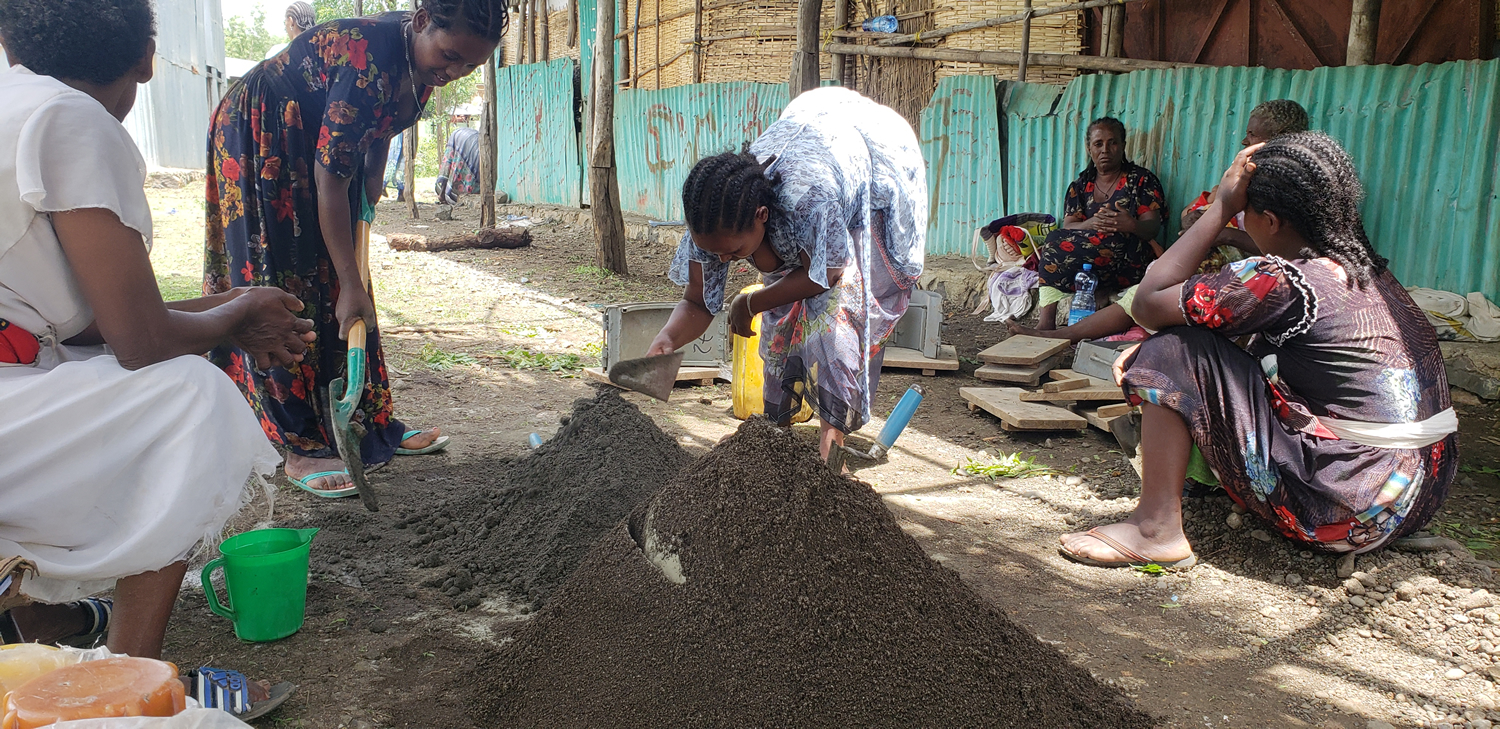
Members of Abahujumugambi Kilimbi Cooperative in Nyamasheke District during hands-on training on producing charcoal from biodegradable waste, an eco-friendly alternative to wood-based fuel.

While training needs remain in pest control, nursery management, marketing, and climate-smart agriculture, many women’s cooperatives are already generating income. Mukarwego Bonifilde, a member of KAJU Cooperative in Bugesera District where the project was officially launched on 14 August 2025, shared her experience:

" You cannot believe that, in just one week you can get 20,000 RWFs from selling tree seedlings; moreover, this is not even our main activity; we do it in the evening after our daily farm work. "

Her gratitude extended to local leaders and the Government of Rwanda for creating an enabling environment for cooperatives to partner with development stakeholders, underscoring how local initiatives can drive adaptation, resilience, and livelihoods.

A Call for Continued Support

At the official project launch in Bugesera District, RNDF leaders and local officials commended the cooperatives’ innovation and commitment. Ms. Verdiane Nyiramana, Chairperson of RNDF, called for greater investment in women-led climate initiatives, emphasizing that “investing in women yields quick and lasting results.”

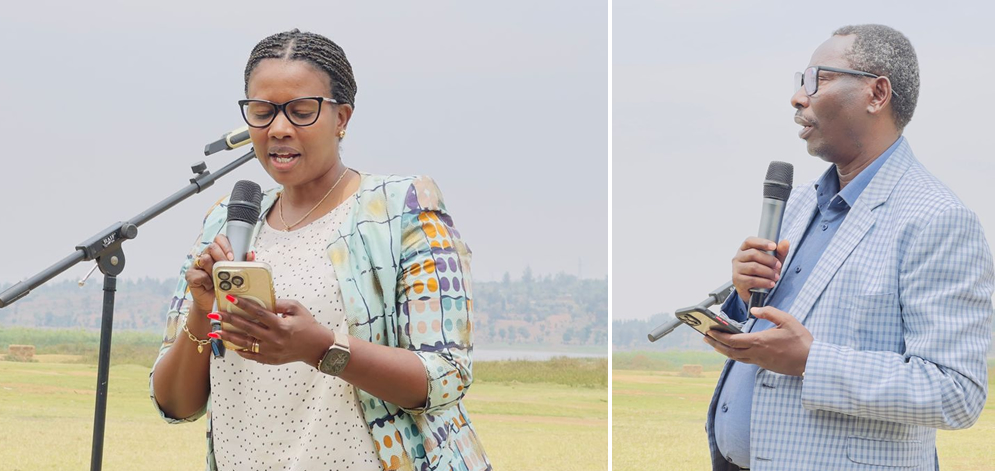
Ms. Verdiane Nyiramana, Chairperson of RNDF (left), and Mr. Faustin Vuningoma, National Coordinator of RCCDN (right), address participants during the official launch of the AWAC Project in Bugesera District, emphasizing women’s leadership in climate resilience.

Mr. Faustin Vuningoma, National Coordinator of the Rwanda Climate Change and Development Network (RCCDN), urged the dismantling of cultural biases that limit women’s participation in climate initiatives. He highlighted the contribution of women’s cooperatives to Rwanda’s green economy targets through solar energy, tree planting, and sustainable agriculture.

Government officials, including Mr. Thaddée Twagirimana, Director General of the Ministry of Environment, and representatives from the Ministry of Gender and Family Promotion, reaffirmed government commitment to linking gender equality with climate resilience. They praised the project for complementing national strategies and promised continued government support for women’s leadership in climate action.

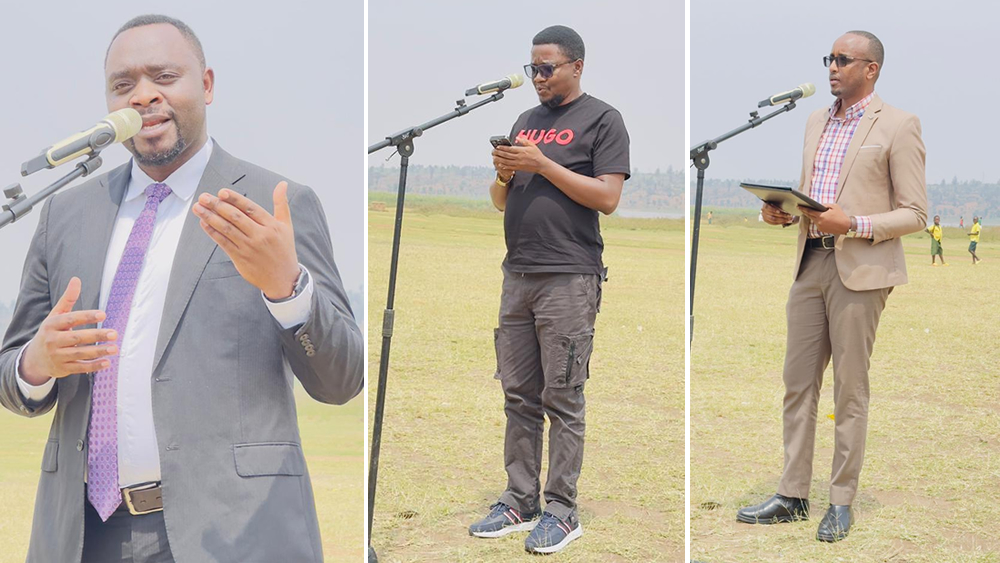
Government representatives - Mr. Thaddée Twagirimana, Director General at the Ministry of Environment (left); Mr. Silas Ngayabosha, Director General at the Ministry of Gender and Family Promotion (center); and Mr. Richard Mutabazi, Mayor of Bugesera District (right) - express government commitment to gender-responsive climate action at the AWAC Project launch.

Transforming Communities, Strengthening Resilience

From restoring degraded lands to improving household incomes, the AWAC Project demonstrates how empowered women can drive both environmental sustainability and community resilience. Local governments, once sceptical of community-led initiatives, are now providing logistical and financial support to expand cooperative activities.

As the Mayor of Bugesera District noted: “The district values the hard work of women’s cooperatives. Their fight for a greener Bugesera is our fight too.

Key Lessons
  • Women’s empowerment is central to effective climate adaptation and mitigation.
  • Community-led action fosters ownership, innovation, and sustainability.
  • Partnerships between civil society, government, and development agencies amplify impact.
  • Small investments in women’s initiatives can yield large-scale transformation in livelihoods and ecosystems.


In essence, Rwanda’s experience under the AWAC Project reinforces the principle that “when women lead, communities flourish, and the environment recovers.” The project is more than a pilot; it’s a blueprint for inclusive, community-driven climate action across Africa.


.....

From Salted Earth to Sustainable Harvests: How Egyptian Farmers Are Reclaiming Salinized Lands in the Nile Delta

In Kafr El Sheikh Governorate, farmers are proving that salinity doesn’t have to mean surrender. Communities are restoring degraded lands and renewing livelihoods. Through bio-saline agriculture, innovation, and strong community participation, once-barren soils are turning productive again. This story highlights how knowledge, collaboration, and resilience are transforming the challenge of salinity into a model of sustainable farming in Egypt’s Nile Delta.

Egypt’s North Coast and Nile Delta are among the most climate-vulnerable regions in the world. Home to nearly 17 million people, this fertile yet fragile landscape faces growing threats from rising sea levels, salinization, and coastal erosion; forces that endanger agriculture, housing, and freshwater resources.

In the northern governorates, particularly Kafr El Sheikh, soil salinity has become one of the most pressing challenges to agricultural productivity and rural livelihoods. Once-productive lands are increasingly turning saline, reducing yields and forcing smallholder farmers especially women and youth to adapt or abandon their fields.

A Grassroots Effort to Restore Productivity

To confront this challenge, the Al Nahda Association for Agricultural Development and Water Management, an active member of the Egypt National Discourse Forum (Eg-NDF) with support from the Ministry of Agriculture, launched a project across several villages in Sidi Salem district. Their goal: to combat land degradation and restore productivity through bio-saline agriculture and sustainable land-use practices.

Spanning four villages: Al-Qun, Abdel-Dayem, Zubaydah Al-Bahriya, and Abu Eleiwa Al-Sharqiya; the initiative engaged 366 farmers directly and reached nearly 900 beneficiaries, including 140 rural women and 45 agricultural extension workers.

From Degraded Soils to Productive Farms

The project took an integrated approach to transform saline soils into thriving agricultural systems. Key interventions included:

  • Adopting integrated bio-saline agriculture systems to stop further land deterioration.
  • Introducing salt-tolerant and non-traditional crops that maintain yields with less water.
  • Improving livestock feed through production of silage and green fodder, and turning agricultural residues into animal feed and organic fertilizer.
  • Enhancing local food processing and grain diversification to reduce dependency on external markets.
  • Empowering women economically and socially by supporting small agribusiness ventures and engaging them in crop diversification and awareness campaigns.
  • Treating and reusing agricultural wastewater to minimize harmful irrigation impacts.
  • Developing innovative models for covered drainage networks to address root causes of salinity.

Tangible Impacts on Communities

Through these efforts, farmers in Sidi Salem began to reclaim degraded lands, increase household incomes, and improve food and water security. Livestock owners benefited from more sustainable feed options, while women-led groups gained new opportunities in dairy production and small-scale agribusinesses.

Farmers reported a significant shift in perspective: where soil salinity was once seen as an irreversible barrier to farming, it is now viewed as a challenge that can be managed through knowledge sharing, innovation, and sustained support. This change in mindset has been key to the success and sustainability of the bio-saline agriculture practices introduced by the project.

What Made It Work

Several lessons emerged from the project:

  • Integrated bio-saline agriculture can effectively reverse land degradation in salt-affected zones.
  • Community participation and local innovation were central to success.
  • Women’s empowerment through agricultural diversification built social and economic resilience.
  • Collaboration between NGOs, government, and local associations ensured sustainability and ownership.

The project demonstrates that even in the face of advancing climate threats, innovation, community engagement, and knowledge sharing can turn degraded lands into engines of rural recovery.

Project Snapshot
  • Communities: Al-Qun; Abdel-Dayem; Zubaydah Al-Bahriya; Abu Eleiwa Al-Sharqiya
  • Direct beneficiaries: 366 farmers (61 directly benefiting families)
  • Indirect beneficiaries: 690 small farmers
  • Women: 140 rural women
  • Extension workers: 45
  • Partners: Egyptian Desalination Research Center of Excellence – Desert Research Center; Ministry of Agriculture; local agricultural associations
Ms. Uzamukunda y'Ukunda, President of the IABM Cooperative briefing delegation on how the cooperative empowers local farmers and drives community impact.

Building Capacity, Driving Change: Empowering Communities for Climate Resilience in Makera Watershed, Muhanga District, Rwanda

During the first CIWA/World Bank Implementation Support Mission of the NCSCR Project, NBD showcased how its regional learning, capacity building, and partnerships are transforming livelihoods at community level. A field visit to Rwanda’s Muhanga District offered firsthand insights into the tangible results of NBD’s work through its member networks.
The first CIWA/World Bank Implementation Support Mission (ISM) of the Nile Civil Society for Climate Resilience (NCSCR) project was held (9th - 11th Oct. 2025) in Kigali, Rwanda. The mission combined indoor meetings and a field visit to Muhanga District, designed to showcase NBD’s community-level impact; particularly on how NBD’s work in capacity building, knowledge sharing, and partnerships translate into tangible livelihoods improvement for local communities.

Spotlight on Local Impact: SDHA and IABM Cooperative
At the centre of the Muhanga field visit was the work of Sustainable Development & Humanitarian Action (SDHA), a civil society organisation and member of the Rwanda National Discourse Forum (NBDF Rwanda), the national forum for NBD members in Rwanda. SDHA is committed to strengthening community-based climate resilience and promoting sustainable livelihoods, goals that are closely aligned with NBD’s mission across the Nile Basin.

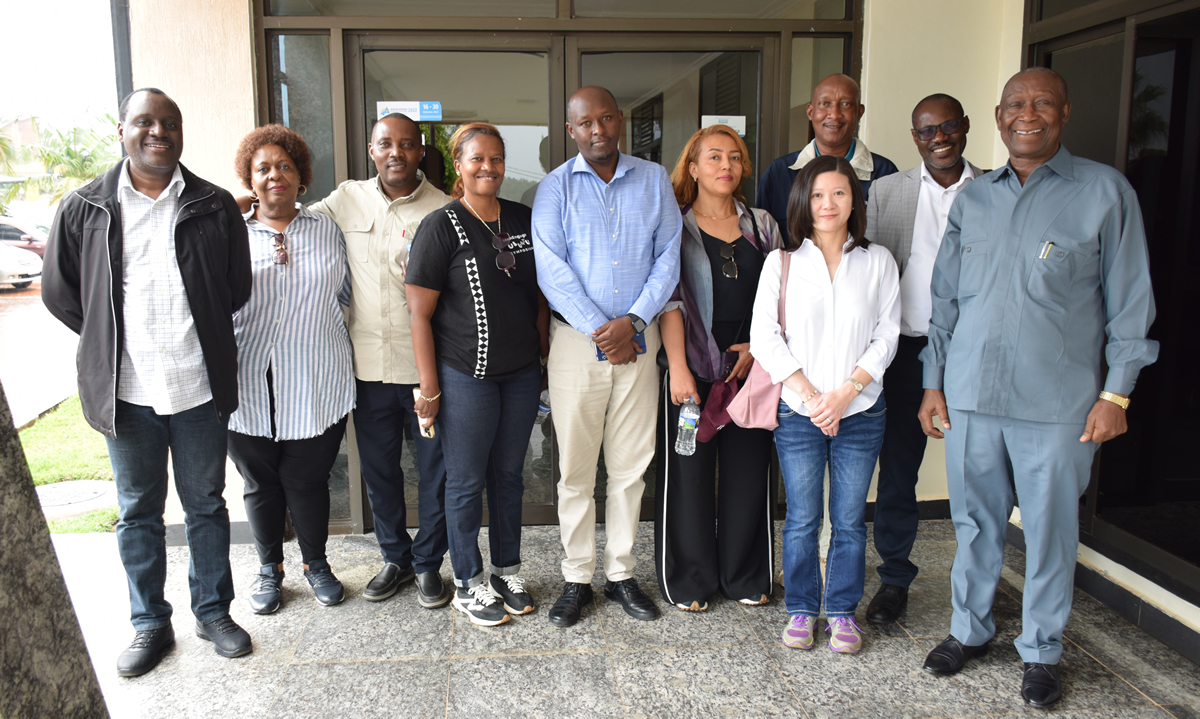
Eng. Jean Pierre Hakizimana, the National Legal Representative of SHDA, addresses the delegation on SHDA’s interventions with the IABM Cooperative
Eng. Jean Pierre Hakizimana, the National Legal Representative of SDHA, addresses the delegation on SHDA’s interventions with the IABM Cooperative.
Over the years, SDHA has benefited from NBD-led capacity-building programmes, peer learning exchanges, and experience-sharing platforms. Leveraging the skills and knowledge gained through these engagements, SDHA is now supporting Iterambere ry’Abahinzi Borozi Ba Makera (IABM) cooperative, a community-based group of more than 1,600 smallholder farmers cultivating in the Makera Watershed of Muhanga District.

SDHA supports IABM cooperative through offering sustainable agriculture extension services, mentorship, and technical guidance in value chain development. These interventions aim to improve food security, build climate resilience, and increase the income and capacity of small-scale farmers.

Policy Influence and Land Access
Mr. Eric Bizimana, Deputy Mayor for Economic Development (centre, in blue shirt), welcomed the delegation at Muhanga District Headquarters and highlighted the strong collaboration between the District, NBDF Rwanda and SDHA
The Deputy Mayor for Economic Development, Mr. Eric Bizimana (centre, in blue shirt) welcomed the delegation at Muhanga District Headquarters and highlighted the strong collaboration between the District, NBDF Rwanda and SDHA
One of the most significant outcomes of SDHA’s work in partnership with Muhanga District was the completion of a feasibility study that explored the relationship between climate change and food insecurity among smallholder farmers in the Makera watershed area. The study offered in-depth analysis and strategic recommendations to increase resilience and reduce vulnerability to climate change within the Watershed.

As a direct result of this evidence-based engagement, the Government of Rwanda allocated 200 hectares of marshland in Makera to the IABM cooperative. This land is now being used for sustainable agriculture, providing secure access to resources and enabling long-term planning for food production and income generation for the members of the cooperative.

Livelihood Improvements and Market Access
The impact of SDHA’s work is already visible. Today, IABM members are involved in the production of hybrid maize seeds, vegetable farming, and grain processing. A portion of their produce is now being exported through the National Agricultural Export Development Board (NAEB),
fffff
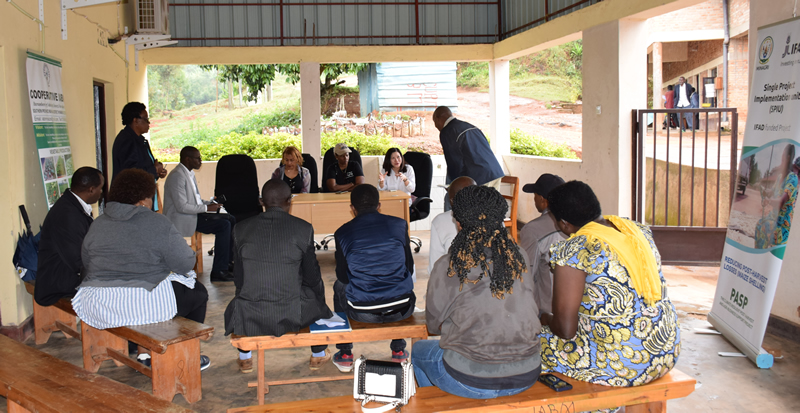
The meeting with representatives of the IABM Cooperative at their offices in Makera, Muhanga District.
connecting smallholder farmers to national and international markets. As a result of these efforts: Incomes for over 1,000 cooperative members have doubled; Farmers now have better access to training and technical support; and The cooperative’s organisational capacity and collective action have been significantly strengthened.

To ensure long-term sustainability, SDHA is working with the Rwanda National Discourse Forum (RNDF) to support the cooperative in developing a strategic plan to scale IABM’s impact.

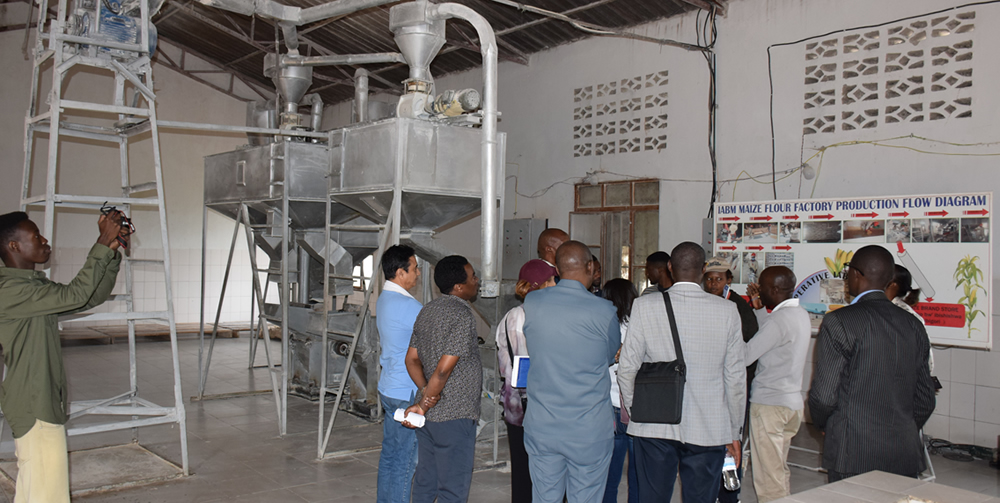
During the site visit, the delegation gained insights into the maize milling process, including cleaning, processing, and packaging, with the facility’s operations clearly visible in the background.
During the site visit, the delegation gained insights into the maize milling process, including cleaning, processing, and packaging. In the background stands the maize milling factory assembly.
Community-Led Solutions to Climate Change
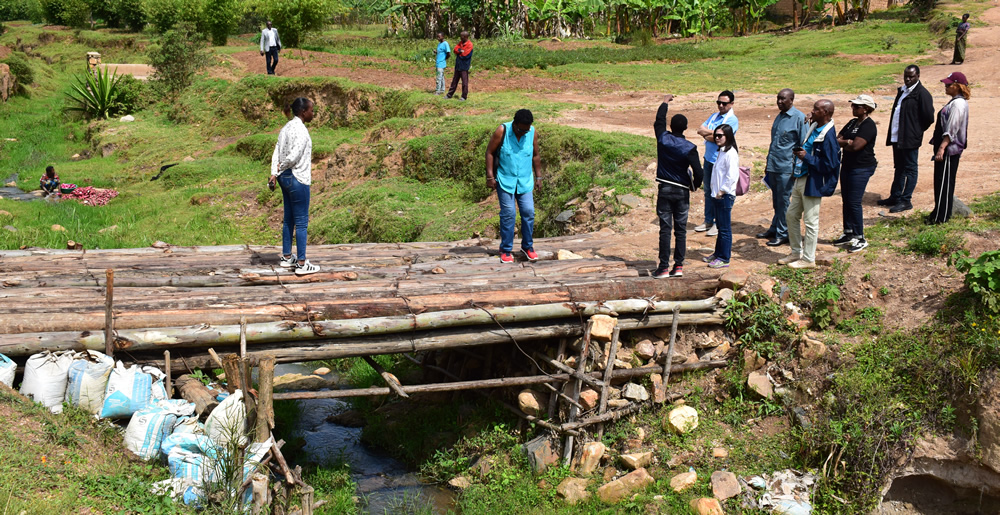
The CIWA/WB delegation had the opportunity to interact directly with IABM members during the field visit. The interaction focused on local innovations that help communities adapt to the impacts of climate change and the challenges that communities face. These included Soil conservation techniques, Small-scale irrigation systems, Rainwater harvesting, and Other climate-smart agriculture practices. These practical solutions are improving resilience and livelihoods while showcasing the power of community-driven action backed by technical support and policy engagement.

Alt text
D
The NBD implementation Model
The field visit demonstrated NBD’s multi-level operational structure, from its Regional Secretariat, through national-level platforms like NBDF Rwanda, and down to grassroots implementation through member organisations like SDHA.
The delegation visited the NBDF Rwanda offices, hosted at the RDHA premises, to engage with the team and learn more about their collaborative efforts in advancing community-driven development.
The delegation visited the NBDF Rwanda offices, hosted by NBD member organisation SDHA, for an engaging exchange on ongoing initiatives.
The CIWA/WB team praised the effectiveness and relevance of this structure and expressed appreciation for the collaboration and interdependence between the NBD Secretariat, national discourse forums, and their member organisations since some NDFs' offices are actually hosted by their own member organisations as it is for NBDF Rwanda.

They also shared valuable insights on how the IABM success story witnessed in Muhanga can be scaled across other countries in the Nile Basin. The delegation expressed strong interest in visiting National Discourse Forums in other countries to learn of the initiatives they are undertaking and their impact in the community.

InfoNile's Andrew Aijuka (black shirt) holds discussions with the NBD team on establishing partnerships with Nile Media Networks

NBD and InfoNile Explore Strategic Partnership to Strengthen Media Engagement Across the Nile Basin

This collaboration will not only enhance NBD’s media reach at local, national, and regional levels but also ensure that the implementation of Subcomponent 1B benefits from the robust storytelling, visibility, and public engagement expertise that InfoNile brings.
Nile Basin Discourse (NBD) hosted and held fruitful discussions with Mr Aijuka Andrew, the Office Manager/Media for InfoNile in Uganda. The discussions centered on forging a partnership under the Nile Civil Society for Climate Resilience (NCSCR) project’s Subcomponent 1B, which focuses on community engagement on transboundary development strategies and projects. Specifically, the dialogue explored opportunities for collaboration on establishing partnerships with Nile Media Networks at the regional level.

InfoNile, a subsidiary of Water Journalists Africa, is a vibrant network of science journalists reporting primarily on water and environmental issues. Since its establishment in 2020, InfoNile has played a vital role in spotlighting under-reported water challenges in the Nile Basin region. Beyond reporting, the platform has excelled in training and mentoring journalists, and through its NileWell platform, it has successfully paired more than 500 science journalists with 250 research scientists to transform scientific knowledge into accessible, impactful stories.

With flagship programs such as #EverydayNile, Environmental Activists, NileWell Science Wednesdays, the Scientists–Journalists Co-production Fellowship, and a wide array of story grants, training, and mentorship opportunities, InfoNile has become a hub for amplifying voices and insights on critical Nile Basin issues.

Given its expansive network of experienced journalists across Nile Basin countries and its established track record in reporting on transboundary water and development matters, InfoNile stands out as a natural partner for NBD. This collaboration will not only enhance NBD’s media reach at local, national, and regional levels but also ensure that the implementation of Subcomponent 1B benefits from the robust storytelling, visibility, and public engagement expertise that InfoNile brings.

The meeting with Mr. Aijuka reinforced shared aspirations: strengthening media linkages, broadening knowledge sharing, and increasing visibility for the Nile Basin’s development and climate resilience initiatives.

Andrew Aijuka with the NBD team at Entebbe


Participants of the handover meeting in Bunabiro Village, Bwikhonge Sub-County, Bulambuli District

Nile Basin Discourse Witnesses Handover of MAR Groundwater Project Sites in Uganda

The MAR Groundwater Project, implemented by NBI with support from GEF and UNDP, will provide access to safe water to over 300 people at each of the five pilot sites. Recognizing NBD’s unique mandate and extensive grassroots networks across the Nile Basin, the project partners have tasked NBD to spearhead community sensitization and awareness-raising at the project sites in Burundi, Kenya, Rwanda, and Uganda.
Last week, the Nile Basin Discourse (NBD) took part in the official handover of project sites by the Government of Uganda (GoU) to the contractor for the implementation of the Managed Aquifer Recharge (MAR) Groundwater Project. The handovers took place on 16th September 2025 in Kakukuru Town Council, Ntungamo District, and on 19th September 2025 in Bunabiro Village, Bwikhonge Sub-County, Bulambuli District.

In Kakukuru, NBD was represented by Eng. Sylvester A. Matemu, Regional Manager; and Ms. Agness Namusiitwa, NBD Board Treasurer and Chairperson of UNDF while in Bunabiro, NBD’s delegation included Ms. Jennifer Kurubeija, Regional Programme Administrator; and Ms. Faith Namansa, NBD Board Member.

NBD Regional Manager Eng. Sylvester A. Matemu addresses Participants in Kakukuru

The handover ceremonies were presided over by the Uganda Ministry of Water and Environment, represented by Mr. Wycliffe Tumwebaze (Assistant Commissioner), and the Nile Basin Initiative (NBI), represented by Dr. Maha Abdelraheem Ismail (Groundwater specialist and Project Team Lead). The events brought together Resident District Commissioners (RDCs), LC 5 Chairpersons, Chief Administrative Officers (CAOs), Town Clerks, LC 1 leaders, landowners, and members of the beneficiary communities.

Uganda Government handing over project site at Bunabiro Village in Bulambuli District

The MAR Groundwater Project: “Enhancing conjunctive management of surface and groundwater resources in selected Transboundary aquifers: Case study for selected shared groundwater bodies in the Nile Basin” is jointly executed by NBI, GEF, and UNDP. Once completed, each site is projected to provide safe water access to more than 300 people.

Recognizing NBD’s unique mandate and extensive grassroots networks across the Nile Basin, the project partners have tasked NBD to spearhead community sensitization and awareness-raising in the four participating countries: Burundi, Kenya, Rwanda, and Uganda.

Inspecting the project site in Kakukuru
Participants visit the project site in Kakukuru - Ntungamo

The Kakukuru site in Ntungamo and Bunabiro site in Bulambuli are part of the five pilot locations under the project, two in Uganda and one each in Burundi, Kenya, and Rwanda where site handovers are scheduled to follow in the coming weeks.

 
NBD Logo


NBI Logo

GEF Logo
UNDP Logo
 
Uganda Nile Discourse Forum Members (Farmers) at one of the community dialogues on Climate Smart Agriculture

Civil Society Targeting Smallholder Farmers and Climate Smart Agriculture to Enhance Climate Change Action

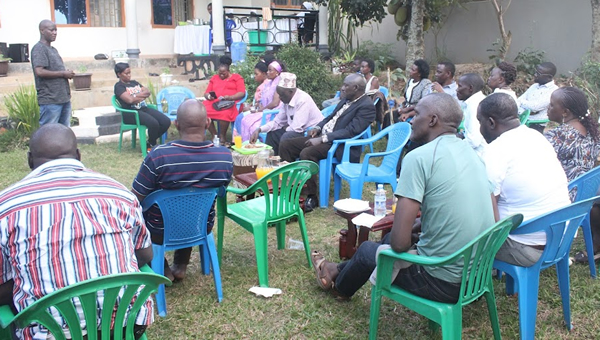
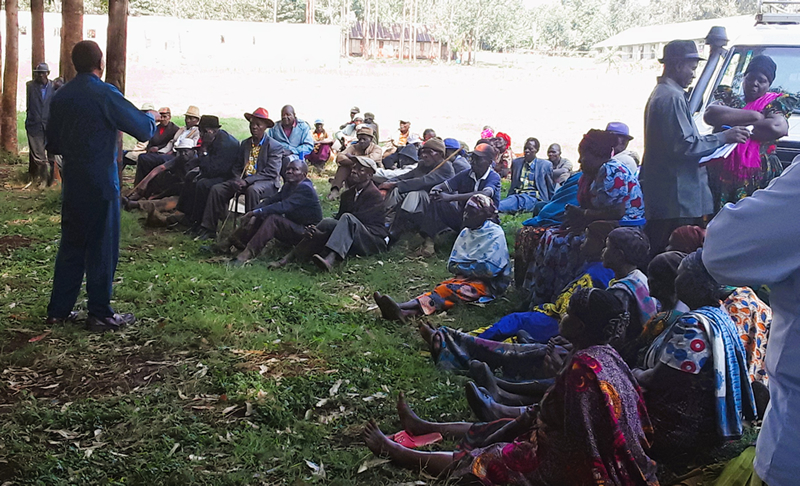
Uganda Nile Discourse Forum (UNDF) held strategic community dialogues on Climate Smart Agriculture with its member farmers. The dialogues aimed at promoting Climate change responsive agriculture as means to building resilience of communities and combatting adverse effects of climate change including: drought, flooding, famine, displacement among other challenges. The dialogue made strong recommendations from the grassroots communities; working on the outcomes of the dialogue, UNDF has embarked on supporting farmers to build associations/cooperatives with a goal to increase farmers’ resilience to climate change, and improvement of their agricultural produce volumes and quality.
In June 2023, UNDF organized community dialogues of Climate Smart Agriculture with its member farmers, The dialogues aimed at promoting climate smart agriculture: working towards building the resilience of communities and combatting effects of drought, flooding and other climate change challenges.
Participants acquired knowledge on sustainable adaptation measures that can build resilience to the adverse effects of climate change. These measures include: tree planting, mulching, soil and water conservation measures, planting crop varieties that are quick maturing and drought resistant, pests and disease resistance and control measures, use of appropriate low-cost irrigation methods and water harvesting, control of wetlands encroachment, use of alternative energy sources other than firewood, reduction in use of inorganic fertilizers/herbicides/pesticides, separation of bio-degradable and non-biodegradable materials among others. The dialogue was attended by over 50 mainly women and youth from the community, Agri-entrepreneurs, and dealers in the agricultural chain inputs and services.

Key Highlights presented at the dialogue:

Agriculture is the back bone of the Uganda’s economy and thus contributes the biggest part of the country’s GDP. The sector supports millions of livelihoods and employs 70% of the working population of whom 71% are women. It provides raw materials for non-agricultural sectors. The sector accounted for 20% of GDP in the fiscal year 2017/2018 and 43% of export earnings. Coffee is the main cash crop that contributes 19% of the country’s export and the Government has planned to increase production to 1.33 million tonnes of processed coffee by 2020 (Ministry Agriculture Animal Industry and Fisheries Report – 2018). Increase in agricultural production and productivity leads to increase in the income of the rural population. This makes agriculture an entry point for poverty eradication across the country.

Agriculture’s contribution to GDP according to Uganda bureau of statistics (UBOS) dropped to 21% in the 2017/18 financial year compared to 21.5% in 2016/17. The drop has been consistent and is reflected in the other financial years. According to the report Uganda is highly vulnerable to climate change which not only affected agricultural output but has long term effects such as entrenching poverty especially among the rural communities.

The poverty level has increased from 19.7 % to 21.4 percent meaning 8 million persons are below the poverty line – hardly earning $1 USD in a day (Uganda Bureau of Statistics - Uganda National Household Survey (UBOS – UNHS 2019)). Uganda has also recorded the highest youth unemployment rate in Sub -Sahara Africa. Highest poverty levels are still recorded in the rural areas across the country.

Up to 80% of the poorest Ugandans live in rural areas and they are a prime target of government development efforts. These rural communities are up to 90% smallholder farmers; growing a few crops and rearing a few animals on approximately 2.5acre pieces of land and mostly producing for home consumption (New vision report dated 23rd Feb 2010 http://www.newvision.co.ug).

The recent low production and productivity growth in the agricultural sector has been mainly attributed to the adverse effects of climate change coupled with challenges of high costs of inputs, slow technological innovations and adoption - particularly amongst women farmers being the majority labour force; poor production techniques; declining soil health; poor management of pests and diseases; limited access to land and agricultural finance; a weak agricultural extension system that is limiting access to relevant information with access to extension services lowest among women; over dependency on rain-fed agriculture as well as limited market access. Uganda has more than 75% of its total land as arable land but the country’s agricultural industry is characterized by poor and inappropriate management practices. This is as a result of soil mineral extraction, structural degradation and soil erosion.

The negative effects of climate change - notably prolonged dry spells, flooding and severe storms - have exacerbated the challenging conditions. The farming communities basically rely on rain-fed conditions without irrigation. The transportation of agricultural produce from the areas of production to the final markets is hindered by the poor road network especially during the rainy seasons thus reducing profit margins.

The overall objective of the agriculture sector in the current National Strategic Plan is to improve household food security and income while conserving the environment. It aims to improve Biological and Economic Productivity of Crops and Livestock, strengthen farmers and community organizations, improve marketing and Value Addition, and improve resilience and mitigation to climate change effects. In order to achieve these interventions therefore, government has taken some initiatives including Operation Wealth Creation (OWC) and National Agricultural Advisory Services (NAADS) programs that are intended to provide extension services to farmers in terms of knowledge and quality farm inputs. The NAADS program is farmer-driven and farmers are represented at the sub-county by secretaries for production. The secretaries for production at the sub-counties are elected by farmers at grassroots to represent them at the sub-county executive committee. Farmers at the grassroots are targeted for the program to enable them articulate their roles better and demand for quality service provision.

To ensure sustainable natural resource management, the government through the ministry of water and environment has instituted the National Environment management Authority (NEMA) tasked with the protection of the environment and making the Environment impact Assessment (EIA). NEMA collaborates with the environment offices at national, district and sub-county levels to effectively carry out its duties.

Unfortunately, the success of the government schemes has been low. The major constraint is the inadequate resources to extension workers and mixing politics with development work. The Government of Uganda had planned to recruit 5000 extension workers across the country by 2019 but only 3800 were recruited. The deployed extension workers reach out to farmers at ratio of 1800 households per extension worker (Uganda Media Cetre - www.mediacentre.go.ug, 5th March 2019). But the internationally accepted level is 500 households per extension worker. This leaves a huge knowledge and service delivery gap.

Besides the government schemes, Uganda also supports various development interventions initiated by other development partners which are aimed at improving the living conditions of the communities. The government gives priority to development programs that are geared towards poverty eradication and sustainable livelihoods.

Discussion and conclusions raised by participants

tttttttttt
.
  • Participants raised the importance of getting climate change facts and figures as the sure way to inform decision making and action. Often times, there are misconceptions, myths and lies about climate change that need to be put straight. They were thus grateful for the gesture raised by the UNDF and called for many more such opportunities for learning.
  • Farmers present highlighted the importance of modern and affordable smart agricultural practices calling on the UNDF leadership to enlighten them more on cheaper but sustainable means of production.
  • Irrigation agriculture was a priority method that is becoming inevitable due to the irregular rainfall seasons and therefore there’s need to find affordable irrigation infrastructure for farmers.
  • Participants were concerned about the high cost of value addition and packaging for farm products. They thought it important to urge government and other decision makers to make this more accessible and affordable to farmers.
  • Farmers present resolved to form or join already existing farmer groups, cooperatives and SACCOS in order to tap into existing resources that the government is investing at Parish level.
  • The procedure of family hosted meetings was encouraged especially now that resources are scarce to hold meetings in hotels and public places. Members were encouraged to invite others for such productive gatherings.


Actions beyond the dialogue

Subsistence communities represent the poorest in Uganda, but they are also the most vulnerable to climate change and other challenges that lead to losses in farming. These communities need to be helped to explore the untapped opportunities in better land-use practices, and also get encouraged to form/join smallholder farmer institutions to build their capacity. This is a direct call to institutions like the UNDF to undertake farmers’ empowerment through increasing their capacity to organize themselves into strong farmer association /cooperatives to enhance their lobbying and marketing capacity.

To this end, UNDF has embarked on building farmer associations/cooperatives that will increase agricultural produce volumes and improve quality. This will be made possible through collective marketing and putting in place quality controls to increase volumes that will result into better prices.


Author:
Mulumba Mathias Suuna,
National Technical Expert, Uganda Nile Discourse Forum (UNDF)


PROJECT

Farmers working at a sunflower demo farm as part of the training

Empowering Smallholder Farmers in Climate Proofing Edible Oil Production in Mara Region - Tanzania

In Mara Region, most Sunflower Small Holder Farmers (SHFs) struggle due to lack of access to inputs - most of Agro-dealers are located in towns and peri-urban areas; Seed affordability - high prices for hybrid seeds make farmers uninterested or unable to use it; Low seed quality - germination issues with some seed varieties makes farmers lack confidence in hybrid/ improved seed: and Unavailability of seeds during planting seasons, all together contributing to low yields versus the demand for sunflower seeds. In 2021, SHIMATA initiated a project with the Objective of addressing the deficit of sunflower seeds while creating employment opportunities for women and youth through sunflower farming in Mara region.
In 2018, a TNDF member organization Shirika la Maendeleo Tarime (SHIMATA) rolled out awareness raising amongst small holder farmers on dry season sunflower (scientifically known as 'Helianthus Annus’) production. In Tanzania, the crop thrives in semi-arid zones. Farmers harvest an average of three-to-five bags per hectare, instead of 10-to-12 bags due to poor crop production practices. Sunflower seeds are a raw material for production of cooking oil and the husks from its seeds are used to feed animals.

In 2021, the annual demand for cooking oil in Tanzania was 600,000 tonnes. The country produced only 290,000 tonnes, leaving a deficit of 310,000 tonnes. The annual sunflower seed demand in Tanzania stands at 5,800 tonnes, while the country produces only 1,340 tonnes. About 1.7 million tonnes of seeds are required to produce700,000 tons of cooking oil.

In Mara Region, most Sunflower Small Holder Farmers (SHFs) struggle due to lack of access to inputs - most of Agro-dealers are located in towns and peri-urban areas; Seed affordability - high prices for hybrid seeds make farmers uninterested or unable to use it; Low seed quality - germination issues with some seed varieties makes farmers lack confidence in hybrid/ improved seed: and Unavailability of seeds during planting seasons.

In 2021, SHIMATA initiated a project with the Objective of addressing the deficit of sunflower seeds while creating employment opportunities for youth and women through sunflower farming in Mara region. 50 farmers were trained in irrigation schemes and storage mechanisms. Specifically, the project intended to:
  1. To enhance youth and women with skills and techniques for Good Agriculture Practice (GAP) and access to farming equipment
  2. To build the capacity of youth on post-harvest handling and storage management (PHHS)
  3. To enable youth and women to form and register farming associations and improve existing ones.

A SHIMATA official addresses participants of one of the village meetings that were held to plan for implementation of the project
A SHIMATA official addresses a village meeting at implementation planning of the project


Engagement with Local Government Authority

Farmers in Tanzania earn Sh3.1 billion from 450 tons of sunflower seeds produced locally per year, instead of Sh38.9 billion that would be generated from the total of 5,528 tons of seeds required. Therefore, farmers lose Sh38.9 billion annually that is spent on seeds imports. The Local Government Authorities particularly village executive officers and Village chairperson were involved in mobilizing and influencing youth and women for enrolment in the project. The district Agricultural Officer and extension officers were the main facilitators/ trainers and Trainers of Trainers. The Ward councillors were also involved to particularly advocate for financial loans provided by the district council to youth and women from 10% earnings.

Small Holder Farmers Associations

Women and youth were grouped in Small Holder Farmers association. The aim is to enhance formulation and design of the project for succession and project sustainability. In future these associations would be equipped to venture into Oil Milling. Associations would as well ensure constant market for farmers’ harvested crops. Trainings also emphasized on Good Agricultural Practice (GAP) while focusing on rotational farming and climate friendly farming.

Project Partnership

  1. The project is implemented in partnership with Victoria Farmers and Fishers Organisation (VIFAFIO) located in Mara region. VIFAFIO is also a member of TNDF  and duly represented TNDF in the project. VIFAFIO's role in the project is to mobilize and coordinate beneficiaries in capacity building and field activities; it also prepares reports for such activities and submits to SHIMATA.
  2. The Local Government Authorities (District and village level) were engaged in the project to mobilize and encourage women and youth participation in the project.

Gender Mainstreaming

An extension officer works with Ms. Mwajuma's of Kiore village to start sunflower farming on her land
An extension officer works with Ms. Mwajuma's of Kiore village to
start sunflower farming on her land
This project focus on empowering women and youth on sunflower farming to tackle the deficit of sunflower seeds necessary for cooking oil production, manufacture animal feeds, shoe polish, motor car brakes, as alternative charcoal, etc. A total of 445 women and Youth from Tarime, Serengeti, Butiama, and Musoma rural districts were trained in off-season sunflower production. The project selected 50 champions among the 445 to be trainers of trainees. 30 champions were women. The farmers’ association’s formation also considered gender equality thereby including women in leadership to increase their participation and opportunities. This also provides an opportunity and platform for women rights activism.

Social Inclusivity

In alignment with the Convention on the Rights of People with Disability [CRPD] 2006, the Charter on Inclusion of Persons with Disabilities in Humanitarian Action (2016), and WFP policy on Protection and Accountability to the affected population, disability inclusion is integrated throughout the project. 21 PWDs were involved in trainings and symposiums of this project. Persons with disabilities were also elected in leadership position of farmer association.

Accountability Towards Affected Population (AAP)

SHIMATA is committed to Accountability for Affected Populations (AAP) by ensuring that programme design, implementation, and monitoring and evaluation processes and decisions are informed by and reflect the views of affected people. To operationalize these commitments, the following three key areas were adhered to:
  1. Information provision: Provided accurate, timely and accessible information to the affected people about the project progress.
  2. Consultation: Involved and consulted local governments, women and youth groups, and existing farmer associations in seeking views of the affected population and invite feedback throughout the project.
  3. Complaints and feedback mechanisms which provided phone number, email and office address to affected people and all its target members to voice complaints and provide feedback on areas relevant to operations in a safe and dignified manner. A formal CFM system included procedures for recording, referring, taking action and providing feedback to the complainant.


SHIRIKA-logo
Shirika la Maendeleo Tarime (SHIMATA) is a Non-Governmental Organisation established in 2009 in Mara region aiming at empowering communities through action on poverty reduction, human rights advocacy, health services, sanitation and hygiene activism as well as income generating projects. SHIMATA is a member of the Tanzania Nile Discourse Forum (TNDF) operating in Tarime, Serengeti, Butiama, and Musoma rural districts of the Mara Region.
Participants of the Consultation workshop in Addis Ababa - Ethiopia, May 2023

Climate Displacement in Africa; Regional Consultations

Over the course of two days, a number of outcomes were approved, including the development of a brief concept paper, which highlights opportunities for identifying responses in coherent and adequately funded Africa, based on human rights, gender, and climate justice. Civil society organizations are to use the paper for advocacy at both national and regional levels.
The cases of climate displacement are increasing due to the impacts of climate change, requiring action to support communities and people at risk and to provide practical solutions that create opportunities for safe migration. A wide range of potential responses to climate-related human mobility are required, including legal and institutional policy reforms, as well as practical support mechanisms, before, during and after migration and displacement resulting from climate change. These solutions ought to guarantee human rights, and preserve the dignity and safety of affected persons, whether they are displaced persons or migrants within areas at risk, while addressing movement within and across borders.

Within the framework of the global call to address issues related to human rights and protection gaps in the context of climate and human mobility in 2023, the Climate Migration and Displacement Platform (CMDP) and the ACT Alliance, in cooperation with the German Friedrich Ebert Foundation, organized a series of national and regional activities related to human rights and justice, in response to the effects of climate change on displacement and migration, where a series of regional consultations are being organized with civil society organizations in Latin America, Asia, the Pacific, and Africa.

These consultations aim to develop common understandings of potential current and future trends in climate-induced human mobility, including displacement and migration, and to identify strategies for targeted institutional and structural advocacy engagement. In particular, the consultation seeks to identify ways for civil society organizations to build coordinated national and regional responses to migration as a result of climate change impacts, including through partnerships with grassroots networks and research communities.

The Egypt Nile Discourse Forum (EgNDF) participated in the regional consultative meeting for Africa, which brought together representatives of civil society organizations, researchers, leaders of communities affected by climate change, and activists in the field of climate response and that of protection and defence of migrants' rights.

This meeting is the first step to identifying ways to frame climate-related migration issues in Africa, including possible solutions for policies and practices in the context of human rights, as well as climate programming and advocacy. It also includes a review of existing watch lists for climate-related migration and displacement patterns on the African continent.

The meeting was held in the Ethiopian capital, Addis Ababa, included representatives from Egypt, Morocco, Mali, Malawi, Zimbabwe, Zambia, Kenya, Ethiopia, Somalia, Tanzania, Sierra Leone, Rwanda, Nigeria, Liberia, Gambia and South Africa, discussed: prioritizing goals and strategies to enhance migration advocacy, climate action at the national, regional and global levels, as well as considering ways to enhance civil society collaboration to advance climate change migration solutions.

Over the course of two days, a number of outcomes were approved, including the development of a brief concept paper, which highlights opportunities for identifying responses in coherent and adequately funded Africa, based on human rights, gender, and climate justice. Civil society organizations are to use the paper for advocacy at both national and regional levels.

The meeting also recommended directing civil society organizations and grassroots networks in their exchanges with national and regional decision-makers, which contributes to coordinating messages across various policy sectors and social movements, including messages related to technical support, capacity building and necessary financing, in line with the national priorities of each country.


Some of the participants at the seminar that took place in Cairo - Egypt

Women Empowerment in Africa – Egypt Picks Lessons from Tanzania

The symposium discussed several important topics, including the achievements made by Tanzanian women in various economic, social and political fields, and the role of civil society in supporting women, while presenting the challenges that women still face in obtaining equal rights in Tanzania, as well as the role of Tanzanian men in supporting women and girls.
Over the past 75 years, there have been many notable achievements in the field of women's rights since the adoption of the Universal Declaration of Human Rights. Women have influenced the text of the Declaration which has contributed to decisive social changes, and they continue to be at the forefront of social change that enables more people to enjoy their rights. This has turned into positive changes in the lives of women and girls. Today, more women occupy leadership positions, are elected to lead governments, and occupy positions in decision-making structures.

International Women's Day comes annually in each March, to celebrate International Women's Day, in appreciation of their essential role, which represents the cornerstone of the growth and renaissance of their society, especially, African women who have stood exemplary for women in the world over the past years, through serious steps taken by many African governments in the field of empowering women and breaking barriers.

In Tanzania, for example, since independence, the government has taken real steps to empower women, which has now made it a model for empowering African women, and the authorities in eastern Africa to take more effective steps to further close gender gaps.

In this context, Egypt National Nile Discourse Forum (EgNDF) collaborated with the African Centre for Research and Strategic Studies in Cairo and organized an interactive seminar entitled "Women Empowerment in Africa... Tanzania as a Model" in celebration of the International Women's Day, in partnership with the Tanzanian Student Union and the Tanzanian community in Egypt, under the auspices and in the presence of representatives of the Embassy of Tanzania in Cairo.

The symposium discussed several important topics, including the achievements made by Tanzanian women in various economic, social and political fields, and the role of civil society in supporting women, while presenting the challenges that women still face in obtaining equal rights in Tanzania, as well as the role of Tanzanian men in supporting women and girls.

In her speech at the opening session, Dr. Ghada Fouad, head of the African Centre for Research and Strategic Studies, and a member of the Egypt National Nile Women Network, explained that Tanzania was among the countries to seek women empowerment, and was among the first African countries to propose allocation of a women’s quota in its Parliament; a move that fostered the rise of women like Mrs. Samia Hassan the president of the Republic of Tanzania today.

NBD's Elham Afifi, Second (2nd) from Left attending the Seminar
NBD's Elham Afifi, Second (2nd) from Left attending the Seminar.
Dr Siham Jibril, Chair of the Provincial Committee of the National Women Council, expressed her happiness with what she heard of the efforts to empower African women and explained that the problems and challenges facing Tanzania are shared by almost all countries of the continent. She also presented the efforts of the National Council for Women towards empowering Egyptian women and putting them on the right path to participate in the development Of the country.

Elham Afifi, the National Coordinator of the EgNDF shared about the Nile Basin Discourse (NBD) and its gender strategy that focuses on empowering women in managing water resources, and the formation of the Regional Nile Women Network to help achieve this purpose. She also spoke about the activities of the EgNDF at both national and regional level.

The workshop concluded with a set of interventions and recommendations on the need for economic empowerment of female breadwinners in Tanzania, equality in employment opportunities and salary rates between men and women, prevention of early marriage that cause early divorce, access to study and use of technology for Tanzanian women, increasing women's representation in parliament, and equal access to health services, and increase in staff and equipment in hospitals and health facilities in villages.


Author:
Elham Afify, National Technical Support Expert - Egypt


Some of the plant species with potential to repel mosquitos (Left to Right): Nasturtium (Tropaeolum majus), Cymbopogon citratus (Lemon Grass), and Tarragon (Artemisia dracunculus)

Ethnobotanical Survey of Plant Species Used as Mosquito Repellents in Controlling Health Challenges Caused by Floods

Uganda is experiencing adverse effects of climate change including more frequent floods in many parts of the country. The flood grounds are a perfect breeding ground for mosquitoes, which transmits malaria and other diseases that has adversely affected Ugandans in recent times. Rose Nakanwagi - a Uganda Nile Discourse Forum(NDF) Youth Champion on malaria control accomplished a community-based study on drought resistant plants that are also mosquito repellent in Greater Masaka using community science.
Uganda is experiencing adverse effects of climate change including more frequent floods in many parts of the country. These floods are a perfect breeding ground for mosquitoes, which transmit malaria and other diseases that have severely affected Ugandans in recent times.

The natural events of flooding cannot be prevented but their impact can be mitigated. Emphasis has been shifted from disaster response to risk management, including the improvement of flood forecasting and warning systems with the addition of health protection during response and recovery phases. The Uganda Ministry of Health and the Civil Society Coalition Against Malaria (UCAAM) - a member organisation of the UNDF have taken keen interest in alternative means for controlling/preventing malaria using natural repellent plant species.     It has however been noted that although the use of medicinal plants in Uganda/Africa has been in existence for thousands of years, there is not much documentation. As a result, the pharmacopoeias are in people’s minds and the knowledge is only passed orally (Kokwaro, 1995). Thus, the efforts to research on the plants presents one of the maiden studies by a UNDF Climate Change Resilience Youth Champion Rose Nakanwagi. The study was conducted in Masaka district located in the Central region of Uganda. Plants were collected and transferred to Makerere University at the Department of Plant Science, Microbiology & Biotechnology. A total of 150 respondents including village elderly men and women, and herbalists were selected for the study.

Overall, the research project’s intent was to document and preserve indigenous knowledge about drought resistant plant species used to repel mosquitoes in Masaka District pursuant to a future research and development of standardized bio-pesticides.


Brief Findings on Plant species used to repel mosquitoes

Community engagement to scale-up planting of mosquito repellent plants
Engaging the community to scale-up planting of
mosquito repellent plants
Malaria and flooding cannot be separated. When floods are receding, floodwater creates stagnant pools that not only provide a perfect breeding ground for mosquitoes that transmit malaria but also increase the chances of spreading waterborne diseases, such as hepatitis A and cholera.

Despite decades of malaria control efforts, malaria and other mosquito-transmitted diseases remain the major cause of maternal death and of children under five years of age worldwide. It is estimated that malaria causes between 1.5 to 3.0 million deaths per year in the tropical and subtropical areas (Kweka et al., 2008). Uganda ranks fourth among the highest malaria burdened countries in Africa according to the World Health Organization (WHO, 2020). An estimated 8 to 13 million cases occur per year and account for approximately 30% to 50% of outpatient care, 15% to 20% of health facility admissions, and 9% to 14% of inpatient deaths in the country (Musoke et al., 2015).

Over 80 plant species were reported being used in Uganda as either herbal remedies against malaria or repellents to mosquitos (Adia et al., 2014). World Health Organization recommended use of different parts of locally available plants and their products to repel mosquitoes such as Cymbopogon citratus (Lemon grass), Rosmarinus officinalis (Rosemary), Eucalyptus globulus (Eucalyptus) and others. The insecticidal property of Cymbopogon citratus (Lemon) is credited to various bioactive cyclic and acyclic terpenes present in its oils for controlling mosquito larvae (Ojewuni et al., 2017).

Plants such as Mentha spicata, Eucalyptus globulus, are a valuable source of bioactive compounds which include essential oils (Giacometti et al., 2018). Leaves constitute the main part used in the control of malaria (Stangeland et al., 2011). These plants are potential sources for the development of novel and more potent antimalarial drugs and insecticides. However, further studies should be undertaken to validate their efficacy and safety, and to standardize practice.


Recommendations for UNDF/NBD Family

  1. This study is an eye opener to the Nile basin family on the importance of community level research in specifically enhancing the use of environmental indigenous knowledge to solve health related and other challenges Nile communities face. The UNDF is taking this further with the MOH and UCAAM to plan for more such studies in different flood prone areas of Uganda.
  2. The findings indicate that 40% of the 132 respondents were not aware of the factors leading to breeding/multiplication of mosquitoes in Masaka district. This is a great finding to inform programming of the NDFs as far as their cardinal role of sensitizing communities is concerned. It is assumed that communities know some of this basic information but equally surprising through this evidence that they don’t. UNDF therefore plans to provide sensitization and training, prioritizing women and youth climate resilience champions to ensure communities have these basic facts at their fingertips.
  3. UNDF will use this study as evidence to complement its workplan generated during recent events, trainings and structure set-up like the Nile Women Network, Youth and Women Climate Resilience Champions and Regional Cities Projects. Plans are under way to engage Rotary and Rotaract Clubs within their Greening project to prioritize repellent plants, draw a pilot plan with stakeholders on promoting repellent plants at city level, malaria support partners to provide initial support for opening up a demonstration nursery regionally among other innovations.
  4. Promoting repellent plants is not a stand-alone initiative, it has several community benefits. There are several plants traditionally used for different purposes including repelling different types of insects, these plants may vary from region to region. All of these plants will add beauty to compound gardens, used for other medicinal solutions, with some providing additional cooking benefits among thousands of benefits to the ecosystem within the Nile Basin.
  5. Many Repellent plants have also been found to be drought resistant and therefore contributing to NBD’s mandate and one of NCCR’s project outcomes of supporting communities to manage drought. Plants such as Lemon Balm/kiwankulata which is a member of the mint family, also known as horsemint and beebalm is a very easy plant for beginning gardeners to grow - even if you don’t have a green thumb! Lemon Balm is a very hardy plant, it resists drought, and it grows well even in shade. It is a very fast growing and sometimes aggressive plant, so you might want to contain it to a pot, where you can move it to wherever you like to ensure that it doesn’t take over your garden.
  6. According to the study, Malaria has caused high rates of mortality and morbidity among the people of Masaka district and as observed nationally and internationally. It’s mainly due to the high poverty levels, delayed and expensive treatments of the infected individuals thus resulting into economic loss to the country and death of future leaders. Tackling this epidemic has far wider advantages to the livelihoods of the Nile Communities especially women and children.
  7. Plant-based mosquito repellents will be of assistance to individuals who experience side effects associated with antimalarial drugs and the high medical costs. The results of this study lay a backbone for further research and efficacious tests in the development of standardized antimalarial drugs and bio- pesticides that are effective, eco-friendly, easily biodegradable and inexpensive.
Nakanwagi Rose
Nakanwagi Rose is a female Ugandan, a zoology and botany graduate of Makerere University. She teaches Biology & sports science at Kyambogo University. Rose is a FAO Youth Champion in Uganda and a member of Greater Masaka Coffee Farmers' Cooperative Society.
As a botany student, due to the increased resistance of malaria vectors towards drugs in Uganda, she carried out an ethnobotanical survey of plant species used in the control of malaria vectors in Masaka district.

Author:
Nakanwagi Rose,
Climate Change Resilience Champion, Uganda Nile Discourse Forum (UNDF)

Email: This email address is being protected from spambots. You need JavaScript enabled to view it.
Tel: 0774471601 / 0757039300

Women in small-scale fisheries at Charity Fish Processing group in Mwanza, Tanzania

Promoting An Enabling Environment for Women Networks on Sustainable Small-Scale Fisheries in Nile Upstream - Lake Victoria, Tanzania

The process has strengthened Tanzania Women Fish Workers Association (TAWFA)'s capacity through the provision of leadership training for its members, their capacity and commitment to engage in co-management systems that improve conservation outcomes, climate adaptation measures, and enhanced food security; and conducting elections of leaders from the districts.
In the years 2021 and 2022, the Environmental Management and Economic Development Organization (EMEDO) - a member of the Tanzania Nile Discourse Forum (TNDF) conducted a study on Women’s Role, Struggles and Strategies across the Fisheries Value Chain in the Lake Victoria—Tanzania. The study was prioritized through research conducted by Ministry of Livestock and Fisheries in 2020. In the Tanzania side of Lake Victoria, the current fish production figure is around 422,859.78 metric tons per year, with approximately 95 percent of fish sourced from small-scale fisheries and the remaining 5 percent from large-scale commercial fishing. The sector employs more than 4.5 million Tanzanians who engage in earning their livelihood from fish and related fish products. Women constitute a significantly big number of small-scale fisherfolk, which means it is a self-employed job and provides direct food security, nutrition and other multiplier effect to the community. Therefore, Tanzanian women have a big role in the fishing sector; and this prompted EMEDO to conduct the study on “Women’s role, struggles and strategies across the Fisheries Value Chain in Lake Victoria -Tanzania”, with the aim to understand the challenges, opportunities and other important spheres that surrounds them as women in fisheries.

The Study Objectives Were:

  1. To empower small-scale fisheries communities with a view to contribute to more sustainable and climate resilient livelihoods and food systems.
  2. To stir the implementation of FAO Voluntary guidelines for securing sustainable Small-scale Fisheries in the context of food security and poverty alleviation (SSF guidelines), and to appreciate the need for empowering women in the sector;
  3. To promote dialogue and collaboration between and among small-scale artisanal fishers, fish farmers, fish workers, governments, and other key partners along the value chain; and to further strengthen their capacity to enhance sustainability in fisheries and aquaculture and to enhance their social development and well-being.

Findings From the Study Underlined a Series of Challenges Including:

Women wade through water to fish boats to purchase fish for resale - Lake Victoria, Mwanza
Women in Mwanza wade through water to access fish boats to buy fish for resale.
  1. Poor infrastructure at landing sites and insecure fisheries resources which hugely affect women participation as they may not be brave enough to face some challenges as men do
  2. Women face time limitations due to their domestic duties overlapping with their fishing activities
  3. Lack of educational/training opportunities and development programs for women in fisheries unlike men
  4. Lack of access to financing, as many women have no collateral needed to access tangible loans. The interest rates on the loans is also high for the women to afford repayment.
  5. Pressure from the rapidly growing population with increased competition for access to fisheries’ resources
  6. Pressure from market competition and export markets that marginalize women to access the opportunities available in the market
  7. Climate change and other social, cultural, political, economic barriers and poor institutional frameworks.

EMEDO Interventions

The findings stirred the idea to establish a national network of women in fisheries namely Tanzania Women Fish Workers Association (TAWFA) in June 2021. The network has proven to be a safety net for women where they can rely on social capital including networks that increase trust, ability to work together, access to opportunities, membership for women groups in small scale fisheries and resilient approaches to address the adverse impacts of climate change.
EMEDO conducted consultative meetings with Tanzania Women Fish Workers Association (TAWFA) in the Lake-zone regions of Mwanza, Kagera, Mara, Simiyu, and Geita to identify the prevalent opportunities, challenges and disparities; and proposed for scalable solutions that will generate solutions for food security and climate resilience. Through consultations EMEDO engaged with the Ministry of Fisheries and Livestock and Local Government Authorities to raise awareness on the challenges and jointly plan for promoting sustainable outcomes for households including food security.

Significance and Impact of the Interventions

Tanzania Women Fish Workers Association (TAWFA) - Lake Zone at a regional consultative meeting in Mwanza
TAWFA - Lake Zone leaders at a regional consultative meeting in Mwanza
The process has strengthened TAWFA’s capacity through the provision of leadership training for its members, their capacity and commitment to engage in co-management systems that improve conservation outcomes, climate adaptation measures, and enhanced food security; and conducting elections of leaders from the districts.
Regional and zonal level leaders who are focal representatives of the network have promoted the women’s bargaining power, as network members are now informed of the market across the regions.
TNDF has been contributing towards facilitation of capacity strengthening in TAWFA interventions through its member - EMEDO. In this particular project, TNDF is using its vast experience in network formation to support TAWFA. TNDF continues to participate in TAWFA stakeholder forums for knowledge sharing, expertise and visibility.


Women sorting small sardines/dagaa at Busekela landing site in Musoma, Tanzania


AMEDO Logo
Environmental Management and Economic Development Organization (EMEDO) is a non -profit organization established in 2005. EMEDO is a member of the Tanzania Nile Discourse Forum (TNDF) and is based in Mwanza Region on the shores of Lake Victoria. EMEDO aims to reach out, listen and encourage voices, and advocate for needs of rural communities. The organization has grown organically in direct response to lessons learnt along the way, grounded in the conviction that real and lasting change depends on commitment, ownership and self-reflection. EMEDO’s main activities focus on enhancing capacities of community groups to effectively mobilise, having their voices heard, rights recognized and respected, and to influence local, national and international policies that affect their rights of access, use and control of natural resources for improved livelihoods. EMEDO operates under 3 thematic areas which are; Sustainable Fisheries Management; Water Sanitation and Hygiene, and Environmental Management.
Author:
Lucyphine Kilanga,
Project Officer , EMEDO
Tanzania Nile Discourse Forum

Participants at the International Women’s Day Celebration event - mainly idle teens, young mothers, and ex combatants; majority of whom are currently enrolled for skills training with ACPDI

Celebrating International Women’s Day: Highlight the plight of the marginalized, idle teens, and young mothers in the North Kivu province of DRC

The need for supervision of young/teen mothers and idle girls remains enormous in the Congolese Nile basin region. The dire need is a direct consequence of the security situation that’s hindering the socio-economic development of young people, most of whom are illiterate, unemployed and significantly marginalized.
World over, civil society plays key role in the advocacy for social - economic development of marginalised communities. In observation of the International Women’s Day 2023, the CSOs of North Kivu Province of DRC with the leadership of Action des Communautés Payssanne pour le Developement Integré (ACPDI) (Action of Peasant Communities for Integrated Development) ceased opportunity of the day to bring together and highlight the plight of marginalised idle teens, and young mothers within the region.

ACPDI is a local NGO and a member of Nile Basin Discourse subscribing through the DRC Nile Discourse Forum. ACPDI is implementing a support project for the Socio-Economic Reintegration of Marginalized and Unemployed Young People as a measure to promote peace in the health area of Ngeleza, Territory of Lubero, North Kivu province in the DRC.   The project covers 14 villages including BUNDO, KYAVIRIMU, KIRUNGU, KYANGIMBA, KIRIMBUNDA, VUVANDE, MUHIMBIRA, VULEKYA, KINYE, LUBWE, KINYATSI, MAHAMBA, MUMBO, MWISE, all together with an estimated population of 11,353 inhabitants from 1,793 households (averaging to 6 people per household); with about 1,567 marginalized and unemployed young people - including 545 teenage single mothers with 708 children under their care; 522 young idle girls, 477 idle boys and 14 ex-combatants.   The 1,567 unemployed and marginalized young people represents 13.8% of the total population of 14 villages in the health area, while ignoring the 708 dependent children of child mothers/girls who give birth early.

The project includes a literacy class, currently with 400 learners distributed in the three training centres including the:  Lubwe/Mihake center with 120 learners among whom 50 are young/teenage mothers, 45 idle girls, 20 idle boys and 5 ex-combatants;  Ngeleza/Katalio center with 142 learners including 51 young mothers, 64 idle girls, 23 idle boys and 4 ex-combatants; and Kirungu Centre with 138 learners including 48 young mothers, 60 idle girls, 25 idle boys and 5 ex-combatants.

The event for the celebration of the International Women’s Day of March 8th was held at KIMWANA-KAWA hall in Mihake under the national theme "Egalitarian digital education for peace and the empowerment of women and girls in the Democratic Republic of Congo”, with a participation of over 561 young people majority being female totalling to 397.

Given the socio-security situation, a sub-theme/provincial theme was set up and focused on the subject of education "Information technologies for promotion of peace and resolution of community conflicts".
 During the event, participants were taught the importance of planting fruit trees to fhttps://nilebasindiscourse.org/administrator/index.php?option=com_content&view=article&layout=edit&id=454#ight against global warming and malnutrition in families since most of them were young/teen mothers.
This was followed by a debate based on the localised theme of the day “Information technologies for promotion of peace and resolution of community conflicts”; characterised with questions and answers that edified the participants’ intake of knowledge.

Participants were also taught on how women can rationally use new information technologies to build lasting peace in DRC and also advocate for egalitarian digital education throughout the community.

Sensitizing themes were presented on the fight against discrimination of women and girls in education so that they can actively and equally participate in the development of DRC, Africa and the World in General. Participants were also treated to a comedy show to firmly establish the days’ theme through humour.

A facilitator from the Union of Women Teachers in the Ngeleza health area gives her remarks on the theme
A facilitator from the Union of Women Teachers in the Ngeleza health area gives her
remarks on the theme "Egalitarian digital education for peace and the empowerment of
women and girls in DRC"
The hosts of the event saw to it that majority of the presenters and facilitators on the event are women and youth; to serve as an example and inspiration to the young girls; that they can also become responsible people and contribute to the development of their communities.

The event was a success; it reached out to many young people especially girls. The main topics of discussion including planting fruit trees for the fight against global warming and malnutrition, egalitarian digital education for peace and the empowerment of women and girls in the Democratic Republic of Congo, and new information technologies at the service of peace and the resolution of community conflicts were timely topics that truly added on the knowledge of those that attended the event.
The need for supervision of young/teen mothers and idle girls remains enormous in the Congolese Nile basin region. The dire need is a direct consequence of the security situation that’s hindering the socio-economic development of young people, most of whom are illiterate, unemployed and significantly marginalized.


About ACPDI

Created in 2005, the NGO “Action des Communautés Payssanne pour le Developpement Integré” (Action of Peasant Communities for integrated development) aims to contribute to the socio-economic promotion of the peasant community. ACPDI a full member of the DRC Nile Discourse Forum and exists to campaign for the well-being of peasants through Food Security and Nutritional Promotion, Rehabilitation of Road Infrastructure, Social Protection and Promotion of Peace, Health, Water, Hygiene and sanitation; Environmental protection and humanitarian assistance. It is located in Butembo city, Vutetse Quarter, 67 Visogho Cell, Democratic Republic of Congo.

Among other programmes, ACPDI works to promote gender through the sensitization of young mothers and idle daughters on the themes of promoting peace, the fight against global warming and skilling youths in making crafts for economic independence.
The massive participation of young mothers, idle girls, idle boys, and some ex-combatants during the event
The massive participation of young mothers, idle teens, and some ex-combatants during the event.
Author:
Assingya Victor,
National Technical Support Expert - DRC NDF


Tree Growing is starting to bear positive results in the degraded hills; the local leaders take lessons at the launch of one of the nurseries established to support the project

Community-Led Rehabilitation of Maragoli Hills - a 1000-acre Degraded Mountain Ecosystem in Western Kenya

Maragoli Hills – a 1000-acre degraded mountain ecosystem in western Kenya. Once a thriving water catchment, the Hills were reduced to bare rocks, due to deforestation that left the soil bare and subject to erosion.
Rehabilitation of Maragoli Hills has seen several failed attempts by government agencies and NGOs, largely because the local community was left out of the loop. With the community on board, the project has gained momentum, spelling hope for the residents.
Communities in Vihiga County of Western Kenya have suffered from effects of climate change across the sectors. Perhaps the worst hit has been the agriculture sector around Maragoli Hills, a once thriving ecosystem that was the source of several streams flowing down to Lake Victoria. Due to massive deforestation of the Hills, combined with climate change, rainfall patterns have shifted greatly, with seasons becoming unpredictable, and crop failure has become common phenomena.

The Maragoli Hills form a dominant environmental feature in Vihiga County, Kenya. Until the early 1990s, the Maragoli Hills were a healthy natural forest and water tower, rich in biodiversity and a source of many springs and streams flowing down into rivers and finally into Lake Victoria. In the years leading to 2000, a lot of destruction occurred in the forest, largely due to compromised administrators and pressure from local communities for firewood, timber and land for agriculture.  Today, the badly degraded Maragoli Hills Ecosystem covers an expanse of 1000-acres of near-bare rocks.

Part of the features in the Hills are the Mungoma caves, which were a popular attraction to both local and international tourists, with the hill-tops in the ecosystem offering panoramic scenic viewpoints for bird watching and hiking, the Nandi Hills, Miwani Plains, Ndere and Maboko Islands on Lake Victoria. On the other end of the Hills stand Bunyore Shrine, considered the home of the ancestors of the Bunyore sub-tribe who are predominant in Luanda Sub-County.

In the last 2 decades, there have been numerous interventions by different stakeholders to restore the ecosystem of hills, but most of them yielded limited results. Such stakeholders included both civil society organizations and government agencies such as the Kenya Forest Service. A number of reasons constrained these efforts – including:
  1. Inadequate Consultation and Involvement of the Local Community – there wasn’t adequate involvement of the local community, to the extent that they only got involved at the implementation stage. This led to hostility against the interventions, and little could be achieved in the long-term.

  2. Tree Planting instead of Tree Growing - after-care activities for trees were not considered in the planning. Practices such as weeding, protection against any forms of damage and watering were not taken into consideration – leading to low survival of trees.

  3. Land Ownership Disputes – individuals in the local community claimed ownership of some sections of the hills, and demanded compensation if they were to release their land for rehabilitation. The government on the other hand held that some title deeds had been acquired irregularly, hence most of the claims by those who resided within the gazetted Maragoli hills ecosystem could not hold, and evictions were inevitable. This fuelled hostility and resistance between the community and government.

  4. Disputes on Species of Trees to Grow - the government and other stakeholders proposed planting indigenous tree species to rehabilitate the hills, but families within and around the hills insisted only fruit trees (such as mangoes, papaws and avocadoes could be grown.

Climate change has further aggravated the situation, with many streams flowing from the hills drying up during prolonged droughts, and flash-floods being experienced in the down-stream parts, such as the out-skirts of Kisumu city.


THE COMMUNITY-LED INTERVENTIONS:

It’s against this backdrop of failed restoration efforts that the Maragoli Hills Water Resource Users’ Association (MAHIWRUA) has mobilized other stakeholders within the ecosystem to collaboratively champion interventions that will see the Hills brought back to their ecological integrity and functions. To this end, local faith-based organizations and other CBOs have held consultative meetings, and invited forestry experts to train them on good practices in tree growing. The forestry department at the County government is actively supporting this initiative with technical advice, as well as donations of tree seedlings for planting by the local community, including fruit trees on their farms.

This has led to some positive results, with 85% survival of 40,000 trees planted in May 2021. In order to provide security, the County government has also put up an office facility within the ecosystem to coordinate restoration activities, with a working desk for MAHIWRUA. The association is also promoting on-farm forestry as part of the strategy to promote tree growing by the community and thus easing pressure on the natural gazetted forests.

Learners from schools around Maragoli hills are involved in the initiative
Learners from schools around Maragoli hills are involved in the initiative.
One of the key partners in the initiative is the Catholic Diocese of Kakamega – under the Catholic Justice and Peace Department (CJPD)- which is helping coordinate other faith actors in engaging actively.

Members of the local community are being encouraged to establish and manage tree nurseries, from which seedlings for rehabilitation will be bought, thereby serving as a source of income to them. Groups from the local community are also being trained in various aspects such planting, care and protection of trees.

In order to support livelihoods and further motivate the community to remain engaged in the initiative, local community groups have been allowed access to practice bee-keeping in the upcoming forest, with some groups already having received some donations of bee-hives.


LESSONS FROM THE PROJECT:

Involvement of local communities in restoration initiatives is an essential component for success – and should not be at the tail end, but right from inception and throughout the project cycle. The case of Maragoli Hills is a classic example where the community had remained a spectator, seeing NGOs and state agencies planting trees on land they considered theirs. In several successive plantings, the very community members uprooted or grazed down the trees, and no amount of protection could save the trees.

Further collaborative effort in the last few years has seen notable success in restoring the hills. Public-private-partnerships have meant synergies created, resources pooled together, and knowledge and skills shared among partners. The private sector, especially the local banks such as Kenya Commercial bank and Equity bank, have been instrumental in donation of tree seedlings while the CBOs provided labour for the entire tree growing cycle.

With the on-going efforts, there is hope that the hills will finally be rehabilitated, and the springs and streams revived, with accompanying benefits to people, nature and climate.

A group photo of MAHIWRUA members with other stakeholders at the Maragoli Hills
Author:
Tom Barasa Wafula,
National Technical Support Expert - Kenya NDF


Farmers showing a sample of the harvest from the improved potato variety that was distributed to them by the project

Integrated Environmental Rehabilitation and Livelihoods Improvement in Baso Na Worena Woreda, Amhara Region, Ethiopia

ADHENO Integrated Rural Development Association has been implementing Integrated Environmental Rehabilitation and Livelihood Improvement Projects in Baso Na Worena Woreda, Amhara Region, Ethiopia.   The main goal is to improve livelihoods of the rural communities through environmental rehabilitation and improving agricultural production. The projects mainly target the North Shewa zone of Amhara region in Ethiopia.   Tested solutions, and lessons learned and documented during the project implementation are presented for lesson dissemination and future programing.
Basona Worena is one of the Woredas in the Amhara region; located in the eastern edge of the Ethiopian highlands in the North Showa Zone. Its altitude ranges from 1300–3,700 MASL and is largely mountainous with escarpments covered predominantly with reddish-brown soil. The Woreda receives monomodal rain whereas some parts receive bimodal rainfall. Climatologically, there are four zones i.e. Wurch 2%, highland 50%, midland 46% and lowland 2%.

The livelihoods of Smallholder farmers in the target kebeles mainly depend on crop cultivation and domestic animal rearing. Most households’ energy supply depends on biomass such as fuel wood, charcoal, farming residues and dung. Communities are practicing unwise use of natural resources for their livelihoods that are largely at risk to detrimental impacts of climate change.

In target Kebeles, spring crop production (“Belg” season) has been completely stopped for 30 years due to climate change impacts. As a result, communities have been pushed to live below the poverty line; whatever efforts they have exerted to produce sufficient crop production in the winter (June – August), their productivity remained low because the soil-type of the area is not compatible to summer season production. The excessive rainfall creates swampy and muddy landscape which does not allow crop production, thus there is no productive agricultural activity in the winter season.

Recurrent drought and locust infestation are additional challenges that affected agriculture production in the project area. The drought situation worsened by climate change impacts coupled with natural resource degradation further reduced the small holder farmers' agricultural yield.

Land degradation and soil infertility has also been impacting agricultural productivity by reducing crop production and causing considerable social and economic losses. Lack of alternative means of livelihood and full dependency on traditional farming that doesn’t cover house holds' basic requirements is also a major development challenge of the project area. Climate reliability has been deteriorating over time due to deforestation and cutting of trees for arable land, firewood, charcoal and construction. This has resulted in environmental degradation, food insecurity and extreme poverty in various forms.

The Interventions:

ADHENO Integrated Rural Development Association - a member NGO of the Ethiopia Nile Discourse Forum has been implementing an Integrated Environmental Rehabilitation and Livelihoods Improvement Project in Baso Na Worena Woreda since the year 2020 with generous support from All We Can and Dir Biaber. The project's overall goal is to improve the livelihoods of the rural communities through environmental rehabilitation and improving agricultural production. The project targeted a total of 6,423 direct beneficiaries of which 2,520 are females and about 32,150 indirect beneficiaries live within Woynye, Goshebado, Metkorya, Moy Amanguilt, and Muti Cherkos kebeles of Baso Na Worena Woreda, in North Shewa zone of Amhara region.

Community Based Organizations are important entry points to targeted communities. With regards to partnership, special emphasis is given to “Idir” (an informal social group organized to deal with social issues). ADHENO has thus provided technical and material support to one “Idir” operating in the area. Members of this “Idir” are now active partners of the project specifically on promoting the theme of the project; "Propagating the cultural heritage and biodiversity conservation". They play key role in mobilizing the community for annual tree planting, protecting area closures, as well as planting local Variety of seeds, fruits and vegetables, and contribute the incentives from their participation in Tree Gudifecha towards their institutional strength.

One of the tree nurseries that were established and distribution of tree seedlings to the community for planting
Distribution of mainly native tree seedlings from the established tree nurseries.
The organization came up with an innovative approach called Tree “Gudifecha” to effectively address land degradation. This involved establishing tree nursery sites, tree planting, and forest development and management. Each year, a significant number of tree seedlings were raised and planted in designated closed areas. Farmers have been planting both indigenous and exotic trees and these trees are currently restoring the degraded land - changing it into forest area.

The program facilitated training on natural resource management, supported farmers with farm tools, and mobilized the community to do physical and biological structures which were constructed on degraded farm land. The program supported the rehabilitation of hundreds of hectares of degraded land and made it productive. The program supported the biodiversity and indigenous forest conservation by providing material and technical assistance to target communities and local churches. As a result, vegetation coverage in the project area has tremendously increased.

For such impactful and highly sustainable projects, ADHENO received an award from H.E. Girma Wolde-Giorgis (the former President of Ethiopia) as a ‘Green Hero’ for its innovative approach of Tree Gudifecha concept; a new approach that encourages and motivates farmers to plant and care for trees much like they would to an adopted child. The organization has demonstrated the effectiveness of this approach by closely working with various communities in North Shewa in planting and caring for hundreds of thousands of indigenous trees, resulting in the visible greening of the landscape and recovery of barren lands.
The project has forged close partnership with the community in merging indigenous local traditional approaches to resource management with modern concepts of conservation and sound agro-economic principles. In addition, the project builds on over a thousand years of local Christian tradition of reverence for trees around churches through focused efforts aimed at resuscitating native species in specially designated area enclosures around churches. Given the alarming rate of deforestation and desertification in Ethiopia, and the associated falling of agricultural yields, Gudifetcha of Trees is especially critical in ensuring that the land recovers some of its productivity.

The program leverages traditional practices of planting trees around church compounds and closely works with community groups not only to rehabilitate their environment but also address their pressing economic needs in a way that preserves their culture, tradition, and environment. This clearly indicates that the organization was able to build credible partnerships with local the communities and line government offices without whose approval, none of these projects could be implemented.

The project gives emphasis to gender equality and women economic empowerment. Women were trained on business skills and organized into Women Self-Help Groups which resulted in increased communication, social skills, and saving and credit practices among women. The women received support to start their own businesses that that generate additional income.

The veterinary service centre that the project established; In-set - Artificial Insemination service in progress
The veterinary veterinary breeding and treatment center established by the project; In-set, A livestock support
personnel administers AI to a cow.
To address food insecurity, the program has given different capacity building training on livestock & poultry management, and improved potato and other horticulture production. It has also provided improved breeds of heifers; improved potato and cereal seeds; and improved chicken breeds among others.

As a result of intensive training and experience sharing events, Artificial Insemination (AI) services were found to be the most effective breeding process. To this end, a state-of-the-art veterinary breeding and treatment center - the first of its kind in that community, has been constructed and is already in operation.
In 2021 and 2022, 23 improved breeds of heifers were distributed to economically deprived farmers with a cost-sharing scheme where farmers contributed 5% of the total price of a heifer. These heifers have become the first of their kind in the area and have become a symbol of hope and inspiration for the community. Some of the heifers have given birth and farmers are getting sufficient milk production which serves for both household consumption and sales.

Another successful activity in the target kebeles is the provision of improved potato seeds to farmers. Providing improved potato seeds to farmers in the project implementation area was found very essential in ensuring food security. It was realized that this improved potato breed starts giving production in the winter season which is the most food-insecure season of the year by which most households would have run out of food stocks.

Milestones, observations and Lessons Learned:

  • The innovative approach called Tree “Gudifecha” motivated the communities to plant and care for indigenous trees. The approach also supported creating awareness on the benefits of conserving indigenous forests and ownership of the resources for environmental rehabilitation.
  • ADHENO has strong partnership with local churches in promoting indigenous forest conservation and mobilizing the community for the cause.
  • The organization undertakes local resource mobilization by closely working with the local churches in supporting its development programs that provides benefits for the local community. 
  • Environmental rehabilitation is a long term project and challenging for the community. For poor communities like the ones ADHENO is operating in, it is essential to include income generating activities with rehabilitation of natural resources.
  • Through training and experience-sharing events on modern animal husbandry, it has been possible to increase the consciousness of the society and change the traditional and ineffective breeding methods in the community.
  • Being focused on specific areas of intervention and geographic locations helped to implement various projects at a time with limited budget and limited human capital.
  • ADHENO works closely with line government offices and utilizes available resources such as improved seeds, motorcycles and available expertise.
  • Moreover, provision of intensive training and undertaking extensive experience sharing events helps to make project activities effective during implementation. They also contribute to the ease of the work by half.
  • The last but not least lesson learnt is commitment and collaboration of staff members which helps to implement projects successfully.
  • The vision and the values that founders set during the establishment of the organization played a significant role in sustaining it for years. Different effective and efficient projects were implemented with limited budgets and a few human resource.


ADHENO Integrated Rural Development Association is an Ethiopian grassroots Non-Governmental Organization (NGO) established in 2002 G.C. ADHENO is a member of NBD - subscribing through the Ethiopian Nile Discourse Forum. The organisation envisions healthy, socially and economically empowered, and self-sufficient rural people with sustained livelihoods. Since its establishment, ADHENO has developed and successfully implemented more than four (4) strategic plans with thematic areas: integrated environmental rehabilitation, biodiversity, education, WASH, and economic empowerment in different communities of Basso Na Worena District.
Contact:  Mr. Yonathan Fikre (Executive Director), Tel:  +251116635080, E-mail:  This email address is being protected from spambots. You need JavaScript enabled to view it.

Author:
Michael John Hartley,
National Technical Support Expert - Ethiopia NDF


Some of the participants at the National Tree Day 2022 event in Bunia, Ituri Province. Each of them planted a tree in celebration of the day.

Working with communities to repulse deforestation through afforestation; CSOs for climate change action in the Ituri province of Eastern DRC

On 5th December, 2022, DRC celebrated the National Tree Day under the theme "Technical Reforestation Routes: Role of a Tree in the School Environment".    A consortium of 25 civil society organizations working on environmental protection within Ituri Province organized a community sensitisation and action event on the effects of deforestation and its contribution to climate change,  and fostering afforestation as the immediate action to repulse the effects.
It is estimated that between 2002 and 2021, Ituri province in DRC lost 297,000 hectares of humid primary forests, which represents 66% of its total Tree Cover Loss during the same period.  The total area of wet primary forests in Ituri decreased by 7.5% during this period.  From 2001 to 2021, Ituri lost 463,000 hectares of plant cover, which is equivalent to a decrease of 8.2% of the plant cover since 2000, and 339MT of C02 emissions.

Lately, Ituri has high occurrence of forest fires with 266 alerts reported between December 2021 and December 2022 which is even relatively low compared to previous years as far as 2012. Between the years 2001 and 2021, Ituri lost 77ha of tree cover due to fires and 463kha due to all other factors.

On the 5th of December each year, DRC celebrates the National Tree Day, a day to commemorate the importance of trees for DRC’s economy, society and environment. This is intended to remind citizens that the country’s future is tied to biodiversity and strength of its forests. For the year 2022, the day was celebrated under the theme: "Technical Reforestation Routes: Role of a Tree in the School Environment". In Ituri province, FLEVICA - a civil society organisation and a member of the Nile Basin Discourse (NBD) through the DRC Nile Discourse Forum (NDF), with support from TROCAIRE led a consortium of 25 Civil Society Organizations working on environmental protection and organized a community environment sensitisation event to mark the DRC National Tree Day.
The event drew a wide number of participants including representatives from both the local and central governments, learners and staff of academic institutions in the area, and the community at large.

At the event, participants were sensitised on the topic of deforestation, its effects on climate change, and  the benefits of reforestation to the ecosystem and the environment. Participants were equipped to become ambassadors and trainers of their communities in reforestation as the best means to repulse deforestation.

Mr. Ukelo Jonathan, Chairperson - FLEVICA
Mr. Ukelo Jonathan at FLEVICA office in Bunia
According to Mr. Ukelo Jonathan - Chairperson of FLEVICA, the challenge of deforestation is enormous in the province of Ituri and that’s why civil society is commemorating this day in collaboration with educational institutions and political authorities in order to raise massive awareness on the dangers of deforestation but also catalyze action against it through popularizing reforestation. The threat of climate change is already here; a disrupted agricultural calendar, severe floods, and excessive erosion are consequences of untimely and irrational deforestation in the Nile basin region in DRC. To foster exemplary community involvement, each participant at the event will plant a tree in celebration of the day and also contribute to the reforestation movement.

Reforestation is the action of planting trees with the aim of stopping deforestation. It consists of reviving forests that have been destroyed in the past. Unlike the natural regeneration of the forest which can take several years, reforestation is a quicker boost to nature and comes with benefits:

Reforestation is an agent to combat effects of climate change; It is becoming increasingly evident nowadays that climate change is largely linked to human activities. Globalization and modernization affect our environment both positively and negatively. Indeed, several toxic substances such as CO2 resulting from industrial development degrade our environment and the air we breathe. The rate of CO2 in the atmosphere today is higher than a few years ago and it continues to increase. Trees act as carbon sink for the environment. Therefore, the best solution to combat the excessive increase in CO2 levels in the environment is reforestation.

Reforestation is a natural control to soil erosion; Soil erosion is a worrying phenomenon, as the loss of nutrients caused by runoff water makes the land arid. The erosion process is accentuated more quickly if the ground is on a slope, which can cause landslides. Plant diversity is important to nature, so it is important to mix plants according to the depth of their roots. To restore the stability of your soils, you need plants with fleshy and superficial roots and trees come in handy. As for root crops, they make soils more permeable and allow their reinforcement thus strengthening the land. Reforestation increases rooted plants like trees that makes soil recover easily from effects of erosion.
It is important to choose small trees that will no longer cause damage to already eroded soils. Dead leaves from trees can be used as compost and good soil for eroded soils that have been very denatured. Among these plants, we can mention the Iris germanisa which serve as stabilizers for the soil near railway tracks. For sandy soils such as the seaside, marram grass is an essential plant.

Increase in rainfall patterns and amount; The intrinsic relationship between vegetation and cloud production is the presence of high rates of precipitation in certain highly diversified plant environments, such as the Amazon in South America and DRC in Africa due to dense covers. It is therefore physical mechanisms of the environment (condensation and evaporation) that involve the transport of moist air in the continent. According to the biotic bomb theory, we notice that the more an environment is populated by trees, the more it attracts rain. It can therefore be said without a doubt that reforestation is a solution to the drying up and aridity of the soil.

Mr. Ukelo Jonathan, Chairperson - FLEVICAA climate change activist volunteer demonstrates tree planting techniques to a farmer in Bunia.

Conclusion:

Protection of the environment is a priority area for all NBD membership and it is for this reason that FLEVICA spearheaded the celebration of the National Tree Day in Ituri province.   The event exposed participants to the effects of deforestation, climate change dynamics,  and  the benefits of reforestation. Each participant got the opportunity to plant a tree in celebration of the day and putting in action the lessons learned at the event.   As deforestation in the province of Ituri is already causing harmful effects to agriculture and the environment, awareness-raising activism is to be multiplied to reduce its effects but also contribute to community resilience to climate change dynamics.


About FLEVICA:

Fleuve D’eau Vive Qui Coule Aux Autres (FLEVICA) translated as River of Living Water Flowing to Others is a non-profit and non-denominational Community Development Organization based in Bunia, in the Ituri province DRC. FLEVICA is a member of the Nile Basin Discourse - subscribing through the DRC Nile Discourse Forum. FLEVICA exists to contribute to the fight against poverty, to raise the standard of living of the population and to promote inherent rights.
FLEVICA's activities are designed around nature, developing capacity of peasants, and fighting poverty through development initiatives at community level. Activities are in particular social reintegration, support for the revival of community work, the promotion of agriculture, environmental protection and food security.


Author:
Assingya Victor,
National Technical Support Expert - DRC NDF


Passenger service riders paddle through a flooded street in the city of Kigali, Rwanda. Source: Blogs.World Bank

Situation Update: The Impact of Flash Floods Disaster in Kigali City, Rwanda

Kigali in the recent past has experienced frequent and heavy rains and these have often led to flash flood. In the face of climate change, the increased frequency of such events threatens economic development. The City has suffered severe widespread flooding to major rivers, damage and loss of property, landslides, risk of loss of lives and livelihoods, and loss of public infrastructure.
Flood related disasters risk management has world over shifted emphasis from post disaster to pre-disaster phases. Pre-disaster flood management such as risk assessment, hazard identification, preparedness or preventive measures need detailed information about hazard characteristics, social-economic strength, and structural vulnerability and capacity. Such information is usually unavailable in many countries, as is the case in Rwanda.

The level of exposure to floods differs by locality. Even though some areas are highly prone to floods, the vulnerability differs from one area to another due to many factors. For example, the Eastern province is highly vulnerable due to the regular overflow of Nyabarongo River.

Highlights:

  1. Kigali in the recent past has experienced frequent and heavy rains and these have often led to flash floods. In the face of climate change, the increased frequency of such events threatens economic development. The City has suffered severe widespread flooding to major rivers, damage and loss of property, landslides, risk of loss of lives and livelihoods, and loss of public infrastructure.
  1. Torrential rains and flash floods have hammered several parts of the city and its outskirts consequently causing extensive power outages. The damage has been particularly acute in Kicukiro and Nyarugenge, the two major urban districts in the city. According to city authorities, Nyabugogo, one of the crowded market suburbs has been hit hardest due to the topography of its location and the lack of an efficient drainage system.
  1. Several streets and sidewalks got flooded and pedestrians had to leap over water to move around the city. The downpours triggered mudslides in some areas of Kigali city, damaging houses and roads. 
    Right - An ugly scene of a homestead in the aftermath of floods and left- motorcars wading through a flooded road
    Right - An ugly scene of a homestead in the aftermath of flash floods and left- motorists drive through a flooded road in Kigali City
  1. Beyond Kigali city, traffic was interrupted on some highways due to landslides across rural districts, according to police. Official reports indicate that over 3,100 hectares of crops were washed away by floodwater and 3,082 houses damaged, leaving thousands of families displaced.
  1. In consideration of other country zones, Climate change is bringing more irregular and unpredictable rainfall patterns with shorter rainy seasons to the largely rain-fed agricultural sector. While the meteorological department has warned that the rains being experienced after the dry spell will be above normal, communities in some zones are facing the danger of heavy floods and landslides. The situation may be worse for farmers whose crops will most likely be destroyed by floods at such a critical moment when the previous season was affected by the long dry spell.
  1. Ominously, the return of floods and landslides spells doom for thousands of families that are still trapped in high-risk zones across the country. According to the latest prediction, an increased amount of rainfall will likely result in floods and landslides in other 10 Districts namely Rusizi, Nyamasheke, Nyamagabe, Nyaruguru, Gisagara and Huye. Similarly, southern parts of Karongi, Bugesera, Ngoma and Kirehe districts are to experience more rains ranging between 150 to 200 milimetres accumulated in November 2022.
  1. Farmers, particularly, express fear that the rains could exacerbated the toll on the already dampened prospects for the year 2022 agriculture season now in the harvesting phase for staple crops like maize. The late and erratic rains, as well as a dry spell that characterized the season left farmers in both the southern and eastern provinces counting losses.
  1. A total of 64,840 farmers have been paying premiums under the State subsidized agriculture insurance scheme for the cover of 14,819 hectares of rice, maize, Irish potatoes, chilies and green beans in 2022 A season.
  1. Severe weather, including heavy rainfall, thunderstorms, and strong winds, in November 2022, have triggered floods and landslides across western Rwanda. Casualties and damages have occurred in Western provinces, with the worst-hit districts being Rubavu, Rusizi, Nyabihu, and Ngoroero. 15 people lost their lives and 37 others got injured in weather-related incidents across these districts, with seven fatalities and 26 injuries caused by lightning. Flooding and landslides have damaged around 130 homes in the region.

Interventions:

  1. The government has undertaken a flood risk assessment in Kigali City and has issued guidelines and advisories to citizens accordingly.
  1. The government has undertaken a flood risk assessment in Kigali City and has issued guidelines and advisories to citizens accordingly.
    Government interventions to mitigate floods disaster in Kigali city
    Government has embarked on building new and widening existing water channels to mitigate floods disaster in Kigali city
  1. In order to mitigate the effects of flooding, the City of Kigali is building storm water channels, desilting water ways and relocating activities from wetlands; this is in the water catchment zones of Nyabugogo, Kanogo, Gisozi, Gikondo and Rwampara.
  1. Government has advised vulnerable spot settlers to relocate from these high-risk zones before disaster strikes.
  1. The population has been put on alert to monitor local media for weather updates and related advisories; to confirm all transport reservations and business appointments before travel.
  1. Citizens are also advised to make allowances for localized travel delays and potential supply chain disruptions where flooding has been forecast and to also avoid driving/riding on flooded roads.
Author:
Nzaramba Rene,
National Technical Support Expert - Rwanda NDF


Rabbit keeping at the home farm. Aside sales of their delicious meat, their urine is used as insecticide while the solid waste is manure to fertilize the home garden

Green Homes for Sustainable Development: Creating Climate Change Resilience in Slum Communities of Kampala - Uganda

In 2021, Nile Basin Discourse (NBD) with support from CIWA Program trained women and youth as Climate Change Resilience Champions; this training has created big impact. Asia Namusoke, one of the beneficiaries of the training shares her story; the training inspired her to diversify into small but smart innovations that are transforming households and specifically women and youth of her slum community in Kampala - Uganda.     ( Watch related video )
In September 2021, I was trained by the Nile Basin Discourse (NBD) as a Climate Change Resilience Champion and I am a proud advocate for Climate Change and Green Homes for Sustainable Development. The training inspired me to diversify into small but smart innovations that would transform households and specifically women and youth in my slum community of Ndejje Division in Kampala. Although I had convinced the trainers I would design a community program to support vulnerable youth and women living with HIV/AIDS in my community after the training, I didn’t know how to do it. When I visited Kampala Capital Authority Kyanja Agriculture Centre as part of the training activities, I was motivated. Their experience in empowering communities through provision of hands-on skills in sustainable agriculture was very inspiring.

I was challenged to think of Green Homes for Sustainable Development; the concept is to use environmental protection as a business to create an environment for socio-economic empowerment to address hunger, poverty, and mental health problems among slum dwelling women and youth. To address the challenges, I set up a demonstration income generating and environment-friendly project comprising of urban vegetables/spices garden, rabbit rearing, bee keeping, a waste recycling centre, and Black Soldier Fly rearing for alternative animal protein and high value crop fertilizer. The mission for the urban demonstration farm is to improve lives of women and youth in the surrounding communities, whilst contributing to the achievement of several SDGs localization. We work under a principle that the 17 SDGs are integrated—they recognize that action in one area will affect outcomes in others, and that development must balance social, economic and environmental sustainability..

The variety of pot grown spices at the demonstration farm
The variety of pot grown spices at the demonstration home garden
The innovation is designed to strike a balance between therapeutic and profitable goals, which are the two key pillars of our Income Generating Project. Community members are engaged as waste collectors, project staff, marketing and sales, and are assisted to start project-related businesses in their homes and communities. This allows them to occupy their time, earn a living, learn skills, and also help with climate and environmental protection efforts whilst accessing quality mental health-care at People In Need Agency – PINA Uganda the organisation that I conceived several years ago. At PINA Uganda, we strongly believe that the poor play a key role in the improvement of their own living conditions and their participation is not only a right but also instrumental in achieving greater effectiveness of our projects. Within a period of 4 months, we have directly created impact to 6 families and indirectly reached over 30 families within the targeted community.

The innovation addresses the daily realities that predispose young people and women to developing mental illnesses. Poverty and hunger are key drivers especially in slum communities and we are addressing this through creation of income generating activities/green jobs to reduce vulnerability, hunger, environmental degradation, health calamities, and increase incomes and hope. The target population can have something to look out for. Community members also generate funds from the sale of their farm produce.

Harvesting vegetables and citrous fruits at the demonstration farm
Harvesting vegetables and citrous fruits at the demonstration home garden
The following are some of the activities we engage in;
  • Vegetables/spices/flowers/fruits demonstration gardens
    These demonstrate home garden technologies and offer hands on training to farmers in sustainable agriculture. The money generated from the sales of produce of the demonstration farm is used as capital to start other new businesses.
  • Training communities in Rabbit Rearing
    Profits from rearing rabbits comes in many ways: We sell the urine because many farmers use it as an insecticide, their waste is used as manure for fertilizer, and we sell rabbit meat whose demand is growing – it is a delicacy is several hotels and restaurants. It takes 70 days to raise a rabbit to reach market weight of between 3 to 10 Kgs. Waste from rabbits is also used to produce maggots that generate black soldier flies. These flies are used as top protein ingredients to feed other animals within the ecosystem e.g., poultry.
  • Training communities in Bee Keeping
    We keep bees that pollinate flowers, fruits and vegetables whilst increasing income from the sale of honey and wax. The extra income enables families to take care of their needs including healthcare.
  • Training communities on recycling and reuse of organic waste
    This innovation seeks to improve solid waste management and establish income generating projects from solid waste which would have otherwise been thrown away. Specifically, we educate the community on sorting of solid waste at the source of generation, recycling and reuse of inorganic waste, and on resilience measures by establishing income generation projects which can put waste to use; for example vermin- culture.

Key Recommendations and input into NBD/UNDF Programming as an Expansion Plan:

We are part of the Nile Basin Green Pilot Cities Project conceived as an outcome of the NBD/WB CIWA Project that trained us as Climate Change Resilience Champions across the country. We have started applying these proven best practices to engage women and youth groups in four cities of Uganda; Jinja, Fort portal, Gulu and Masaka. Our plan is to have demonstration and model villages in each of these cities under this Green Homes for Sustainable Development concept.
 
Our biggest gap is resources to expand but in order to get the resources, we are proud to participate in the profiling and documentation project under School of Public Health Makerere University for the right communication we need to reach our targeted partners.


PINA Uganda is a Not for Profit organization established in 2008, PINA works with vulnerable children such as victims of child sexual violence and children living with HIV/AIDS to elevate their standards of living; trains them to become social justice advocates and role models in their communities. PINA is a member of Nile Basin Discourse (NBD) directly subscribed to Uganda Nile Discourse Forum (UNDF).

Author:
Namusoke Asia,
People in Need Agency; Member of Uganda Nile Discourse Forum (UNDF)


The climate change sensitisation team from Christian Faith International interfaces with the community during the visit

Civil Society Engendering Efforts to Address Climate Change in Grassroots Communities of Burundi

The sensitised communities committed to: i)Create market gardens to guarantee food security even in the face of drought ii)Promote large-scale irrigation coupled with the willingness to restore and protect water catchment areas iii)Engage in parallel but profitable income-generating activities with nutritional impact but not dependent on rainfall iv)Make rational management of rainwater, and v)Protect the green environment/vegetation through fighting against bush burning and deforestation..
Burundi is one of the 20 countries most vulnerable to the effects of climate change. Majority of the humanitarian needs in the country are caused by recurrent natural disasters linked to climate change. Since 2018, more than 445 natural disasters have happened; adversely affecting over 270,000 people in Burundi of which 100,000 were displaced.

Rising ocean temperatures are disrupting rainfall in many countries around the world and Burundi is not spared. The rainy seasons in Burundi are becoming more and more challenging to vulnerable populations.  Rain is a necessity for agriculture, but excessive or lack of it thereof is disastrous to nature.
Water and subsoil resources are essential for the economic and social development of the country. These resources are under strong pressure from the surging population growth, overexploitation of land, and the increasing demand for natural resources. Climate change and increase in its variability on addition to the above is further affecting the availability of water both in quality and quantity.

Kirundo province is one of the four provinces in the north of Burundi that, for more than a decade have experienced disruptions related to climate change; characterized by prolonged droughts resulting in chronic food insecurity. This situation of water deficit is attributable to global climate change due in part to excessive deforestation caused by demographic pressure and non-rational use of environmental resources.
Several hills in the north of Kirundo province, particularly those in the communes of Bugabira, Ntega, Marangara and Busoni, have not received rain for several months now, while the other communes have been hit by excessive torrential rains and strong winds, resulting in crop rot and damage to homes and infrastructure.

It is upon this background that on July 14, 2022, a civil society organisation Christian Faith International Burundi (CFI), which is also a member of the Burundi Nile Discourse Forum organized a community sensitisation visit to the construction sites of the Basic Schools of Carubambo - Ntega commune and  Ruhehe – Bugabira commune, both located within Kirundo province; first to assess the level of consideration and measures taken to protect the environment at the construction sites, but to also increase awareness about climate change adaptation, and conservation of the environment to the surrounding communities.

The team sensitised communities on climate change, its effects, mitigation, and adaptation – mainly focusing on drought and flooding. The communities were asked to control human activity on nature such as deforestation and overexploitation of the land which accentuates drought and the accelerates loss of water in the reserves. The activists appealed to the communities to take action while advising them on what to do to contribute towards climate change mitigation and also build resilience to climate change impacts.

The sensitisation focused mainly on behaviour change of members of the community in regards to the activities they do in their daily life, to align them with climate change mitigation actions since inconsiderate human activity is the leading contributor to climate change risks.
 
In response, the participants were appreciative of the sensitisation and committed to take all measures and advisories to mitigate impacts of climate change, protect the environment and build resilience to survive in the case of risks.
They committed to: - i) Create market gardens to guarantee food security even in the face of drought ii) Promote large-scale irrigation coupled with the willingness to restore and protect water catchment areas iii) Engage in parallel but profitable income-generating activities with nutritional impact but not dependent on rainfall iv) Make rational management of rainwater, and v) Protect the green environment/vegetation through fighting against bush burning and deforestation.


Initiatives by the Burundi government to mitigate climate change and its risks:

Various government initiatives are visible at the local level through the implementation of several climate change related disaster and risk prevention and management solutions. In addition to the creation of a precise map of risk areas, dykes are being built and buffer basins are being created upstream to mitigate the risk of overflow or waterlogging. The increase of green spaces is also ongoing as a means to minimize the occurrence and severity of floods in the long term.

Guidelines for the protection of highlands against erosion and cleanliness of flowing water were put in place by the concerned ministry and also endorsed by the Council of Ministers’ meeting held in early July 2022. The underlying reasons for developing these guidelines are:
  • There are many partners working in the field of environment but are not outputting expected results or causing impact on the ground
  • The vision of the government is that all such projects must be prepared in consultation with other partners and with observance and consideration of government plans and priorities.
  • The fundamental idea of the government of Burundi is that agriculture does not destroy the environment and that both complement each other.
  • A strict and cautious development on slopes of mountains and enhanced contouring of all the hills in the country so that the water in all rivers is clean and healthy.
  • Proposed projects must be accompanied with action plans of the activities that are environmentally friendly. The objective is that the mountain slopes and the rivers versant must be protected to conserve the environment.

Recommendations from the council of ministers:

  • The implementation of the guidelines should be carried out as soon as possible and protection of the environment must be a responsibility of all people.
  • The contour lines on hills should be created within this year (2022) regardless of who owns the fields.
  • The banks of the rivers that flow into Lake Tanganyika should be protected with bamboo trees.
  • The administration must contribute significantly in the implementation of these measures and the overall goal is that the water flowing in the rivers is clean and free from pollution.

Conclusion:

A combined effort of Civil Society, the government and all stakeholders in the fight against climate change, and the preparation of communities for climate change mitigation and resilience can have a far-reaching impact. CSOs have the capacity to effectively reach grassroots communities and to effectively influence appropriate action thereof. It is very important for both government and CSO to find common ground as they collaborate forces to enhance climate change action.

Author:
AHISHAKIYE Fabrice,
National Technical Support Expert - Burundi NDF


Building capacity of communities on creating and preserving Charco dams and using them for Drip Farming Technology on their farms

Participatory Floods and Drought Mitigation Interventions in Kishapu District -Tanzania

The project has demonstrated effectiveness of  interventions involving communities and civil society organizations as field partners. The partnership has now expanded to include Local Government and private sector networks in Kishapu and Kahama Districts. The project has also attracted the attention of donors and other NGOs in the country and as a result, Oxfam has contributed mobile sanitation facilities including mobile latrines to prevent the spread of water-borne diseases during floods.
Shinyanga Region has a tropical wet and dry or savanna climate with an  average  temperature of 23.34ºC which is -0.88% lower than Tanzania’s average. Shinyanga typically receives about 225.82 millimeters of precipitation and has about 232.46 rainy days in a year . According to the 2012 population and housing census, the district is projected to host 272,990 people (135,269 male and 137,721 female).

Relief to Development Society (REDESO) - a non governmental organization and member of Tanzania Nile Discourse Forum (TNDF), has been working with smallholder farmers in Kishapu since 2018 ,facilitating and supporting community responses to the extreme events of floods and drought through participatory research and promoting of promising practices at farm level to ensure food security.
Traditionally, local communities in Kishapu used to grow maize, beans and rice as the main food crops while cotton being the only cash crop.

Sudden flooding and prolonged drought have been threats to local livelihoods, forcing some households to migrate to other regions. REDESO is promoting adaptation to floods and drought through a Disaster Risk Reduction approach which includes popularizing crop diversification and integrated water resource management strategies.
Flood mitigation strategies include deep soil excavation to increase water absorption and neighbourhood charco dams. Drought mitigation strategies include the supply of drip irrigation tools and distribution of planting materials for drought resistant crops particularly cassava , sorghum and pumpkins as food crops and sisal as an additional cash crop.

A mobile toilet made by REDESO to help victims during floods timesThe project started working with 21 groups and has currently scaled up to 95 groups (54 for women and 41 for youths).
Following the successes demonstrated through the project, the Local Government has come on board and has so far constructed 3 warehouses for storage of planting materials and contingency food stock.
The project has also attracted the attention of donors and other NGOs in the country . In 2021, Oxfam partnered with REDESO to replicate the project in Kahama District within Shinyanga Region. Oxfam has contributed mobile sanitation facilities including mobile latrines to prevent the spread of water-borne diseases during floods.


Success Stories:

A mobile toilet designed and made by REDESO in effort to help victims during floods timesThe project initiated by REDESO has demonstrated effectiveness of  interventions involving communities and civil society organizations as field partners. The partnership has now expanded to include Local Government and private sector networks in Kishapu and Kahama Districts.

Private sector networks in the two districts have supported the construction of more warehouses for day to day business which has gradually developed these places as marketing centres. The warehouses are gradually being stocked with general merchandise for the benefit of locals.

During an exchange learning visit organised by TNDF for women and youth groups to the project area, Mahuna Shigele, a resident of Kiloleli in Kishapu District, narrated:
“The Disaster Risk Reduction project is our baby. It was initiated through experiment and dialogue between villagers and REDESO. Our experts started documenting and sharing the century-old practices for flood and drought mitigation, blending them with modern science. The results are incredible. Kishapu and Kahama District Councils are now partners in the project  increasing extension and advisory support , with corporate sector contributing to infrastructural development .We do not consider floods as a threat any more, we can store the excess water and use it for drip irrigation during prolonged drought. Families are no longer thinking of migration since we have the right adaptive strategies.”


Challenges:

Preparedness is key in flood and drought mitigation, lowering the risks of loss of lives and properties. With the increasing uncertainties in the timing of the floods and drought, there is a call for establishment of an Early Warning System through collaboration with Tanzania Meteorological Agency. The system will be useful in alerting communities ahead of critical seasonal periods when floods are likely to set in. REDESO has started distributing mobile phones to Ward Disaster Committees as an initial step for information sharing in the districts. It is hoped that Tanzania Meteorological Agency will respond quickly and join the partnership for flood and drought mitigation in Shinyanga Region.


Conclusion:

The Disaster Risk Reduction initiative by REDESO is an excellent example of taming flood water for irrigation alongside other drought mitigation strategies. With climate change compounding the challenge of food insecurity in many areas of North Western Tanzania,TNDF and REDESO will use the lessons from Kishapu for advocating towards increased support to participatory flood and drought mitigation as well as establishment of early warning systems that are embedded into community governance structures


Author:
Hadija Malimusi,
National Technical Support Expert - Tanzania NDF


LEFT: Farmers participate in the bamboo farming sensitisation workshop.   RIGHT: Trainees receive bamboo seedlings to plant on their farms.

Promoting Bamboo Growing for Climate Change Adaptation, Resilience, and Livelihood Improvement in Kakamega County - Kenya

Bamboo is one of the fastest growing and highest yielding renewable natural resource contributing to economic growth of many countries across the world, including Kenya, although this potential is yet to be fully exploited in Kenya and many other African countries.
Kakamega County lies in the Western part of Kenya spanning an area of 3,051.3 KM2. Kakamega is boardered by Vihiga County to the South, Siaya County to the West, Bungoma and Trans Nzoia Counties to the North, and Nandi and Uasin Gishu Counties to the East. Kakamega county’s altitude is between 1,240 metres and 2,000 metres above sea level.

Environmental Degradation and its Effects in Kakamega County:

According to the County’s Integrated Development Plan (CIDP) 2018-2022, environmental degradation is mentioned as a major challenge to sustainable development. The main causes of degradation are indicated as pollution, deforestation, uncontrolled quarrying, poor land use practices, inefficient enforcement of environmental laws, and encroachment on gazetted forest land, hilly tops and slopes.

The combined impact of various forms of environmental degradation has led to adverse effects on the lives of people in the County including: declining water volumes/levels and drying of many springs and streams, unreliable weather patterns resulting into reduced farm yields, frequent flash floods and reduced land productivity due to loss of soil fertility - partly arising from leaching and soil erosion.

Relatedly, climate change has led to increased incidences and intensity of flooding, arising from modified climatic patterns, including increased precipitation during certain periods of the year. As a result, farming on the lower lands has been reduced due to regular destruction of crops when it floods, intensifying the already low food production in the county. Other effects include displacement of populations, poor quality water, and waterborne diseases.

Sensitization Workshop:

In a bid to address some of the environmental challenges in Kakamega County, the Regional Centre of Expertise – Western (RCE-W) organized a sensitization workshop on promoting bamboo growing for sustainable land management as well as water conservation. The workshop that was held in May 2022 and brought together 29 members of the community (mainly small-scale farmers) - representing more than 8 CSOs, most of whom are members of the Kenya Nile Discourse Forum (KNDF). The event was facilitated by Eco-Green Kenya – an NGO that focuses on promoting bamboo growing and its value chain for livelihood improvement, and climate change adaptation and mitigation under the Dutch-Sino East Africa Bamboo Development Programme.

The workshop aimed at sensitizing farmers on the importance and benefits of growing bamboo on their farms, and the current value chains in the bamboo industry for income generation.

Key highlights from the workshop:

  • Bamboo is one of the fastest growing and highest yielding renewable natural resource contributing to economic growth of many countries across the world, including Kenya, although this potential is yet to be fully exploited in Kenya and many other African countries.
  • Poles from bamboo had various construction uses – ranging from building shelters to fencing and scaffolding
  • Control of soil erosion – planted along river banks, bamboo has a high capacity to control erosion, as it has an elaborate root system that spreads wide and deep – thus holding soil particles firmly and preventing erosion. This reduces siltation of rivers, dams and lakes while also improving water quality – especially for domestic use
  • Purification ability – bamboo has natural filtering properties on water, including removal of chemical impurities. For this reason, it is recommended for wetlands to help purify water flowing through it into reservoirs.
  • The leaves from bamboo are good for use as mulch in organic farming, thereby helping conserve soil moisture, control weeds as well as improve soil fertility upon decomposition.
  • Source of Renewable Energy – bamboo was a good raw material for charcoal, whose use would reduce deforestation in natural forests. Its fast regeneration and growth rate make it a renewable source of fuel.

The following resolutions were reached:

  • Farmers whose farms bordered rivers/streams, and those on slopes/hills were encouraged to plant bamboo on the riparian sections and sloping land to prevent/reduce erosion.
  • A planned follow-up workshop will focus on basic training on practical aspects of bamboo growing including choice of species, propagation, spacing, pruning and harvesting.
  • Farmers to place orders for bamboo seedlings, as these would be delivered by Eco-Green in a few days. In the spirit of cost-sharing, Eco-Green would take on the costs for procurement and transportation of the seedlings, while the farmers would shoulder costs related to planting, protection and general care of the plants.
  • Extension service – Eco Green would continue supporting farmers who plant the crop through extension services and training.
  • Artisan Training for Value-addition – Youth and women interested in undertaking artisan training in value addition to bamboo products would be trained by Eco Green, upon request.
  • Farmers were encouraged to set aside a part of their farms for growing bamboo as a cash crop in order to tap into the growing potential for income generation through trading bamboo products.

Uptake of bamboo growing in Kakamega County will have many benefits, including:

  • Enhanced Climate Change Mitigation and Adaptation benefits through developing inclusive and sustainable industrial and bamboo value chains resulting in enhanced livelihood opportunities, food security and environmental management.
  • Improved water quality, thus reduced water-borne diseases in the community.
  • Creation of green jobs - especially for youth and women who would engage in establishing and managing of bamboo nurseries for income generation, artisans for bamboo furniture, weaving, handicraft, charcoal-briquettes making, and construction.
  • The overall benefits accruing to the Nile Basin include increased water volumes and quality, reduced resource-based conflicts, reduced siltation rates in rivers and Lake Victoria, as well as reduced loss of biodiversity arising from enhanced forest protection and enrichment with bamboo micro-forests.

Two important lessons stood out:

  • Participants learned that there was great un-exploited potential for bamboo farming, following the government’s decision to gazette bamboo as a crop through the Bamboo Act 2019. This opened opportunity for development of the crop through research and value addition; and farmers across the country would benefit immensely, if they engaged in farming bamboo. There exists both local and export market for bamboo products.
  • The Technical and Vocational Education Training (TVET) Directorate of the Ministry of Education has already rolled out a training programme on value chains and entrepreneurship in bamboo in pilot TVET institutions targeting the youth.

From the first sensitization meeting, farmers made requests for a total of 783 bamboo seedlings to plant on their farms. In this regard, Eco Green delivered and distributed 800 seedlings to the farmers on 27th May, 2022.

The Regional Centre of Expertise – Western (RCE-W) is a network of organizations implementing projects that contribute to attainment of Sustainable Development Goals, especially those relating to education and capacity building in matters of environmental conservation.
Author:
Tom Barasa Wafula,
National Technical Support Expert - Kenya NDF


Left: A beneficiary's smile after biogas installation in her home; Centre: Vegetable Farming to boost food security; Right: Residents fetch water at Kore multipurpose spring development scheme in Suha kebele.

Building Grassroots Communities' Resilience Against Impacts of Drought and Climate Change; A Case of Shebel Berenta - Ethiopia

Direct beneficiaries of the project total to 4,100 households with approximately 20,500 people living in eight rural kebeles out of which 52% are women; the beneficiaries are generally resource poor, disadvantaged and vulnerable groups.    To build resilience of the target communities against impacts of drought and climate change, the project implemented diversified livelihood options. The target communities actively participated in planning, implementation, and monitoring.  The project planned interventions were successfully implemented with great achievement.
Ethiopia is predominantly rural with a large population depending on agriculture and pastoral activities, but there has been limited development of surface water and groundwater resources for irrigation. Agriculture which is rain-fed accounts for 46.3% of the nation's Gross domestic Product (GDP), 83.9% of exports, and 80% of the labour force.

Unfortunately, drought has frequently plagued Ethiopia and is a major climatic hazard that impacts the long-term sustainability of this rapidly growing African nation. The recurrent drought puts pressure on agricultural production and overall socio-economic development of the country.

Shebel Berenta is among the three food insecure districts in Amhara Regional State; with an estimated population of 130,800 people (52% females) but overall, 92% being rural dwellers. Agriculture, mainly crop and livestock production is the main economic base of the area. Shebele Berenta is divided into two major zones with 72% of the district falling within semi-arid climatic zone while the 28% is midland (Woinadega).  Data from Woreda Agricultural Office show that Shebel Berenta is a highly food insecure district and all Kebeles (wards) are supported by the Productive Safety Net Program (PSNP) which targets the poorest of the poor with cash or food–for-work programs. 55% of the households in this area face seasonal food shortages especially in the months of July to October.

Agri Service Ethiopia (ASE), a member of the Ethiopian Nile Discourse Forum has been working in Shebel Berenta since 2016; building communities’ resilience against drought risks through an Integrated Community Development Project - generously funded by Brot für die Welt (BftW). The project interventions tackle food insecurity, limited access to potable water supply and sanitation, gender imbalance, poor economic status of women, youth unemployment, negative impacts of climate change, natural resources conservation, and capacity building for communities.

The cause of food insecurity is majorly low agricultural production as a result of erratic rainfall conditions, fragmented and small landholding size, rain-dependent monoculture, traditional and backward agricultural production systems, uncontrollable crop pests and diseases, and soil erosion among other factors. Extreme food insecurity has resulted into food gap, high rate of malnutrition, subsistence livelihood, affected children’s education, and has increased migration in search for employment.

Notably, women suffer from socio-cultural discrimination and have fewer opportunities for personal growth, education, and employment compared to men. There is lack equity in the distribution of power and decision-making between men and women at all levels of the governance structure and local institutions; there are less than 15% of women in leadership as compared to men.

The direct beneficiaries of the project total to 4,100 Households with approximately 20,500 people living in eight rural kebeles out of which 52% are women. The direct beneficiaries are generally resource poor, disadvantaged and vulnerable groups.

To build the resilience of the target communities against the impacts of drought and climate change, the project implemented diversified livelihood options. The target communities actively participated in planning, implementation, and monitoring.  The project planned interventions were successfully implemented with great achievement.


The Interventions:

Community learning and organization: ASE used Community Learning Forums (CoLF) combined with Saving clubs involving up to 30 people (50% women) per CoLF, who will regularly meet once a week. Under ASE’s guidance, communities themselves prioritize and select social, economic, and environmental key problems of learning and prepare an annual CoLF action plan. Weekly CoLF learning sessions on the topics identified are cascaded by ASE’s development facilitators and peer learning in their villages. In line with learning, they do savings and internal lending that support small businesses for members.

Project Sustainability: ASE has home-grown experience of phase-in and phase-out strategy; projects are started and taken over by established and organized legal Community-Based Institutions (CBIs). Therefore, Finote Belay community-based Association was established during phase I of the project and remains responsible for mobilizing, coordinating, and leading project activities and development initiatives within their locality

Food Security: Food Security and income of the target small holder farmers were improved through crop & livestock diversification and capacity building trainings. Specifically, farmers were supported to access drought resistant & early maturing crop seeds such as vegetables, lowland fruit seedlings, and trainings on proper agronomic practices and techniques such as the revolving system. In addition, resource poor women and landless youths were trained and supported with shoats & poultry as income generation.

Yedhua gully before intervention in 2017 and after Conservation and tree planting in 2018
Natural Resources Management: Degraded lands were rehabilitated through establishing of individual & community tree nurseries, production & plantation of multipurpose tree seedlings, area closure, gully treatment, promotion of agroforestry on the farm lands, organizing capacity building/exposure visits and skill trainings.
 
Introduction of alternative energy sources: Biogas and fuel-efficient stoves were introduced and promoted in the project area. Selected households benefited from these technologies which also reduced the need for firewood. Biogas provides rural households with lighting, and the bio celery is used as composite for vegetable production.

Access to water for multipurpose use: The project developed small scale irrigation schemes using the rivers in the target kebeles and promoted house hold irrigation technologies like the rope & washer pumps by digging wells. These enable farmers to grow vegetables and other food crops three times per year using the irrigation water.  The project also developed springs and shallow wells for communities that do not have access to potable water for drinking. As a result, the communities’ health improved and lessened the burden on women & girls moving long distances to fetch water.


Project impact and Lessons:

The project has had a huge impact on the beneficiary communities and lots of lessons are derived from its implementation:
  • ASE's Community Learning Forums (CoLFs) + Savings Clubs + Community-Based Institutions (CBIs) are effective in mobilizing the community, ensuring benefit, ownership & sustainability of the project.
  • Livelihood intervention is more successful if it encompasses multiple activities targeting both short-term and long-term interventions for example: vegetable farming, sheep/goat rearing, staple food-crop farming, and poultry keeping - integrated with each other.
  • The project’s water preservation initiative for multiple use ensures accessibility and suitability of water for various activities such as drinking, home hygiene, animal feeding, and irrigation of crops.
  • The Natural Resources Management Interventions, mainly the agro-forestry practice and gully rehabilitation, is exemplary, today, it has been replicated beyond the program’s 8 kebele to 22 Kebeles across the woreda. This is a remarkable achievement made possible by involving the local leaders - the Edir and elders.
Development partners, governments, and the NBD network can learn from this success story to design similar projects that build resilience of their communities against drought and other eminent climate change impacts.

Author:
Michael John Hartley,
National Technical Support Expert - Ethiopia NDF


Left: Bor town market in Jonglei State submerged by floods.   Right: Women from a village near Bor town walk through flood water almost above their chests.

Situation Brief: Flood Risks and Mitigation Approaches in the Affected Communities of South Sudan

The communities most affected by floods in South Sudan include the eastern counties of Jonglie State namely: Bor, Akobo, and Twic; and Upper Nile State counties of Maban and Malakal. These areas have the highest number of displacements; lots of families without shelter, have no basic livelihood, inadequate access to safe drinking water points and no access to learning centres for their children.
Floods are a grave disaster that has caused displacement of communities and destruction of infrastructural property in South Sudan. Since the country attained its independence in July 2011, the concerned Ministry of Humanitarian Affairs and Disaster Management (MHAMD) has largely undermined its duty on flood prevention, mitigation approaches and responses.

For the last three years, there have been erratic and heavy rainfall in South Sudan which has caused excessive flooding in Jonglei and Upper Nile states due to the nature of the landscape that does not allow effective flow of water downstream. Water has increasingly accumulated in villages, especially in agricultural fields and grazing lands. As the rainy season is currently at its peak, flooding is expected to increase - which might aggravate the situation. In addition, the heavy rains in the upper basin of the Nile (Central equatorial and Uganda) are expected to increase the water level of the river and the connected swamps which may in turn cause breakage of the already damaged primary dyke and exacerbate the crisis.

Residents of the flood-affected eastern counties of Jonglie State namely: Bor, Akobo, and Twic; and Upper Nile State counties of Maban and Malakal have been forced to move to higher grounds and further away from the river banks. Most of the population lives in temporary structures made of Sorghum stalks, old clothing and craft mats.

The low-lying areas are submerged in water, left with destroyed shelters, household belongings floating on flood water, and poor sanitation as a result of the bigger population practicing open defecation; the few households that had constructed pit latrines also lost them to the floods.  Cases of water borne diseases are already prevalent in the flood-affected areas mainly due to consumption of contaminated water and the lifestyle of un-safe hygiene practices in the community.

The floods have caused shock and trauma particularly to women and children as a result of psychological stress and sleeplessness for women in fear for their children’s safety at night, getting sick, or being bitten by poisonous snakes, insects etc. Most children are cut off from school due to flooded and impassable roads and this is bound to affect their academic life.

Women are the most disadvantaged; vastly searching for hard-to-find firewood, searching for clean water and carrying it for longer distances, involve in shifting of heavy household properties….; all these challenges subsequently expose them to risks of GBV as disagreements and resultant fights occur with their partners.

History has seen Government’s MHAMD partnering with NGOs to establish some mitigation approaches though the local government has no active disaster master plan to directly respond to flood risks. For instance, water flooded from Ethiopia to South Sudan and hit the Maban area causing serious displacement and destruction to the local communities; government never responded to this disaster. International organisations that were operating in this area airlifted their workers to safety leaving the local population mainly women and children to suffer the consequences of the floods.

In Jonglie the humanitarian community in coordination with the MHAMD responded but with less impact considering the magnitude of the disaster. The affected communities are very desperate since 2019 when the floods first hit. Right now, they are contemplating on where to seek refugee since the flood season - September to November is fast approaching.


Key priority response areas to consider:
  • Shelter and Non-Food Items: The affected population left behind their shelters after they were submerged, forcing them to camp under temporary sheds. They also lost their household belongings - they were washed away by the floods. For instance, some families are using tins as cooking utensils; therefore, the top need for shelter and non-food items.
  • Water, Sanitation and Hygiene (WASH): The affected population have no easy access to safe water; flood water that is highly contaminated remains the largely available water. Most of the boreholes are submerged and the communities are using either water from the river or flood water for cooking and household consumption.  Having lost household assets most families own usually no more than one jerrycan to fetch and safe-store water. There’s urgent need for interventions in WASH programmes in the affected communities including distribution of mosquito-nets to protect pregnant women from the risk of catching malaria.
  • Food Security and Livelihood: Families have lost means of livelihoods/income opportunities as their crops in farms have been destroyed by floods. Livelihood assets including food commodities in their houses were either destroyed or washed away by flash floods. Communities urgently need rehabilitative interventions to enhance food production and other income generating projects for the households.
  • Education: Many schools premises/classrooms are occupied by flood displaced people; this means schools cannot effectively operate because of the interference. Moreover, most roads to schools are submerged and children are not able to travel to school. There’s need to relocate the displaced population out of schools’ facilities to give way for schools to operate.
  • Nutrition: There is high prevalence of malnutrition which is not new but has been exacerbated by people relocating to places far away from Nutrition centres; thus many children are missing on Nutrition programs. This has also been due to impassable roads as a result of floods. There’s need to move nutrition services nearer to the displaced communities in order to overcome this problem.
  • Security and Protection:  Most of the flood affected people are women and children. In households headed by women, they are responsible to rescue family members from floods and guide them to safety - a responsibility they may not be able to perform effectively - consequently putting their families at risk. Women and girls move out for long distances, to less-familiar and non-secure places to collect water and firewood. This increases their risk to abuse – many rape and murder cases have been reported. There’s need for government to among other measures designate safe places for flood victims or at least guarantee their safety in places where they find refuge.
Relevant information
  • Humanitarian access, say physical access to the affected areas could be difficult but not entirely impossible. Boats can be used to reach areas cut off by floods.
  • The International Organization for Migration in coordination with South Sudan government shall soon respond to the crisis by implementing some mitigation approaches to reinforce outcomes for the flood affected communities in South Sudan under the Netherlands government funds to: Strengthen the knowledge base on the vulnerability of communities to disaster related risks, Strengthen capacities for effective community response to climate related shocks through participatory disaster risk management; Mechanisms and early warning system at dyke rehabilitation, and Enhance resilience to climate related shocks through strategic infrastructural interventions in target locations.

The Nile Basin Discourse Forum in South Sudan envisage to coordinate with the local authorities and communities to raise awareness on floods, mobilizing stakeholders and communities on early warning on flood occurrences and risks if given access to funds.

Author:
Lomoro Cosmos,
National Technical Support Expert - South Sudan NDF


Fishermen at Kyavinyonge landing site prepare fish-nets before going to catch the now seemingly scarce fish. Because of the scarcity some have abstained from the activity rendering most boats useless at the moment

Illegal Fishing on Lake Edward, A Risk to Fish Production in Eastern DRC

The current fishing situation at Kyavinyonge - DRC on Lake Edward is not promising. Fish production has dropped so much; it is no longer like it was in 2017-2018. Several social - economic, security, and technical problems are at the root of the unproductivity. Our fishermen are often arrested in Uganda, our canoes and nets often thrown by Ugandan naval forces for failure to meet fishing standards..

Illegal and unregulated fishing has become a common practice on Lake Edward. In the past years Lake Edward produced between 12 to 15 tonnes of fish per day; currently fish deficiency is visible in Kyavinyonge fishing community.

 “The current fishing situation at Kyavinyonge - DRC on Lake Edward is not promising. Fish production has dropped so much; it is no longer like it was in 2017-2018. Several social - economic, security, and technical problems are at the root of the unproductivity. Our fishermen are often arrested in Uganda, our canoes and nets often thrown by Ugandan naval forces for failure to meet fishing standards." says MUKOHE RODRIGUES, the manager at Cooperative des Pêcheries de Virunga station in Kyavinyonge.

MBUSA KAVASA Noé, the president of fishermen in Kyavinyonge also notes that the community has up to 250 boat owners whose biggest challenge is fish scarcity on the DRC side of Lake Albert areas of Kyanika, Nyakakoma, Vitchumbi, Kasindi port, Kyavinyonge and Kisaka. This is majorly caused by illicit fishing practice on the lake under the protection of rogue agents claiming to be from the government."

“The Institut Congolais pour la Conservation de la Nature (ICCN)’s position of assigning registration numbers to identify DRC canoes from the Ugandan canoes is one of the solutions to the problems of illegal fishing; the DRC government must provide license plates - In Uganda Kikungu, there is already a license plate application and this puts fishing activities to order; and efficiently regulate fishing activities to wean out illegal fishing. Second, the lake must be monitored to the point of cleaning up the spawning ground and once the regulations are well followed, DRC side will regain good fish productivity as it is on the Ugandan side.” adds MBUSA KAVASA Noé.

Manager of COOPEVI station of Kyavinyonge

“Article 36 of the DRC law gives the ICCN power to control the protected areas of Lake Edward. It is the ICCN’s duty to identify the canoes and fishermen who can work within that area. “The plates are issued individually for each canoe owner at the Fisheries Department or ICCN. Plate owners are authorized to operate on a single canoe equipped with 10 minimum mesh nets of 4.5 mm (inchs). Theoretically, only license plate owners have a canoe, each boat is then numbered to allow controls and verifications by the Department of Fisheries. But to the surprise some fishing canoes operate with a crew of nets from 4.4 to 3.9mm, which is prohibited by law, and the owners operate without worry, especially for the case of tilapia fishing. Generally, the fisherman goes to the fishing grounds in the evening to cast the nets, picks them up very early in the morning (at dawn) and brings back his catch in the morning. So, most illicit fishermen slip away for illegal fishing, spending many days on the lake and believing that they will have a lot of production. This is how they destroy breading places hunting young fish and pregnant females - directly fighting growth and reproduction.This illegal fishing is applied at all levels and creates a multiplicity of canoes and fisheries”. COPEVI manager Kyavinyonge worries.

Due to the prolonged suffering of fish communities on Lake Edward, fishermen in Kyavinyonge, plead with the government to prevail on illegal fishing and ‘clean up’ the lake. "We want the government to help us protect this lake so that we have the same production as in the past. We are faced with challenges while chasing the fish towards Uganda and this is the basis of our everyday arrest. The Ugandans know how to protect the fish from their side and that is what takes us fishing across; we are victims of a circumstance that does not allow us to even pay for our children's schooling
Unfortunately, enforcement agencies that are supposed to regulate fishing for good production are at the forefront of receiving money to protect illegal fishing. When they catch illicit fishermen, they free them in exchange for bribes; it is another form of commerce on the lake. We therefore ask government to pay enforcement agents well to wean out corruption.” says Mr. RAMADA KAKULE.

Most of the Lake Edward fishing area is located opposite the Kisenyi fishing camp. Canoes equipped with outboard motors are able to reach this territory from other villages such as Katwe, Kazinga and Rwenshama. Paddle canoes have less latitude and a significant portion of their fishing effort is likely to be in a less productive area. The DRC occupies 75% of the lake's water compared to Uganda's 25% but this is not used rationally. In addition, the increase in the riparian population is one of the causes of the overexploitation of the lake: people from the highlands have already descended in multitudes to invading the lake and this population will have a big bearing on the activities around the lake.

Authors:
PALULU TAHAWASIMA Elias, National Technical Support Expert - DRC
KAVIRA KYALWAHI Denise, Environmental journalist from Naturelcd.net

Women and children fetch water at the banks of river Nile. For decades, the Nile has been the main source of water for Egypt. Untill now, families fetch water from the riverbank. Photo Credit: David Boyer - www.nationalgeographic.org

River Nile; the Lifeline of Egypt's Water Economy

Egypt's water resource is estimated at about 60 billion cubic meters annually, most of it from the Nile River, in addition to very limited amounts of rainwater and deep groundwater in the deserts. In contrast, the total water needs in Egypt reach about 114 billion cubic meters annually...
The Nile River is the most prioritized issue that receives a lot of attention as it is the main source of water in Egypt; the same has been confirmed in numerous comprehensive and specific legal agreements with the Nile Basin riparian states, obligating everyone to respect it. In return, Egypt cooperates with the Nile Basin riparian states and participates in many of its development projects. Egypt has also contributed to the establishment of numerous dams and underground drinking water stations; has prepared the necessary studies for projects to build multi-purpose dams to provide electricity and drinking water with brothers in African countries.

Egypt's water resource is estimated at about 60 billion cubic meters annually, most of it from the Nile River, in addition to very limited amounts of rainwater and deep groundwater in the deserts. In contrast, the total water needs in Egypt reach about 114 billion cubic meters annually (according to the statement of the Minister of Water Resources on March, 2021).

Water challenges facing Egypt

The water sector in Egypt faces many challenges that the government is trying to deal with through finding practical solutions. These challenges are:
  • Population increase: is a major challenge to water resources. It is estimated that the total population in Egypt will exceed 175 million people by 2050, which represents a great pressure on water resources.
  • Climate change: is a major challenge to Egypt's water resources in light of the remarkable rise in temperature, as well as the extreme and unprecedented weather phenomena that Egypt is witnessing, such as intense rain that hits separate areas of the country; in addition to the rise in sea level and its dangerous negative impact on cities and coastal areas.
  • The uncertainties with the Ethiopian Renaissance Dam: and its likely impact on the waters of the Nile River is a major challenge facing Egypt; especially in light of the proposed plans by the Ethiopian government regarding filling and operating the Renaissance Dam, and the likely negative upshots resulting from executing these plans.


The existing water sources

Egypt is trying to maximize the benefits of the water resource, given that water is the mainstay of development and it has direct impact on the present and future Egyptian’s political, economic, and social security. Water resource in Egypt is limited to two types:

  1. Traditional sources
    - The Nile River: The Nile is the main source of water, as Egypt's share is 55.5 billion cubic meters, representing 79.3% of the water resources in Egypt, and covering 95% of the current water needs.
    - Underground water: The amount of the used groundwater in Egypt is estimated at about 6 billion cubic meters annually in the valley and the delta, and this amount can be increased in the future to reach 7.5 billion.
    - Rain: Rain is not a major source of water in Egypt due to the small amounts that fall in winter; about 1 billion cubic meters of rainwater fall on Egypt every year.
  2. Unconventional sources:
    - Reuse of agricultural wastewater: The annual average of agricultural drainage water is about 12 billion cubic meters. About 5 billion cubic meters are currently being reused. Efforts have been made to help increase it to 9 billion cubic meters in 2017, to be mainly used in agricultural expansion projects.
    - Treated waste water: Treated sewage water can be reused for irrigation, on condition that it meets the internationally recognized health conditions, as its quantity is about 2.5 billion cubic meters annually. About 1.3 billion cubic meters of this water is recycled for use desert cultivation projects.


Water uses in Egypt

Agriculture represents the largest part of water use in Egypt - amounting to about 65 billion cubic meters of the total uses in 2017/2018. The water needs of the industrial sector were estimated at about 4.5 billion cubic meters in 2018, of which about 9.4 billion cubic meters were actually consumed in 2018/2019 and the rest Returns to the Nile, canals and drains in a polluted condition.

As for drinking water and health use purposes, it is estimated at about 4% of the total use in 2018, according to the bulletin of the Central Agency for Public Mobilization and Statistics in 2019. The average percentage of losses in pure drinking water is estimated at about 9% of the total water; this is lost in dilapidated networks, homes, schools and government agencies.

Egypt's water needs until 2021

Egypt's total water needs are about 114 billion cubic meters annually, although the available share ranges between 60 and 61 billion cubic meters annually, including the annual share of Nile waters in addition to other sources such as groundwater. It is worth noting that Egypt is one of the driest countries in the world due to limited and unstable water resources coupled with a large population increase; this increase has registered about 25 million people in the last 10 years.

In order to confront the problem of water shortage, the government is working to treat all types of waste water to be suitable for reuse, and make the overall efficiency of water use in Egypt among the highest in Africa and the world. The government's efforts to raise water use efficiency are based on several axes, including lining of canals, using modern irrigation projects, and improving water quality and efficiency.


Author:
Elham Afify, National Technical Support Expert - Egypt


The Uganda Nile Discourse Forum Delegation and the Climate Change Champions' Representatives Meet the Mayor and Deputy Mayor of the Southern Division in Jinja City

Women and Youth Climate Change Champions Engaging Communities for Environmental Sustainability

The trainees formed a network of Uganda Women and Youth Champions as a front to engage other stakeholders to develop meaningful and sustainable climate change action projects at personal, organizational, and institutional levels; beginning with creating pilot regional cities' demonstration centres - one City per region.

Uganda Nile Discourse Forum (UNDF), in partnership with the NBD Regional secretariat, built capacity of Women and Youth in Water for Environmental Sustainability and Climate Resilience under NBD’s CIWA/WB supported project “Engaging Civil Society for Social and Climate Resilience in the Nile Basin.”

Over sixty (60) Women and Youth leaders from across Uganda were trained in September 2021 after which they created a network of Climate Change Champions. The training provided participants with a wealth of practical water management and climate resilience knowledge, to enable them to asses, analyse and plan for focused, innovative, and sustainable water and environment management projects/programs.

Women Climate Change Champions in one of the training sessions

Purpose for the training:

  • To build the capacity of Women and Youth on water for environmental sustainability, climate change resilience and Integrated Flood and Drought Risk Mitigation.
  • Identify and analyse roles and responsibilities of gender (both female and male) in water resources management and climate resilience with emphasis on combating social barriers for gender inequality and highlighting strategies for bringing women and Youth into the central decision-making roles in water.
  • Enhance knowledge of Women and Youth on green jobs and cleaner energy technologies as mechanisms for inter-generational environmental sustainability and climate change resilience.
  • To establish a network of Women and Youth to mobilize resources and implement projects contributing to the sustainability of UNDF network.

The training was expected to bring-forth the following outcomes:

  • A team of Ugandan Women and Youth Climate Change champions with improved knowledge and skills on water for environmental sustainability, climate change resilience, and integrated Flood and Drought Risk Mitigation.
  • Women and Youth Climate change champions’ capacity improved to engage fellow leaders and other decision makers to combat barriers for Women and youth engagement in water resources management and climate resilience decision-making.
  • Women and Youth champions’ knowledge enhanced on green jobs and greener and cleaner technologies, respectively as mechanisms for inter-generational environmental sustainability and climate resilience.
  • A network of Women and Youth champions set up to support their households, regions/cities/urban centres and NBD/UNDF to mobilize resources

Women And Youth Champions Engaging Other Stakeholders to Ensure Knowledge Transfer and Sustainability Of UNDF

The trainees formed a network of Uganda Women and youth champions as a front to engage other stakeholders to develop meaningful sustainable projects at personal, mother organizations, and UNDF/NBD institutional levels; beginning with pilot regional cities demonstration centres. This was a result of the action-based training of Champions empowered to set up project proposals that were reviewed by the resource mobilisation expert hired under the project. One City was selected per region of Uganda for a pilot project that would be replicated across the respective regions; Jinja City for Eastern Uganda, Masaka for Central Uganda, Gulu for Northern Uganda, and Fort portal for Western Uganda.
 
After the trainings, a team of experts from UNDF together with Champion leaders spearheaded the process of forming regional structures of UNDF starting with inception meetings with key stakeholders in these cities. The team met key Government officials at city level at both technical and political leadership. They met non-public stakeholders including Civil Society Organizations leaders, Private Sector leaders, Cultural and religious institutional leaders, among others.  
The ultimate objective of the mobilisation was to assist UNDF build a sustainable network of resources across the country through Structures where the trained champions would build climate resilience of human systems, ecosystems and economies. The Champions will at the end of the day set up projects through the mobilization of local/region/city specific knowledge and best practices hubs, enhancing institutional capacity, informing decision-making processes and facilitating access to resources.

UNDF delegation with the Resource Mobilization Expert meet with Biodiversity Conservation Foundation - a member of UNDF
UNDF Board chairperson, the General Secretary, the Resource Mobilization Expert, the NTSE and
Central Region Champions meeting the Team from Biodiversity Conservation Foundation -
a UNDF Member Organisation.

The mobilisation and inception meetings led to various inputs into the conceived ideas and in summary all regions and cities focused on mainly four objectives including;

  1. To set up a climate smart demonstration centre for sustainable cities and communities.
  2. To enhance the tourism sector through beautifying/landscaping, branding, boosting community tourism.
  3. To enhance mind-set, change towards sustainable and green city.
  4. Advocate for innovative waste management practices at the source, through different stakeholder engagement at all levels starting with a modal village.

Way forward

The experts’ team at the UNDF Secretariat was tasked by city authorities to initiate a memorandum of understanding (MOU) that will be reviewed and signed by end of November 2021 between the cities and NBD/UNDF as appropriate. Among other things, the city stakeholders committed to meaningfully contribute and participate in the projects and mobilize other city communities for the success of the projects.

Follow up meetings are being made in each of the cities where the NTSE is invited to make final presentation of the project proposals to all key stakeholders in one room for final review and inputs/contribution of ideas. The proposals will then be shared with different partners and institutions already identified to contribute resources for their implementation beginning January 2021.

UNDF Secretariate Led by the NTSE meeting the City Clerk and the Western Region Police Spokes Person

Authors:
Mathias Mulumba, National Technical Support Expert - Uganda
Fred Ssendege, Coordinator KACODEP

Wachapakazi group harvesting fish from one of their farm ponds (L) and Pambazuko  group preparing manure for fartilization of the fish pond (R)

Supporting Communities Affected by HIV/AIDS and Drug Abuse Around Fishing Areas of Lake Victoria

The project has been recognized by local Government Authorities and the community as one of the most promising fish farming projects in Mwanza and consequently many groups and individuals organize exchange visits to learn and be inspired. Currently, 1,208 people have visited the project site and 301 among them established their own fish ponds in Magu District alone.
Background:
The East African Communities Organization for Management of Lake Victoria Resources (ECOVIC) is a regional organization registered in Tanzania with regional and Tanzania chapter head offices at Capri-point, Mwanza Tanzania. The organization was formed to address the escalating problems in the Victoria Basin including natural resources depletion, poverty, and HIV/AIDS pandemic. ECOVIC Tanzania (ECOVIC Tz.) chapter is an active member of the Nile Basin Discourse (NBD); subscribing through Tanzania Nile Discourse Forum (TNDF).
Since its establishment, ECOVIC Tz. has executed various programs including Capacity building to Beach Management Units, training exchange program with Folk Development College of Sweden, tree planting programs, and hosting the Nile Basin Initiative’s Micro Grants Program. It is from this base that ECOVIC became a member of Tanzania Nile Discourse Forum.

Fish farming project for PLHIV and people affected by drug abuse:
This project is being implemented by ECOVIC Tz. chapter in collaboration with local community support groups with funding from UNDP since 2014. The project is addressing four thematic areas including income generation, nutrition, environmental conservation, support for PLHIV/AIDS, and fighting drugs abuse in fishing communities.

The project supports vulnerable people from three groups:
  • Tupendane PLHIV group from Magu District - with 27 members who are mostly women;
  • Wachapakazi group of 14 people affected by drugs abuse at Kigangama village of Magu District; and
  • Kitongo and Pambazuko village group in Namagondo Ward of Ukerewe District reaching 21 people.
The communities from Kigangama, Kitongo and Namagondo villages largely depend on fishing activities as the major source of income.

Implementation of the project:
The project has supported the establishment of 41 fish ponds; 7 for Tupendane group at Kigangama village, 12 for Wachapakazi groups at Kitongo village and 22 for Pambazuko group at Namagondo village.
Fixing solar panels on the roof of project store (L), and fixing pond inlet and outlet system (R)
Fixing solar panels on the roof of project store (L), and Fixing pond inlet and outlet system (R)
ECOVIC Tz. has futher collaborated with Charity and other stakeholders to consolidate Tupendane Fish farming project for self -sufficiency.  Under this consolidation the  activities carried out included:
  • Installation of pond liners into ponds to hold water and prevent excessive water loss through overflow.
  • Renovation of water outlet and inlets structures of fish ponds using a cut in the dyke and pipes as method and types respectively.
  • Installation of solar lighting infrastructure to support the production process. Solar lighting is safe, clean, and cheap. Its installation at the farm sets an example to the community to embrace solar energy since it is environmentally friendly.
  • Installation of water tanks to simplify gravity filling of water into ponds for aeration. The system has two tanks; a filter tank, and a storage tank. The solar system generates power for the machine which pumps water from the lake into a constructed well, then further into the filter tank and lastly into the storage tank.
  • Purchase of water quality testing kit for monitoring water quality aspects including temperature, pH, oxygen concentration, salinity and turbidity.
  • Purchase of complete aqua-feeds plant comprising of milling, grinding and mixer machines to ensure aqua-feeds availability and income stability at the farm.
Success Stories:
The project has provided a number of tangible benefits to families and communities at large:
  • Generation of additional income from fish sales which is used to improve household livelihoods in numerous ways including payment for antiretroviral treatment, school fees, housing, and purchase of basic household items.
  • Improved nutrition - HIV/AIDS and drug abuse affected communities need quality nutrition, the project has successfully ensured that all beneficiaries get valuable protein through fish at family meals.
  • Community infrastructure development - Tupendane group has constructed their own office block which is also used as a training centre - not only for the group but also for events covering the entire village and ward.
  • The project has been recognized by local Government Authorities and the community as one of the most promising fish farming projects in Mwanza and consequently many groups and individuals organize exchange visits to learn and be inspired. Currently, 1,208 people have visited the project site and 301 among them established their own fish ponds in Magu District.
Challenges Encountered:
  • Increased installation costs for ponds vs the budgeted costs due to various challenges including: Limited accessibility to clay soil for covering pond liners – areas around the farm are sandy; wrong season timing for installation of pond liners which led to extra costs during the rainy season; the rocky geology of the pond area required extra cushioning of liners to protect them from being   punctured by rocks; and price fluctuation for some project materials which increased the project cost.
  • Increased demand for fish feeds due to fish farming mushrooming in the lake zone and competition for feeds particularly with livestock keeping projects.  
  • Ponds leakage and high energy consumption - Project sites rely on pump-fed ponds using costly fossil fuel in the production process with high consumption during the dry season.
Conclusion:
Fisherfolk around Lake Victoria often land fish in markets away from home where cash-in-the-pocket is easily spent on alcohol and transactional sex. As HIV/AIDS robbed rural households of income earners and agricultural labour, many households are turning to natural resources as a safety net. Activities such as illegal fishing and charcoal burning increase as families seek alternative livelihood strategies. More water, firewood and medicinal plants are required by households in the struggle to care for the sick.
Despite the dire circumstances, efforts by the Government of Tanzania collaborating with ECOVIC and other stakeholders to alleviate the impacts of HIV and drug abuse in the communities around Lake Victoria Basin through this project is timely. Stakeholders are in dialogue on how to sustain the interventions.

Authors:
Jackson Ndobeji, ECOVIC Tanzania Chapter
Hadija Malimusi, National Technical Support Expert - Tanzania NDF

Accountability to Our Membership: NBDF-Rwanda Holds Annual General Assembly


Every year, Nile Basin Discourse Forum (NBDF) Rwanda holds a General Assembly (GA) meeting for its membership. This year’s AGM was held on the 17th August 2021 at Nobleza Hotel in kicukiro, Kigali; with 45 out of 47 member organisations in attendance.

In the capacity of the Guest of Honour, the assemby was graced by the Nile Technical Advisory Committee (Nile-TAC) member for Rwanda Ms. Jacqueline Nyirakamana who is also the Chair of the Regional Nile-TAC.

The roles of the General Assembly as elaborated in the organisation’s constitution are: to approve organisation’s policies, plans, budgets and reports and with far reaching objectives of re-energizing NBDF’s performance; reviewing of the annual narrative and financial reports; reviewing existing policies and proposing of new desired organizational policies.

The board chairperson Ms Verdiane Nyiramana updated the GA on the current status of the organization; first with the changes that have been made at the secretariat since 2018 when the previous Coordinator left. She highlighted the progress for the revival of NBDF Rwanda and the commitment of the Board of Directors towards the growth of the forum. She emphasised that there is hope for having a strong NBDF Rwanda going forward and thanked the commitment from both the Coordinator and the Board Members.

The GA reviewed the Annual Report 2020 which notably took a short time since a few activities were implemented in that year because of the Covid-19 pandemic and the associated lock-down that greatly hampered the organisation’s activities.

The Guest of Honour expressed gratitude for the invitation to officiate at the GA and recognized the good partnership between the Ministry of Environment and NBDF Rwanda. The Nile-TAC chair highlighted the available opportunities for Nile Basin Discourse in general, including the Nile Cooperation for Climate Resilience (NCCR) Project in which the NBD Regional body has been allocated funds for stakeholder engagement from which NBDF Rwanda can benefit. She emphasized a few points: cooperation among member organizations; to continue producing the Intervention Report of Civil Societies; and to align NBDF Rwanda activities with the Ministry of Environment objectives.

123456
123456
The GA elected Dr Safari Emmanuel as the new Board Vice Chairperson, filling up a position that has been vacant for a while. Dr Safari has been the Legal Advisor to the Board, a post he will still hold until the Board identifies another befitting individual within the network to take on the responsibility.
The GA appreciated the NBDF Secretariat for what they were able to accomplish amidst the tough funding challenges and encouraged the coordinator to put more focus on resources mobilization going forward.

The assebly equally thanked the NBDF Board for providing oversight to the NBDF secretariat and tasked the Chairperson to continue working hand-in-hand with the coordinator, providing support until the secretariat is well strengthened.

The Assembly applauded the role of the NBD Regional Secretariat in Uganda for supporting NBDF-Rwanda and requested it to continue doing so and opening of more opportunities for joint projects.

Overall, this year’s GA was a success; the attendance of members was quite satisfactory and the forum leadership was able to pleasingly give accountability to the NBDF membership.

Author: UWAMAHORO Lydia
National Technical Support Expert – Rwanda NDF
Left: A facilitator training farmers on how to set up a sprinkler gun; . . Center: Farmers learning how to set up an irrigation pump; . . Right: Farmers learning how to practically irrigate.

Empowering Coffee Farmers to Fuse Both Coffee Growing and Commercial Horticulture Using Low-Cost Irrigation Systems

The project has led to reduced post-harvest losses of coffee and horticulture products through inculcating the practice of good post-harvest handling practices and value addition. Farmer groups have taken initiative to do value addition to coffee; giving birth to new products on the coffee market such as ready to drink coffee brands of KACODEP Coffee and MASAKA Coffee.
Kakuuto Community Development Programme (KACODEP) is a rural based community initiative started in 1998 and registered in 1999 as a CBO in Rakai district and an old member of Uganda Nile Discourse Forum (UNDF).  Registered as a Company Limited by Guarantee in 2018 with the Uganda Registrar of companies.
 
KACODEP is blessed to have implemented several successful projects among which included; Kagera Trans boundary Agro ecosystems Management Project, a 4-year (2011-2014) project, funded by Global Environmental Facility (GEF) through FAO Uganda, where we formed Field Farmer Schools (FFS), that form base of SDF Trained groups. NBI/WB Funded watershed community projects under NELSAP, where the first coffee nurseries and trainings were done in early 2000s.

In the mid-20th C 1940s, 50s, 60s and part of 70s Greater Masaka (GMSK) went through a period of steady economic progress. It was both the food and economic basket of Uganda. It was the hub of education, the spirit of cooperation and entrepreneurship; it was promising with many small/medium factories flourishing. However, in the mid-70s and later years GMSK experienced steady decline mostly due to two reasons: the Liberation war and the HIV/AIDS pandemic that started in Kakuuto, Rakai District.

In the last twenty years several institutions in GMSK are making an effort to re instate the lost glory albeit a lot of difficulties of poverty, infrastructure, climatic change, environmental challenges and low morale amongst others. Kakuuto Community Development Project (KACODEP) is one of the many development actors in the region along the shorelines of Lake Victoria.

The Rakai Coffee Farmers Skills Development Project (RACOFASDEP).
Kakuuto Community Development Project (KACODEP) received funding from Skills Development Facility (SDF) to implement a training project named Rakai Coffee Farmers Skills Development Project (RACOFASDEP). The project sought to empower coffee farmers with skills to fuse both coffee growing and Commercial horticulture using low-cost irrigation systems. Among others the training focused on training farmers in establishment of low cost rain water harvesting systems, establishment and maintenance of low-cost irrigation systems, training in postharvest handling and value addition for coffee and financial literacy for effective finance and Business management.

The training comprised of 200 farmers with specific priority to women and Youth drawn from the parishes of Mayanja, Kakuuto, Kasasa and Kyebe in Kyotera district almost all bordering Lake Victoria and housing Kagera River that feeds into the Nile.

The Training Methodology
Farmers planning/sharing water management innovations for their gardens
The training program employed a number of approaches to guarantee efficiency and effectiveness while executing the prescribed assignment. The program started with development of simple training manuals and materials to guide the training. A training program was also prepared, discussed and agreed between KACODEP and the trainers.

During training sessions, the trainers adopted various training approaches to stimulate active participation among participants. Each training started with an introduction session through which participants were requested to introduce themselves by names, farmer groups they belong to, as well as sharing one’s most interesting and frustrating moments encountered during their involvement in the coffee business. Participants were also requested to highlight their expectations and fears as part of the introduction sessions.

The objective of the introduction exercise was to create a favourable learning environment and set the ground for the training. Power point presentations and other participatory approaches were employed.  Group discussions and presentations were also applied as part of the methodology.

Outcomes for other UNDF Members to learn from
  • The project was a continuation of Kagera Trans boundary Agro ecosystems Management Project funded by Global Environmental Facility (GEF) through FAO Uganda. The Watershed Management system continued to build values of the Farmer Field School (FFS) approach. Watersheds in Kakuuto Sub County and Katongero in Kyebe Sub County greatly contributed to the preservation of Bukoola River and Kagera that feed into the Nile. KACODEP has been equipped with training tools and materials like the irrigation systems and plans are underway to do more trainings in best practices.
  • The active involvement of all key stake holders in all stages of the project has instilled a sense of ownership of the project which is essential for sustainability. There is evidence of enhanced project ownership especially by women and youth with support and commitment from both the community and district leaders who have embraced this a sustainable practice to improve lives of the communities. KACODEP members can now mobilize resources through conventional channels: Government, Private Sector and Civil Society Organizations.
  • Linkages have been done to other locally funded farm activities and programs such as Operation Wealth Creation. The farmers can now sustain activities even after the end of the funding for this particular project.
  • The project has led to improved production and productivity of coffee as a long-term value chain and short-term value chains of horticulture (fruits such as passion fruits, pineapples) and vegetables.
  • Value-added ready to drink MASAKA coffee
    Value-added ready to drink MASAKA coffee
    There is evidence of improved household income among the trained farmers due to more sustained production and sale of high-quality coffee and horticulture products.
  • The project has led to reduced post-harvest losses of coffee and horticulture products through inculcating the practice of good post-harvest handling practices and value addition. Farmer groups have taken initiative to do value addition to coffee; giving birth to new products on the coffee market such as ready to drink coffee brands of KACODEP Coffee and MASAKA Coffee.
  • There is improved farmers’ financial discipline through adoption of financial management practices. Farmers can now save and re-invest their savings to expand their agri-business practices along the value chain of coffee and horticulture farming.
Overall, the project taught farmers “how to fish” through knowledge and skills transfer where the acquired knowledge and skills by the farmers will go a long way in having positive mind-set after transition of the project. Gaps found have formed another proposal that is being marketed and discussed with prospective donors. Other resources mobilization methods that do not necessarily fall into the mentioned methodology such as seeking for social cooperate support from companies will also be prioritized.

Authors:
Mathias Mulumba, National Technical Support Expert - Uganda
Fred Ssendege, Coordinator KACODEP

Uhai Lake Forum Team sharing study results  with stakeholders at Pinecone hotel in Kisumu, Kenya

Baseline Emission Inventory and Access to Energy Assessment Study for Kisumu County, Kenya

Uhai Lake Forum (ULF) - a member organization of the Kenya Nile Discourse Forum (KNDF) is implementing a Baseline Emission Inventory and Access to Energy Assessment Study for Kisumu County, Kenya. The study is to build capacity of the County Government of Kisumu officials, equipping them with skills to check / analyse greenhouse emission within the County, and come up with measures on how to control the same.

The overall objective for the study is to develop a baseline emission inventory for Kisumu County. Specifically, the study is to identify all sources of sectorial Green House Gas (GHG) emission within Kisumu County as a territory and Institution. The study will also model Kisumu County Baseline Emission Inventory and also build capacity of Kisumu County technical staff on developing and updating Green House Gas emission inventory and carbon accountability for projects.

To ensure an objective strategic orientation for Kisumu County to mitigate GHG emissions within the county’s institution and jurisdiction by 2030 and 2050, modelling of the BEI will be implemented under two scenarios namely: Business as Usual scenario (BAU), and Voluntary & Optimistic Scenario (SEACAP). Emission reduction targets shall consider Kenya’s Intended National Determined Contribution (INDC) and follow the JRC emission reduction characteristic.
Knowledge and skills from the study will be transferred to the County Technical staff through training.

The study will assess access to Energy, and develop indicators, where unavailable; assess energy for Clean Cooking, heating and electricity within households, public buildings and within micro and informal enterprises; develop baseline Energy consumption and production inventory within Kisumu County Jurisdiction; and also develop gender focused consumer inventory for sectorial energy access.

Uhai Lake Forum Staff Conducting a Focus Group Discussion with community members in Muhoroni Sub County
ULF staff in a focus group discussion with community members in Muhoroni Sub-County
Devising and implementing a sustainable energy and climate action plan is a challenging and requires collaboration and coordination between all stakeholders.

ULF in partnership with county government of Kisumu department of Environment, Natural Resource, Water and Climate Change organized a stakeholder engagement workshop; and interactive presentations on the Overview of the baseline emission inventory, Access to energy assessment and Stakeholder engagement strategies were delivered. Additionally, the platform provided space for general discussions, feedback and questions & answer session, and a sectorial breakout session for all stakeholders in the project.

The workshop aimed at making sure that stakeholders understand the study in general, their roles in the study, data requirements from their organizations, and also consent to sharing their organizations/institutions data for the study.
Stakeholders agreed to disclose relevant data and also promised to work closely with their stakeholders to avail the required data for the study. The agreed to participate in the subsequent SEACAP processes.

Overall, beyond the stated responsibilities and expectations them, the stakeholders' active participation and their expression of satisfaction at the end of the workshop was a validation of their unwavering support and contribution to the study.

Ultimately, the project is a leaping step forward into making informed decisions, and getting government authorities directly involved into the fight against environmental pollution in Kisumu County of Kenya.
 
By Mark Omondi
Project Manager, Uhai Lake Forum
Email: This email address is being protected from spambots. You need JavaScript enabled to view it. / This email address is being protected from spambots. You need JavaScript enabled to view it.
An elderly widow receives a pack of food relief from Dr. Andre Patrice Carter after a lunch meeting with the project beneficiaries

Reprieve to Widows and Orphans of Gogo Kosiemo Village, Homa-Bay County as They Receive Social Support

The plight of widows and orphans has been dire in Kenya’s Homa-Bay County along the shores of Lake Victoria where HIV/AIDS has intensely ravaged the community, leaving hundreds of widows and orphans suffering.

The widows suffer majorly at the hand of their in-laws, robbing them of the opportunity to access factors of production like land. This makes widows and orphans extremely vulnerable since some even lack homes/houses to live; thus, failing to play an active role in supporting their livelihood and furthering economic development within the Nile Basin.

Health and Environmental Media Network (HEMNet) – a member of NBD’s Kenya National Discourse Forum in partnered with a local Community Based Organization to support the vulnerable widows and orphans; donating land for constructing houses/homes for the widows and their dependants to live in peace, and manage their affairs without being intimidated.

Distributing food relief to project beneficiaries
The project titled Improving the Socio-Economic Wellbeing of The Vulnerable Widows and Orphans is being implemented in Gogo Kosiemo Village, Kanyasa ward, Nyatike Constituency, Homa-Bay County. The project is generously sponsored by Dr. Andre Patrice Carter of the Andre Patrice Carter Foundation, USA; providing funds for the construction of the homes and other social support like food.

The project has so far constructed a total of four (4) residential houses - each comprising two units, a multi-purpose hall, a pharmacy, store, clinic and ablution block. From the advent of the COVID-19 pandemic in March 2020, the donor has been giving foodstuffs to the widows and orphans.

The project has also moved electricity powerlines nearer to the community which has greatly improved quality of life in the area. In future, the development partner intends to improve on a currently dilapidated primary school neighbouring the project.

The beneficiaries are happy with the project and hope for its continuity to make them live decent lives. The project aims at reducing poverty within the Nile Basin since without proper shelter, the widows are not able to be productive in the community. Once they have their peace, they can engage in economically viable ventures to generate income.

Projecting on the future, the project has the potential of opening up more opportunities that will have an impact on the rural village's local economy.

The vision bearers of the project have a dream of turning the area into a small town where jobs and services will be available for the local community rather than travelling to seek jobs and services elsewhere beyond the village.


Video Credit: Migori News (www.migorinews.co.ke)


Author:
Joseph Ngome
Health and Environmental Media Network (HEMNet)
Kenya NDF

Youth listening to a facilitator during a consultative meeting to explore solutions to protect and conserve the Rweru ecosystem and biodiversity

Mobilising Youth as Environmental Champions for Sustainable Management of Natural Resources to Safeguard Lake Rweru Basin, Rwanda; NBDF – Rwanda

Youth are targeted because they are the biggest proportion of the population, they are a better resource to mobilise and are key drivers for change.

Lake Rweru is an important Rwanda – Burundi transboundary water body with a wide biodiversity. It feeds the Akagera River, which feeds into Lake Victoria and the Nile through the Rusumo rapid falls. Lake Rweru is as well regarded as a reservoir for Lakes Mugesera, Sake, Akagera and Nyabarongo, which to some is believed to be the source of the waters of the Nile and therefore very key watershed in the Nile Basin.

The swamps of Kanyaru, Nyabarongo and Akagera Basins where Rweru is found has Organic soils with less developed peat. They are endowed with Paper reed (Cyperus papyrus), wild date palm (Phoenix reclinate), water berry (Syzygium cordatum), and perform the roles of being water reserve, water source, and swamp for ecosystem & biodiversity conservation, and Dam potential for energy (REMA, 2008)

Lake Rweru is threatened by water hyacinth and pollution which reduce fish and further pollutes other water bodies downstream. It is also threatened by poor land use management, that includes encroaching on the otherwise buffer zones to protect the water bodies that have been turned into agriculture land.
After realizing this, Nile Basin Discourse Forum – Rwanda (NBDF-Rwanda) and University of Rwanda have decided to work together again (after initially carrying out the agro-ecology study together) to develop a concept and consequently a proposal to deal with issues surrounding the Rweru basin.

The collaborating duo organised a youth consultative meeting to explore what could be done to protect and conserve the Rweru ecosystem and biodiversity.

The youth were targeted because they are the biggest proportion of the population, they are a better resource to mobilise and are key drivers for change. The criteria for selection of participants majorly targeted youth leaders including: leaders of youth groups at the administrative cell and sector levels; youth in public service; prominent youth in business; and unemployed youth with a university level education.
 
Objectives of the consultative meeting:
  1. To raise youth awareness of the importance of conserving and managing well the natural resources around them for their personal benefit and for the benefit of the generations to come
  2. To collectively identify potential environment sustainable opportunities that would create jobs for the unemployed youth
 Outcomes of the meeting
  1. The participating youth after realizing the importance of protecting the entire Rweru ecosystem and its biodiversity, agreed to become environment activists and advocates for sustainable management of natural resources
  2. Ideas of what needs to be done for potential creation of jobs were generated


Author: UWAMAHORO Lydia
National Technical Support Expert – Rwanda NDF

CBO Network Undertaking Solid Waste Management to Prevent Environmental Pollution, but also Generating Income for Sustainability

Solid waste management is one of the core functions of the local authorities in Kenya. The management of solid waste however has proved to be a challenge to the concerned authorities due to the continuous increase in population and lack of capacity to collect and effectively manage the solid waste generated.

A CBOs’ Network which brings together different Community Based Organizations handling solid waste ‘stepped’ in to complement what the Kisumu City Council has been doing to control pollution and make the city habitable. The network subscribes to NBD’s Kenya Nile Discourse Forum (NKDF) as Kisumu Waste Collectors and Recyclers Association (K-CORE). K-CORE collects domestic waste door to door with use of gunny bags and pile the waste in a collection centre for sorting. From the sorting process, re-usable items like metal, plastics, paper and bottles are retained and sold off while the rest is taken to dump site.

Waste bags are distributed to clients weekly - during waste collection. Special arrangements are made under an agreement with clients that generate excessive waste and require services more than once a week; taking into account the number of collections per week and the charges that accrue to the client.

With this project, K-CORE contributes to reducing environmental pollution while at the same time generating income through payments from waste collection. This income in-turn helps K-CORE to run its activities.

The project which initially operated within Kisumu Town has now expanded to its peri-urban areas offering services to residents of Kisumu County. According to the coordinator Mr. Ben Alaka, waste management business especially from households is good because people will always generate waste as they consume food and other necessities of life. This means that they are in the business for a long time.

Mr. Alaka notes that the main challenge the project faces right now is lack of appropriate equipment for example a specialised truck to safely transport waste and also allow for easy movement to cover the entire county. He is also of the opinion that it is not sustainable to collect the waste from the outskirts of the town and bring to the current dumpsite that is located within Kisumu Town. There is therefore serious need for effective satellite waste recycling plants within the county to transform the waste into resources through processing. This will create even more employment opportunities.

By James ODUOR
National Technical Support Expert – Kenya NDF
Participants at the Forestry Campaign Edition 2021 - 2022 take part in a nursery bed preperation exercise ahead of the day's celebration activity

Tying Loose Ends to Save The Environment: Burundi Dedicates and Observes Days to Water Quality, The Fight Against Drought, Protection of Biodiversity and The Environment


 "Failure to Act in The Restoration of Ecosystems Is to Fail Biodiversity and The Fight Against Desertification"
On June 24, 2021 at CIBITOKE province, MUGINA commune, RUGAJO zone on RUGENDO  hill in Burundi, Burundi National Discourse Forum (BNDF) (Burundian Forum of the Civil Society of the Nile Basin (FCBN)) joined the Ministry of Environment, Agriculture and Breeding to a colourful event to observe the days dedicated to Water quality, the fight against Desertification and Drought, protection of Biodiversity and the Environment, which were coupled with the World Day for Recycling of biodegradable products, and the launch of the forestry campaign “Edition 2021-2022” under the theme: "Failure to Act in The Restoration of Ecosystems Is to Fail Biodiversity and The Fight Against Desertification"

Among distinguished participants was the Permanent Secretary at the Ministry of the Environment, Agriculture and Livestock – representing the Minister, the Governor of the Province of CIBITOKE, the Hon. Deputies and Senators elected in this constituency, the Municipal administrators, Representatives of NGOs and local associations, partners and senior executives of ministries, and the grassroots community.

The day’s activities started with the Permanent Secretary launching the preparation of a tree nursery to serve Rugendo hill; filling biodegradable bags with soil/manure, sowing seeds, and arranging the seed-bags into a seed-bed.

The Governor of the province of CIBITOKE warmly welcomed participants, and thanked the Government of Burundi in particular the Ministry of Environment and Livestock for choosing the province of CIBITOKE to organize the ceremony.
The festival was graced by cultural dance presentations that made the day colourful and revellers happy throughout

The festival was graced by cultural dance presentations that made the day colourful and revellers happy throughout

In his speech, the Permanent Secretary (PS) highlighted that it was the first time that Burundi celebrates the World Day of Recycling of biodegradable products and that the ministry chose to combine celebration of these days because they are complementary; we cannot talk about water without trees.

The PS also noted that this year’s festival is five-fold – including Water Day, the fight against Desertification and Drought Day, Biodiversity and the Environment Day, World Day for the Recycling of biodegradable products, and the Silviculture campaign Edition 2021-2022; all cerebrated under the theme "Failure to Act in The Restoration of Ecosystems Is to Fail Biodiversity and The Fight Against Desertification"

Elaborating on the significance of the five days, this is what the PS had to say:
Water Day: The government wants water to be plentiful and clean. Water sources should be protected and there should be enough water to support crop irrigation.

Environmental protection:  Protection of the environment is necessary; it is a direct contribution to good climate. This is why the Government of Burundi initiated the "EWE BURUNDI URAMBAYE" reforestation project.

Ecosystem protection:  Preserving flora and fauna generates income for the country, protects crops, and reduces the risks associated with natural disasters.
The fight against Desertification and Drought:  Desertification and drought cause famine and subsequently poverty as arable land becomes barren and lacks moisture/water/rain. Disasters become more frequent, - causing human and material damage. Deforestation and tree cutting must be avoided in an anarchic manner. Trees should be planted on mountains and slippery soils, contour lines and soil-fixing grass planted to control erosion.

Recycling of biodegradable products: This is the first time this holiday has been celebrated in Burundi. People must always use products that are biodegradable to increase soil fertility. The use of non-biodegradable products causes sterility of the soil.

Participants started off the celebration with preparation of biodegradable sacks for tree nursery bedsEnding his speech, the PS emphasised that the intention of the celebrations is to remind Burundi citizens to implement measures taken by the Government and its partners. He called on CSOs/NGOs/CBOs to come to the aid of the population in the preservation of nature by facilitating the digging of contour lines and planting trees on all mountains in order to fight against erosion and deforestation. He also thanked the partners who gave their financial or technical support for the celebration to take place.

The participation of Burundi NDF (FCBN) and CSOs in the activities and meetings organized by the Ministry in charge of environment provides a platform for Civil Society participation, support and representation of grassroots in the strengthening of environmental governance and the protection of ecosystems. Civil Society helps the government to realise inadequacies and realign policies for better management and protection of the environment. The overarching challenge of CSOs today is funding and Burundi NDF/FCBN is not spared. Once the FCBN has funds, it could develop projects to help the government overcome these shortcomings.

Author: Fabrice AHISHAKIYE
National Technical Expert – Burundi NDF

Littering of solid Waste on the streats and drainage channels of Kator Payam, Juba County, Central Equatoria State, South Sudan before the clean-up and solid waste management innitiative

Success Story: Civil Society at the Centre of Environmental and Community Health Protection Through Solid Waste Management - Kator Payam, Juba - South Sudan

“I have a small business and a medicine shop by the road side, I used to be burdened by the bad smell of garbage. I could sell lots of medicine for diseases like malaria, typhoid, diarrhea, respiratory diseases, and skin disease. But now the road is clean, no more bad smell and the sales of medicines for the aforesaid diseases has declined. The environment and the aesthetic view of the surrounding area has been enhanced.” Jada Tongun , Kator, payam - Juba
Solid waste and its disposal constitute a growing problem and has gained increased political and Environmental awareness over recent years. The amount of solid waste generated and disposed off in Juba, South Sudan is steadily increasing and the government is currently focusing on methods to approach the severity of solid waste.

Solid Waste is an unavoidable byproduct of human activities.    Economic development, urbanization and improved living standards in cities such as Juba have led to an increase in the quantity and complexity of solid waste generated.   Rapid population growth and industrialization degrades the urban ecosystem and exerts serious stress on natural resources, which undermines equitable and sustainable development. Inefficient management and disposal of solid waste is an obvious cause of environmental degradation to most cities of the developing world.

Municipal corporations of the developing countries such as South Sudan are not able to handle increasing quantities of solid waste, which results in accumulation of poorly disposed waste on roads and in other public places; this waste ends up in water bodies - the Nile inclusive.    There is a need to work towards a sustainable solid waste management system, which requires environmental, institutional, financial, economic and social sustainability.   The purpose of MUNICIPAL SOLID WASTE management (MSW) system is to improve the present practices of MSW that prevail in many developing countries where it has received sufficient attention. This article describes the present scenario of the SWM practices carried out in Kator Payam, Juba County – Juba City.

Kator is one of the settlements in Juba under the jurisdiction of Juba City in terms of services and waste management. Kator is located in the southern part of Juba town, a few meters to the bank of River Nile, covering an area of 0.87km2. It has a stream called Lobuleit - along which slum residents dump waste and when it rains, the waste flows to the Nile.      Many of the Households in Kator live in the slum, with more than 100 shops available by the road side. The road leading to para/slum was always littered with scattered waste; users of this road were however not bothered about this situation.
There was no specific place for waste gathering and disposal so the slum dwellers and shop owners dumped waste by the road side in a scattered manner; some would even dump it in Lobuleit streams. People walked by the stashes of stinking waste, covering noses by their hands. Both adults and children suffered from the bad odor, diarrhea, respiratory diseases, and skin infections among other ailments.

Most people in Kator earn their livelihood through engaging in small scale business like selling locally brewed alcohol, wood and charcoal selling, vending food stalls, employment as maids and house helps, and running petty errands. The area is not connected to tap/safe water, and unemployment and poverty rates are high.

Initial effort by Conserve the Environment – South Sudan (CESS) and Community Based Organization (CBO), both members of the South Sudan NDF partnering with Kator Quarter Council to overcome the problem of solid waste management was never successful.   CESS and CBO decided to counter the problem on their own. A Waste Management Committee was formed in the Kator community and trucks were hired through mutual agreement with owners - given the responsibility to collect waste from households and shops by the roadside; and dispose it at the City landfill/dumping site. After this initiative, the community became more vigilant and disposal of waste on the roadside is no more. CESS and CBO did awareness raising to slum dwellers and shop owners to continue collecting waste in the sacks/bags and submitting to trucks when the collection routine comes.

In appreciation of the effort made by CESS and CBO and the waste management committee, households and shop owners committed to pay 1000 South Sudanese Pound (SSP) each per month towards sustainability of the waste collection initiative.   Currently, the roads remain clean with no odor and discomfort of people using it. The community is well pleased with the initiative and very glad to see the change with a lesson that if there is a will, there is a way.

Conserve the Environment – South Sudan (CESS) is a National Non-Governmental Organization and a member of the South Sudan NDF. The organization was strategically established to address challenges facing the local communities in their respective areas by initiating developmental projects/programs with the aim of enhancing the livelihoods of the local communities in rural areas

Article by:
Dr. John Leju Celestino Ladu
National Technical Support Expert - South Sudan NDF

Village-based elephants control group operating in 25 villages bordering the Serengeti National Park

Conserving the Mara River Basin through Human – Elephant Conflict Management Around Serengeti National Park - A Project Of Serengeti Development Research And Environmental Conservation Center (SEDEREC)


Serengeti Development Research and Environmental Conservation Center (SEDEREC) is a non-governmental organization Registered in Tanzania Mainland and a member of the Tanzania Nile Discourse Forum(TNDF). The Mission of SEDEREC is to Link Nature Conservation and Human Developments so that both Nature and humankind co-exist; and the overal objective is to ensure equitable social economic development within sustainable a environment.

SEDEREC works to protect Lake Victoria's ecosystem through improved livelihoods, food security, and environmental conservation within populations bordering the Mara River basin. SEDEREC also works to reduce human-wildlife conflicts resulting from wild life movements from Serengeti National Park to villages within the basin.

Human-elephant conflicts mostly exists where human population and wild animals share resources outside protected areas. The negative impacts of these conflicts affect both humans and wild animals. The main negative impacts of Human-Elephants Conflicts are: water sources destruction, crop raiding, loss of lives for both humans and elephants, and killing of livestock. The end results of all these impacts Mara River since most of the population are highly dependent on Mara River basin for their daily living.

Data from Tanzania Wildlife Authority (TAWA) depicts a total of 1,069 human deaths, 642 human injuries, 792 livestock depredations, and 41,404 acres of crops damaged for the period 2012 to 2019 (National Human-Wildlife Conflicts Management strategy 2020-2024). Recent research on Human – Elephant Conflicts incidents trends show that Climate Change is the new driver for the conflicts. The deepening Climate change has propelled traditional human activities expanding to buffer areas around the park, while unpredictable change of rain season trends changed plants and water sources availability inside the park that leads the wild animals like elephants crossing over to villages for fresh fodder and water.

The ongoing project addresses Human – Elephant Conflicts in Climate change risks and water conservation within the Mara River Basin, eastern of Lake Victoria in Tanzania. The project works within 10 villages bordering Mara River Basin and Serengeti National Park; it also engages 8 Secondary school students and 25 groups of village youths as security guards who trained on Environmental conservation and Wild animal guarding.
 
Description of the project/ implementation
The Human – Elephant Conflicts (HEC) management project aims to address climate change risks, water conservation and improve coexistence between humans and elephants within villages adjacent to protected areas in Mara River basin. The project focuses on mitigating negative impacts of elephants within villages bordering the Serengeti National Park through capacitating a consortium of village-based elephants control groups registered to work on human - elephant conflict issues.

The project supports the establishment and registration of elephants control groups within 25 villages bordering the Serengeti National Park, provide training to the registered groups by Tanzania wildlife departments (District Game Offices and TAWA), and provide working tools and equipment for field work. The project also constructed 2 pilot village-based game posts within but nearer the border to the national park. The game posts are used by villagers for office and communication issues.
The project works parallel with Grumeti Fund, a tourism investor who implements tourist activities and is committed to improving conservation and livelihoods of peoples in villages in western Serengeti. The Grumeti Fund have constructed a demarcation road and pilot electrical wire fence to separate 5 villages bordering the park – the same area where this project is being implemented.

Left: A section of a maize field destroyed by Elephants from  Serengeti National Park Right: Demarcation road and Electrical wire fence supported by Grumeti FundLeft: A section of a maize field destroyed by Elephants from Serengeti National Park; Right: Demarcation road and Electrical wire fence donated by Grumeti Fund


Village communities and elephant control groups are used to maintain and protect the electrical wire fence at their villages. The electrical fence is still under pilot research phase before it is extended to other areas. The Serengeti Maasai-Mara (SEMA- project) which is a trans-boundary project that links Maasai – Mara in Kenya and Serengeti in Tanzania also supports our own founded elephant control groups in 3 wards within the basin ecosystem. WWF through SOKNOT (Southern Kenya and Northern Tanzania) project have shown interest in community-based approach to work with existing village-based conservation institutions including Wildlife Management Areas (WMAs), village Game Scouts and water user associations.
 
HUMAN – ELEPHANT CONFLICT (HEC) - Success stories
  • The project contributed its experience during the stakeholders’ meeting in the establishment of Tanzania National Human Wildlife conflicts (HWC) management strategy 2020-2024 that was endorsed on 5th October, 2020 by the Ministry for Natural Resources and Tourism.
  • Improved communication between villagers and government game rangers as a result of training where village level groups are reporting elephant incidents, collect monthly data and reporting to government rangers.
  • Reduced monitoring costs by government rangers including vehicles and staff needed to respond to elephant incidences in the villages. Village groups are working on behalf of government rangers.
  • Reduced negative impacts of elephant attacks in village lands; village groups are timely responding to fugitive elephants before they attack and destroy village property and water sources.
  • The Tanzania Wildlife Authority (TAWA) are now working closely with village groups as community partners for conservation and wildlife protection matters.
  • The village groups have established microfinance schemes through weekly savings and loan services in their villages. They use the schemes’ weekly forums to learn water conservation issues including climate change adaptation and recovery measures.
 
Challenges the HEC project is facing
  • Despite the human-elephant conflicts mitigation, climate change has diverse risks that are not addressed by the project including gaps for sustainable water conservation and improved livelihoods. Increased extraction of water resources and the environment during prolonged drought seasons, causing destruction of upstream water flow systems.
  • Floods change traditional upstream water flow ways that lead to negative ecological impacts to the basin ecosystem, deviating water flow to communities which affects livelihood systems and social services. All that needs climate change adaptation and response plans that are not part of the current project.
  • Resettlement education from most vulnerable flood zones within the mara river basin are not yet implemented and as a result most of villages are continuously losing their farms, livestock and sometime human life when floods occur. This needs special attention in future plans.
  • Poverty is noted to be increasing within villages in the basin resulting to reduced morale in voluntary conservation issues addressed by the project. Alternative income generating projects are urgently needed to support the ongoing project. Marketing for local products is also needed.

Left: A section of a maize field destroyed by Elephants from  Serengeti National Park Right: Demarcation road and Electrical wire fence supported by Grumeti FundLeft: Locals receive donations of improved seeds for their farms to boost farm yields and food security; Right: Tangible increase in yields and harvest as a result of using improved seeds.
 
Conclusion
The main driver of Human-wildlife conflicts in the region is climate change, hence, mitigation of Human-Wildlife Conflicts within Mara River basin should go hand in hand with measures for mitigation and adaptation to Climate change risks within Lake Victoria upstream ecosystem.
The following extra interventions are required to sustainably conserve the basin ecology and improve livelihoods.
  1. Empowering communities on water conservation and climate change adaption measures, preparedness and recovery options that will increase their resilience to the risks.
  2. Enhance initiatives for improving local land use plan with prioritizing less impacted community activities adjacent to the basin that will reduce threat to water flows and also reduce expected community property losses during floods.
  3. Introduce new projects that will increase alternative benefits to communities adjacent to the basin so as to increase value of the basin to communities.
  4. Establish women and youth projects that will educate the community regarding climate change trends, adaptation measures and alternative recovery options.
  5. Implement alternative initiatives to reduce water use conflicts especially during dry season including water allocation plans for domestic use, livestock, irrigation and other private use.
  6. Protect natural water sources from threat of wildlife conflicts and pollution by human activities that can be made by simple fencing and improvement of water points.
  7. Support community based local institutions including existing village groups and water associations to manage village level conservation and Human-wildlife conflict issues. This will further reduce management costs and increase ownership of interventions
 
SEDEREC joined TNDF in 2012 after showing interest in working with communities in Research and Environmental conservation around Mara River. It further stretched into Gender and Climate Change issues. TNDF plays a role of mediating SEDEREC in HEC project with the Government Agencies to reduce bureaucracy whenever it transpires. As an umbrella to its members, TNDF provides time to time consultations on creating awareness on Climate Change resilience, Gender, research, food security and conflict resolutions.
Massive migration of people from Goma city in DRC as they flee from the disastrous Nyiragong0 Volcano eruption of May 22, 2021

DRC: Profiling the Nyiragongo Volcanic Eruption and Earthquakes Disasters of 22nd May 2021

On 4th June 2021, DRC NDF (Forum Congolais de la Societe Civile du Bassin Du Nil (FCBN-DRCNDF)) released a statement profiling the eruption of Nyiragongo Volcano on May 22, 2021 and here below is the statement. You can download the original statement at bottom of the page.

1.  Introduction

a) The Nile Basin and the volcano
The Congolese Nile Basin is located in the volcanic mountainous zone and the Albertine rift. All the mountain ranges from the south of the Basin near Goma to Mahagi via Kasenyi are likely to have fire inside; especially in the Province of North Kivu in the Virunga National Park mainly in territories of Rutshuru and Nyirangongo towards the Rwandan border. There are many active volcanoes including Nyiragongo (3,470 m altitude), Nyamulagira (3,058 m altitude), Visoke (3,711 m altitude), Karisimbi (4,507 m altitude), Mayi-ya-Moto (950 m altitude), Tshibinda (1460 m altitude) etc.,

Regarding NYIRAGONGO, it should be noted that this volcano is the most active and it’s classified as the most threatening of all African volcanoes. It had last erupted in 2002, when it destroyed the city of Goma, sweeping through the airport and all the buildings causing significant human and material damages. During the 2002 eruption, more than 250 victims and 100,000 homeless people were recorded.
Since then, the population had just rebuilt the city; the government had put substantial resources there as well as international institutions. Unsurprisingly, the volcano improvised the population on May 22, 2021 around 6:30 p.m, with yet another eruption.

b) The city of Goma
The city of Goma, 75.72 km2, located at an altitude of 1,500 m, is the provincial capital of North Kivu Province. It is a city of over 1 million inhabitants and is is a very important city for the East of the DRC because it is a junction between the DRC and certain countries of the East due to its international airport and its proximity to the countries of the East, in particular Rwanda, Uganda, Burundi, Kenya and Tanzania.
The city is made up of 2 municipalities:
      Ø   Municipality of GOMA located in the south of the city with 7 quarters (Mikeno, Katindo, Les Volcans, Kyeshero, Himbi, Mapendo and Lac Vert), and
      Ø   Municipality of KARISIMBI located in the north of the city and at the end of the Nyiragongo Territory with 11 quarters (Virunga, Katoyi, Ndosho, Mabanga North, Mabanga South, Majengo, Kasika, Kahembe, Murara, Bujovu and Mugunga.

The city is between volcanoes and Lake Kivu which contains a large deposit of methane gas; that position constitutes a double danger of the zone.


2.  The evolution of the events.    

a.    The political context of the Province of North Kivu
North Kivu has been a martyred province of insecurity for more than two decades. Militias and armed groups sow death among the population on a daily, women are raped, children forcibly recruited into militias, people's property is stolen, the wealth of the soil and subsoil looted, and homes are set on fire every day. The number of internally displaced people is so high in the Province and the hope of the population is turned towards peace, security, and the development of their area.              
It is in addition to this mapping that another danger appears, that of the volcanic eruption. This volcanic eruption took place at a particular period in which the President of the Republic had just appointed military personnel as Governors of 2 provinces in the east of the DRC including General Constant NDIMO in North Kivu and General Johnny GASHAMA in Ituri; to fight against all foreign and national anti-government armed groups and establish lasting peace in that region. While the new governors were preparing to restore peace in the designated areas, the Nyiragongo volcano arose.

b.    Saturday May 22nd - Sunday May 23rd, 2021
According to KASEREKA MAHINDA Célestin, the scientific director of the Observatoire Volcanologique de Goma (OVG), the Nyiragongo volcano unexpectedly erupted on the evening of May 22nd at around 6.30 p.m.  Whereas there is an alert siren at the scene, this siren did not sound to alert the population - that's why megaphones were used in quarters to alert residents.   That night, residents took various directions to escape: some for Rwanda, others for Sake, a city located 27 km west of Goma.   During this eruption, the volcano took the direction of the Vurunga and Buhene quarters towards Rwanda and that of Kibati towards the west, thus closing the Goma-Rutshuru-Butembo road with lava.              
While he was staying in Europe where he participated in the financing summit of African economies after COVID 19, the President of the country Felix Antoine TSHISEKEDI shortened his stay to return to the country on May 23 in order to coordinate the evacuation operations of the people of Goma.   At the same time, all the airplanes that were at Goma airport had been evacuated to Bangoka airport in Kisangani.              
Twenty four hours later, that is to say, at 6.30 p.m on May 23rd, Mr KASEREKA MAHINDA Célestin presented the mid-course damage including the material damage (the factories, village fires and so on) and a huge number of lost human lives. As people fled at night, more than 400 children separated from their parents in the rush thus UNICEF undertaking the operation to search for the parents of these children.

c.     Monday May 24th
It was the arrival of the government delegation of 7 ministers to ascertain the situation. These included the Ministers for Defense, Health, Higher and University Education, Scientific Research, Agriculture, and National Solidarity. This delegation had come to do a preliminary check, to work with the provincial government and volcanologists to propose immediate evacuation measures, to provide the first assistance to the victims, to assess the priority needs and to return to Kinshasa to present to the council of the government.

d.     From Tuesday May 25th
It was on this day that things got worse because of the great earthquakes in the region. The effects of these earthquakes are enormous, large buildings collapsed leaving many people dead and others wounded.

e.     Consequences
At the time of this profiling, deaths are estimated at 34 according to the Minister of Health, Dr Jacques MBANDA including: 14 injured during the evacuation of the city, 4 prisoners, 2 asphyxiated, 7 consumed by lava, 3 killed by the smock from lava, 2 babies, and 2 other people died in the collapse of houses due to earthquakes.

Dr Chantal BIKILIMANI reported that for just one night of Saturday-Sunday 22nd-23rd May, they recorded at least 25 cases of premature births at Kyeshero General Hospital.

There are so many cracks on the soil of Goma and several houses have cracks due to earthquakes. More than 3,629 houses, more than 3 health structures and more than 12 primary and secondary schools were destroyed either by lava or by the earthquakes. Entire families made up of mainly women and children are sleeping under the stars without shelter. The airports of Goma and Kavumu (Bukavu) are closed due to earthquakes.      According to the President of the Civil Society of the territory of Nyiragongo, Mr MAMBO KAWAYA Jean Claude, several villages have been affected by lava from the volcanic eruption. These are Mujoga, Mugerwa, Kisheke, Rwanguba, Buhama, Kaguri, Bukanda, Kanyanza, Rutagara, Kiguri, Vubiro, Bushwaga, Bugarura, Buhima, Janga, Bushara, Kasenyi, Kabaya, Ngangi 1, Ngangi 2, Rukoko and Byungo.

According to the Minister for Industry who is also the former Governor of North Kivu, His Excellency PALUKU KAHONGYA Julien, since the start of the eruption on May 22nd until May 28th, there were 581 earthquakes. Electricity and water were cut for more than 500,000 people in the city.         
According to UNOCHA, there are more than 1,361 unaccompanied minors because of the eruption, of whom 858 have already been reunited with their parents. The statistics of the inhabitants who left Goma while fleeing the eruption stand at 416,000 inhabitants, of which at least 14,000 went to Rwanda.              
After analyzing data from the Observatoire Volacanologique de Goma on the dangerousness of the Nyiragongo volcano, Military Governor NDIMA Constant obliged residents of several quarters of the city to evacuate Goma on May 27th starting at 1 a.m.    Quarters concerned by his decision are the MAJENGO, MABENGA NORD, MABENGA SUD, BUJAVU, VIRUNGA, MURARA, MAPENDO, MIKENO, KAHEMBE and VOLCAN.
This population fled to 3 main directions:
     Ø  The South direction: Sake- Masisi- Kitsanga- Minova- Bukavu
     Ø  The East direction: Gisenyi- Changugu- Kigali
     Ø  The North direction: Rutshuru- Kanyabayonga- Kirumba Lubero- Butembo- Beni- Kisangani
             
From an agricultural point of view, it should be noted that the farmers were major victims of this eruption because all their fields of corn, beans and other vegetables around the volcano were consumed.              
From an environmental point of view, the flora and fauna of Virunga National Park were once again victims of this disaster in addition to poaching and deforestation which have become a daily game in many zones of the park.              
In his communication of May 27th, the Minister for Information and spokesperson for the Congolese government, Patrick MUYAYA reported that the city of Goma located at least 18 km from the Nyiragongo volcano now has 4 dangers, in particular: the explosion of pockets of methane gas from Lake Kivu under magma, Volcano Magma, earthquake and the toxicity of volcano ash in the atmosphere.

f.      Personal measures of protection in case of  earthquakes and volcanic eruption
The civil protection service recommended that when an earthquake occurs, the population should protect themselves.  For example, if you are in the house, you should stand under a resistant object such as a table, a bed etc., especially in the corner of a room. It is also necessary to protect the head and not to move around the house. If you are outside, you have to stay there, that is, do not rush into the house. If you are in the vehicle, you have to stop driving and follow the radio afterwards on what is recommended to be done by authorities.
             
Also, to avoid the loss of children during the eruption, each parent should put his phone number in his children's pockets so that in case the children get lost, the security or rescue service can call the parent directly.  Because of the toxicity of the ash from the volcano, it is necessary to wear protective masks, the multiplication of personal hygiene and that of food.


3. Conclusion and recommendations

The sudden eruption of the Nyiragongo volcano at 6.30 p.m on May 22nd, 2021 was a natural brutality that strongly shook the DRC in general and the inhabitants of Goma in particular. This fact has created a profound upheaval not only in the life of the population of the city but also in the functioning of the institutions of the country. There were many losses of human life and material losses; the city now has many irreparable effects.
In view of all these incalculable consequences, we call on the Congolese government to think deeply about disaster prevention in the country. We should think about the formation of a very strong structure of civil protection and the fight against disasters, endow this structure with capable people, substantial material and financial resources in order to allow it to face all kinds of threats that the country may have.

Also, we think that the government should:
      Ø   Relocate the provincial institutions from Goma to another city in North Kivu, for example to the city of Beni which is also a very strategic city in eastern DR Congo because it is an opening city to East Africa (Uganda, Kenya, Tanzania and Rwanda), it has an airport that can be modernized to become a major international airport in eastern DRC. It is through this city of Beni that the Trans-African road and the railroad will pass, which will be able to link East Africa to Central and West Africa.
      Ø   Relocate the population located in the target areas of the volcanoes to the other part of the city of Goma.
      Ø   Establish Goma as a tourist town in the DRC with movable constructions adapted to the circumstances.
      Ø   Intervene to repair the damage caused by the volcano, for example, the reconstruction of schools, hospitals, homes of the population and help the victim population to reintegrate into life.

Done in Butembo,

By :   Paluku Tahawasima Elias, DRCNDF NTSE

Approved by:   KAKULE KATUNGU Therese, DRC NDF Chairperson
 
Date:    04/06/2021


news,, NDF, Reports, eruption, volcano, Kivu, Goma

This partially submerged recreation place is just one of the many infrastructures, establishments, homes, and social amenities that are affected by the floods

The cost of climate change extremes: over 4,223 households in Burundi ravaged by the flooding of rivers; Rusizi, Kajeke and Mpanda

In May 2021, more than 4,223 households were ravaged by the flooding of rivers; Rusizi, Kajeke and Mpanda. The areas that are highly devastated by the floods disaster include Gatumba, Kigaramango, Rukaramu and part of Mpanda cemetery.

The rise of the waters of the three rivers is as a result of the steadily rising water level of Lake Tanganyika to which they are tributaries.
Lake Tanganyika’s water level has been gradually rising for more than a year ago and has now reached a level so worrying for the people living around it; the situation is further worsened by heavy rains that are affecting most upstream Nile basin communities during this period.

According to the Geographical Institute of Burundi (IGEBU), the cause of the rise of Lake Tanganyika’s water is twofold, heavy non-seasonal rains in the sub-region in the countries bordering the lake (such as Rwanda, Tanzania and the DRC) and the overflow of the Lukuga river (a tributary of the Lualaba river in the DRC) which normally constitutes an outlet for the lake. According to metrological forecasts the rains are expected to continue for continue for some time.

The damage caused by these floods is unspeakable; most households are displaced and currently accommodated either in host families or in houses under construction, in collective centres, and some families remain in their houses although they are partially submerged in water. In addition to submerged and inhabitable homes, roads have become impassable, rice-growing fields have been ravaged by water runoff, economic activities have been paralyzed, essential infrastructure are submerged in water, education of children is undermined and the hygiene situation is becoming more and more serious; there is a fear of being attacked by water-borne and vector-borne diseases.

At Mushasha I & II fundamental schools of Gatumba Zone in Mutimbuzi Commune, Bujumbura Province, classrooms, latrines, and offices were partially submerged following these floods. Some students from these establishments had to leave, to go and stay in halls of churches and mosques. A section of students stay on site but with a lot of difficulties especially in case when nature calls - they go to latrines of houses in the neighbourhood of the school.

Civil protection supported by humanitarian organizations including the RED CROSS and IOM, under the supervision of the governor of Bujumbura province, intervene by using boats in the flood affected areas to evacuate victims and their property. Several police and army trucks took part in this casualty evacuation operation.

 Government representatives including the Minister for Interior, Community Development and Public Security, the Minister for Environment, Agriculture and Livestock, and the Minister for National Solidarity went to the scene to observe the situation. They asked the residents of the river banks to vacate the area immediately.  The governor of Bujumbura province, Mr. Désire Nsengiyumvaa called on humanitarian organizations and all benefactors to come to the aid of the victims. Those affected and without shelter are taken to the Maramvya assembly site, commonly known as ISOBEL.

From the CSO angle FCBN (Burundi NDF) has planned to assist victims as part of a community engagement activity - subject to availability of funds.

In conclusion, the floods from the Rusizi, Kajeke and Mpanda rivers caused a lot of material and economic damage. The victims seriously need urgent assistance because they have lost everything and are currently living in total desolation.   The government of Burundi, its partners, and donors are called upon to take urgent measures to not only protect the riverside population and their property but also engage in activities that are geared towards environment protection and resilience; the issue of climate change is a matter for everyone.

Author: Fabrice AHISHAKIYE
National Technical Support Expert - Burundi
Women as a target group participate in a focused group discussion during the training workshop

Sudan: Understanding Environmental Citizenship, Consumer Rights and Responsibilities

The Sudanese Environment Conservation Society (SECS) in collaboration with Sudan National Discourse forum (SNDF) and Consumer Protection Society (CPS) conducted a training workshop on Environmental citizenship, within the framework of cooperation and common interest in environmental and consumer issues, due to their close association with human rights and improving living condition.

The workshop took place from 8th to 11th of February, 2021 at SECS training Hall with 20 participants in total (11 females, 9 males) from community NGOs and CBOs.

Environmental citizenship is one of the programs through which SECS seeks to enhance the role of the individuals and community in achieving a sustainable environment. Environmental citizenship is a concept call to remind people to actively participate in all environmental issues and adopt an environmental behavior, that enhances and encourages environmental sustainability of natural resources, and takes into account the requirements of future generations.

The main objective of the workshop was to increase active environmental awareness and knowledge of consumer rights and responsibilities.
The other Objectives were (a) Strengthening the capacity of target groups; (b) knowledge dissemination and experience sharing; and to facilitate linkages between the CBOs and NGOs.

Participants were trained on basic concepts and principles of environmental citizenship and people participation; total quality and safety first; consumer rights and responsibilities, and food safety.

It was observed that many local communities are ready and willing to participate in dissemination of the concept of Environmental citizenship to neighboring communities and schools.

In line with controlling the spread of COVID-19, the number of participants was highly reduced in order to comply with the Standard Operating Procedures (SOPs).


Author: Adil Mohammed Ali
National Technical Support Expert - Sudan


Children Participating in a Competition to Draw River Nile During the National Nile Day 2021 Celebrations in Sudan
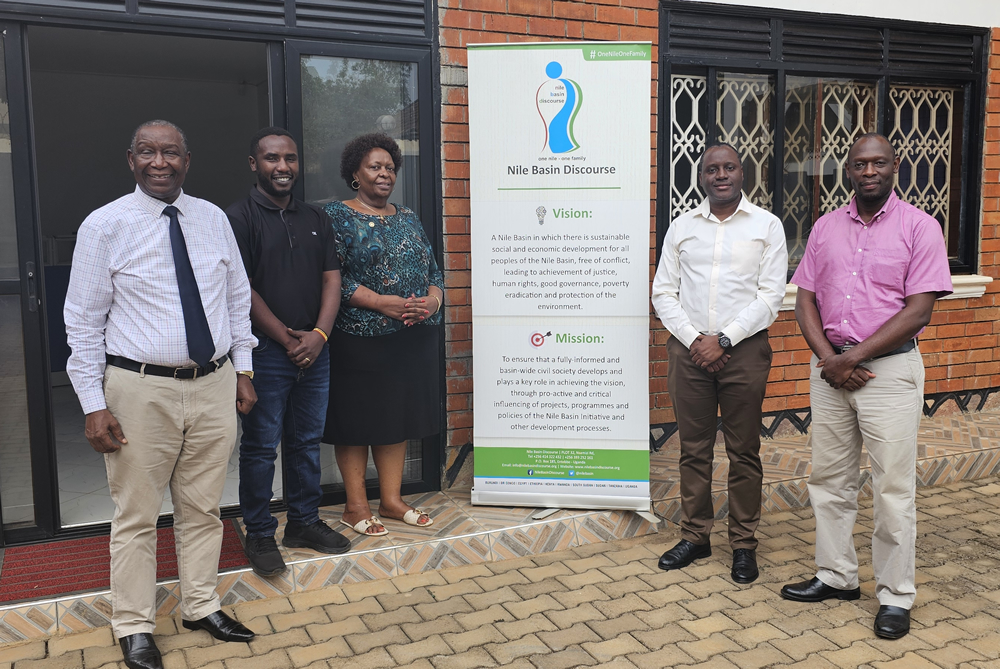
Celebrating National Nile Day 2021 in Sudan: the role and voice of the local communities in Nile Basin development

 
On the 29th of April 2021, the Sudan Nile Discourse Forum (SNDF) celebrated National Nile Day 2021 at Khartoum under the theme "The role and voice of the local communities on Nile Basin development" Within the activities of the NBD regional Nile day year".
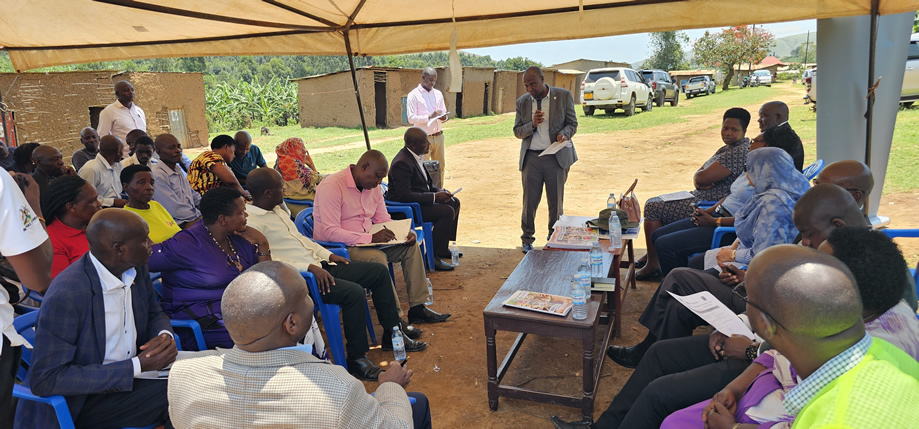
Sixty one (61) participants from local communities attended the national Nile day celebration. The event was also graced by a wide participation from the Ministry of Irrigation and Water Resources, water experts, Civil Society Organizations, primary school students, Forest National Corporation Khartoum state, the media fraternity, SNDF volunteers, and SNDF Executive Committee members.

While giving his opening remarks, the Under-Secretary of Ministry of Irrigation and Water Resources expressed his gratitude to the SNDF and NBD for organizing this celebration of National Nile day. He explained that “the recent years, Sudan has been facing a number of challenges, especially in areas related to environment and water issues, such as deforestation, lack of pastoral resources, misuse of water resources, land degradation, and climate change.”

Sudan is in the process of concluding many agreements and treaties related to the water of the Nile and the large development projects that will be established on it in the future. It was necessary therefore that SNDF continuously enlightens communities in Sudan and others around the Nile Basin of the importance of these development projects.

Overall objective

The National Nile Day celebration in Sudan aimed at improving the communities' knowledge of the Nile Basin environment to become more informed and prepare for participation in the current and future investment projects in the Nile Basin.

Specific objectives:
• Creating consensus on the roles of local communities' indigenous knowledge in the Nile basin development
• Creating a spirit of cooperation between Nile communities in the Sudan to improve Nile Basin environment for development and prosperity.
• Raising awareness and encouraging culture of participation in environment and water resources management among Nile communities and stakeholders in the Sudan.
• Establish a feedback mechanism for community participation for future development projects in the Sudan.

The role and voice of the local communities on large scale investments projects in the Nile Basin

In his presentation, Dr. Ahmed Adam Mohamed, a water expert and who also engineer and Ex Undersecretary of Ministry of irrigation and water resources, he focused on the largest investments project on the Nile basin internal and external of the Sudan land. On other hand the presentation focused on the challenges that faced all communities of the Nile basin such as poverty – climate change –Droughts - floods – soil erosion - adjustment of river flow and water quotas .
The lecture focused on opportunities available in joint cooperation between the Nile basin countries, to benefit from the implementing major development projects such as two-way trade – hydro-power generation –reducing evaporation –control and regulation of river discharge (flood period 3 months) – Economic integration (Ethiopia energy, Sudan agriculture ,Egypt manufacturing.

Detecting knowledge of children on Nile through drawing

A competition was held to detect knowledge of children on Nile through drawing
15 students from different age groups participated (4 females – 11 males). The competition's objective was to produce drawings reflecting the Nile and the environment by Children's Eyes. The competition started by the orientation about the environment and some photos of environmental violations.
There were also other activities like exhibition of various pictures of Nile and distributed about 200 seedlings in Arkwit Block 68 surrounding SNDF office and two main streets. Seedling were planted with partnership of Forests Cooperation Khartoum state and Green Khartoum initiative.

Results achieved

• Awareness of participants through discussions and lecture
• Dissemination of information about the investment projects to more than 60 people through the various media outlets.
• Creation of partnership with many governmental and civil society of common interest was created
• Activation of media network for the Nile Basin environment

Conclusions and recommendations made

• Commitment to conduct an environmental feasibility study for projects on the Nile, inside and outside Sudan.
• The importance of joint cooperation between the Basin countries in planning and implementing projects to save on effort and money.
• The importance of the role of media in spreading knowledge among the Nile Basin communities about development projects, (advantages and disadvantages).
• Pressuring governments to involve communities on projects planning before their establishment.

Challenges faced and mitigation measures taken

• The spread of Covid-19 made the work movement and organization very difficult.
• Covid-19 effect on the number and diversity of attendance - according to commitment, distances, and health conditions of would be participants

Lessons learnt

• Working in groups and forming smart partnerships helps in carrying out the work successfully.
• Ensure high dissemination of information through various media.


Author: Adil Mohammed Ali
National Technical Support Expert - Sudan

The team visited  different sites during the mobilization

Mobilizing and sensitizing masses to save floods affected communities in Uganda


In effort to support initiatives for sustainable integrated river basin management, UNDF member organizations are working with Uganda government and other stakeholders to save flood affected communities. This was Kick-started with mobilization and sensitization activities along the Lake Victoria shorelines from 3rd to 8th May 2021.

The activity is in line with the NBD objective to support Nile communities for equitable utilization and sustainable management of the Nile basin resources, improve communication, knowledge and information management.

Profile of activity Implementation team

The entire team was composed of the Uganda Ministry of Health - Malaria and Vector control departments, Kampala Capital City Authority, Office of the Prime Minister, Makerere University School of Public Health (MakSPH), Uganda Police Force – Marines Unit, Uganda Red Cross Society, and NBD member Organisations Swim Safe Uganda (SSU) and CEPARD Global in collaboration with several other stakeholders.

SSU and CEPARD Global have had several achievements over the years. These include lifeguard trainings for aquatic bystanders (constituting water safety education, survival swimming, and lifesaving, rescue and CPR skills) since 2011 producing over 400 lifeguards.
In 2017 the partnership carried out  a Water Safety out-reach which benefited 121 adults and 300 children in Ssese Island, in 2018 the training benefited 126 adults, and 240 children in Buvuma Island, and 79 people around Lake Bunyonyi - Kabale community.
In 2019, Kasensero - Kyotera Community Water Safety Out-Reach training benefited 200 adults and 400 children, and in 2016 at Butuntumula - Luwero, an Aquatic Survival programme was conducted benefiting 207 children and 306 parents. In the year 2018, a "Learn to Swim Programme" was conducted - benefiting 105 scouts and 174 children.

Problem and Rationale for the activities/project

Lake Victoria is a huge trans-boundary body shared by Kenya, Tanzania and Uganda with about 23 rivers that bring water into the lake. Some of these rivers originate as far as Rwanda and Burundi and therefore when it rains in Burundi, water finds its way into Lake Victoria. There is however, only one exit through River Nile at Jinja. The current rise in water levels for Lake Victoria has also attracted regional and international attention since this water flows through South Sudan, Sudan, and through Egypt to the Mediterranean Sea.

The rising water levels and associated floods within Lake Victoria basin and other areas of Uganda are already having negative impacts on the people and developments including Hydropower generation, Water transport and bridge construction, Water sanitation and health, Settlements and establishments. It has also created worsening conditions of water bone diseases, malaria and reduced the health access and seeking behavior of communities.

Lake Kyoga is projected to exceed the highest historical water level of 13.2 meters and as such its shorelines, swamps and flood plains will experience high water levels. Several settlements and essential facilities in the districts surrounding the lake including health facilities, schools, roads, water supply and sanitation facilities are vulnerable to effects of flooding. Although Lake Albert is not expected to reach critical flooding levels some areas in the surrounding districts of Hoima, Buliisa and Ntoroko will be affected.

Upon a directive by His Excellency the President of Uganda, to remove all encroachers on wetlands, shorelines, river banks and government forests, Uganda's Water Ministry is working with the Ministry of Local Government and other relevant government agencies to evict people living within 100 meters of river banks, 30 meters of wetlands and 200 meters of lake shores, in forest reserves, and stop cultivation on steep slopes in order to reduce erosion and high run-off from the hilly areas.

Among other things Government has put in place structures and systems to combat this crisis including setting up an Inter-ministerial Committee under the chairmanship of the Prime Minister, comprising 14 Ministries and 7 Agencies to implement government response to this disaster. A multi-sectoral Technical Task Team chaired by the Ministry of Water and Environment provides technical support to the Inter-ministerial Committee and has already started on emergency work on three (3) key fronts; ensuring safety of Hydropower dams, protection of lives and property and monitoring and surveillance of water resources and floating islands.

Goal and Objectives

The Overall goal; Building community based prevention, mitigation, rescue/response and resilience capacity for sustainable water safety and drowning prevention initiatives.
Objectives:
  1. Do a rapid assessment on the impact of floods in different flood spots
  2. Increase sensitization and awareness creation to abide by government directives while preventing, mitigating and adapting to flood challenges along the Nile Basin.
  3. Offer short term responses to affected communities like waste vector management

Long term Objectives
  1. Promote water safety and first aid skills through training youths and adults teams in and around Nile water bodies
  2. To train and accredit 500 community water safety facilitators, and 100 community water safety instructors
  3. Acquire training, first aid and rescue equipment and avail them to water based communities.

Expected outcomes

The plan started with short term objectives of data collection, mobilization of communities and sensitizing them but the main outcome of all this is to have increased water safety in the Nile Basin of Uganda and beyond beginning with Lake Victoria basin communities.

Uganda Nile Discourse Forum (UNDF) will work with member Organizations to implement the objectives of this programme through promotion of collaboration and partnerships between member CSOs and other stakeholders.

Target Areas

Through assessment and through use of information from the media and other sources, at least ten high risk flood areas will be targeted for activities across the country. Those include : Gaba, Masolya (Mayuge), Namayingo, Kalangala, Buvuma, Kaseese, Kasensero, Bindibugyo, Nakasongola and Amolatar.


Author:
Mathias Mulumba
National Technical Support Expert - Uganda


There is good progress in the Construction Of Regional Rusumo Falls Hydroelectric Project

Tanzania: Study on Business and Human Rights Footprint in the Construction Of Regional Rusumo Falls Hydroelectric Project

Between July 2020 and February 2021, Governance Links Tanzania, a member of Tanzania Nile Discourse Forum conducted a study on Business and Human Rights Footprint in the Construction Of Regional Rusumo Falls Hydroelectric Project.

The overall objective of this study was to assess how the Tanzania section of the Regional Rusumo Falls Hydroelectric Project is complying with the United Nations Guiding Principles on Business and Human Rights (UNGPs), and specifically the requirement of human rights due diligence. The project’s human rights footprint was most significant on economic rights of communities, particularly related to land rights and livelihood opportunities. These impacts were overall well mitigated by the project and the affected people considered the compensations received as sufficient. While the project was found to positively contribute to employment and business opportunities, negative footprints on health and environment seem insufficiently addressed.

The Regional Rusumo Falls Hydroelectric Project (RRFHP) is a hydropower project under joint development by the Governments of Burundi, Rwanda and Tanzania. This joint development was entered through a Tripartite Agreement signed on February, 2012. Rusumo Falls is located on the Kagera River, on the border between Rwanda (Southeast) and Tanzania (Northwest), about 25 kilometers of the common border point between Burundi, Rwanda and Tanzania. The RRFHP is championed by the Nile Basin Initiative (NBI), the intergovernmental partnership of 10 Nile Basin countries including Burundi, Rwanda and Tanzania, and its investment arm, the Nile Equatorial Lakes Subsidiary Action Program Coordination Unit (NELSAP-CU).

The RRFHP is developed to address an acute shortage of electricity experienced by the three Kagera sub-region countries of Burundi, Rwanda and Tanzania which is negatively affecting their economies and the livelihoods of their riparian citizens. The project will enhance regional cooperation, peace building, support sustainable management of the Kagera river basin and promote growth and poverty reduction whilst managing environmental aspects. Constructions on the RRFHP started in March 2017 and is planned to be completed this year 2021.

In Tanzania side, Ngara district, around 39,300 people in 8,360 households were directly affected by the RRFHP (16,200 people in Rusumo village and 23,100 in Kasulo village). In Rusumo village, households were relocated to allow space for the installation of a power generation turbine system.

STUDY FINDINGS

The actual and Potential Human Rights Impact Issues

  1. Human rights impact - Land as the backbone of rural communities in the district. 39,300 people in 8,360 households in Rusumo and Kasulo villages were relocated from their ancestral land to other areas to allow constructions. To mitigate the loss of livelihoods, land and property, a Local Area Development Plan (LADP) was designed through collaboration of RPCL and the Ngara District Council.

  2. Labor rights impact - It was estimated that about 1,000 people in total would be employed by the RRFHP during and after construction. Employment opportunities were foreseen for managers, engineers, technicians, administrative staff, carpenters, structural steel fitters, cement workers, crane workers, welders, electricians, and mechanics. According to RPCL management, foreigners would occupy 10% of these positions, while nationals would occupy 90%. The high percentage of national employment is required to comply with Tanzania’s Local Content regulations (2018). By June 2020, the total number of Tanzanians employed by contractors to RPLC at the project was 290, about 87% of the country’s share. Most of them are employed as casual laborers and technicians.

  3. On Local business and Supply Chains - There have been no disruptions reported related to business operations and supply chains within the area affected by the project. The only inconveniences mentioned were those resulting from border closures due to the COVID-19 pandemic.

RRFHP footprint on environmental rights

The project’s ESIA acknowledged that there would be substantial impact on flora and fauna due to the construction of a dam on the Kagera River and the diversion of the Kagera River to bypass the Rusumo Falls (after which it rejoins its course further downstream). Ecological impact is particularly expected due to disturbance of a forest to make a way for the dam. The forest cover used to host monkeys and a diversity of birds that are of great aesthetic value.

RRFHP footprint on social and cultural rights

  1. Impacts on Health - The RRFHP study on Environmental and Social Safeguards identified high prevalence rates of infectious diseases and Sexually Transmitted Infections (STIs), such as HIV/AIDS and tuberculosis, in the project area even before the construction started. The inflow of migrant workers and truck drivers is recognized as one of the factors that can lead to an increased spread of diseases in the areas. Further, the reservoir that is expected to hold excess water is feared to create a habitat that will be favorable for the growth of vectors of waterborne disease such as Malaria, Onchocerciasis, and Schistosomiasis.
  2. Impact on Gender and Vulnerable groups – Project contractors demonstrated appreciable levels of gender perspective in the execution of the project. For the vulnerable community, three households were identified to be hosting people with disabilities at Kasulo village. The households were provided special resettlement packages besides the rated compensation.

Human rights due diligence in the RRFHP

Compliance with human rights due diligence - From the World Bank’s perspective, the Environmental and Social Safeguards of the RRFHP evaluated as high risk, because the negative impacts can be significant. Therefore, contractors were jointly obliged to develop a detailed Environmental, Social, Health and Safety Management Plan (ESHS-MP), to detail and outline mitigation measures and monitor impacts. Similarly, the project’s ESIA, approved by Tanzania’s National Environmental Management Council (NEMC), also assessed risks and proposed mitigation measures.

Recommendations from the Study

The RRFHP provides a useful learning point for corporate responsibility in complying with the UNGPs: the following recommendations were brought down by Governance Links Tanzania:

  1. The RRFH is an opportunity and living laboratory for the Commission for Human Rights and Good Governance (CHRAGG) and other regulatory institutions to accelerate popularization of the United Nations Guiding Principles on Business and Human Rights across stakeholders in Tanzania.
  2. It is critical for CHRAGG as a frontline institution to provide methodological support to local government authorities to engage with multi-stakeholders in compliance monitoring.
  3. A “whole government” approach is necessary for engaging corporate sector units involved in infrastructure projects to roll out proper due diligence procedures, in alignment with UNGPs on Business and Human Rights and compliance monitoring.
  4. Despite the absence of a national framework for business compliance with Human Rights, corporate institutions and networks should adopt strategies for due diligence through effective implementation of codes of conduct and contractual provisions as primary entry points to alignment with the UN framework.
  5. The surging investments in mega infrastructure projects calls for urgent consideration on establishment of a national framework on business and human rights aligned to the UN Guiding Principles on Business and Human Rights.
Conclusion

Overall, the project’s human rights footprint was most significant on economic rights of communities, particularly on land and livelihoods. Communities in Rusumo village experienced the most direct impact due to forced relocations, while those in Kasulo village suffered from limited access to their land. These impacts were compensated by the RRFH project. Affected people considered these compensations sufficient to enable them to resettle with stability. The project is also found to positively contribute to employment and business opportunities. Impacts on socio- cultural rights seem limited and, where present, considered sufficiently. Moving forward, greater attention needs to be paid to health and environmental mitigation measures, which – at present – do not suffice considering the impact of the project. Further, strengthening the impact monitoring of project activities and ensuring transparent communication will greatly add value to demonstration of accountability in this large-scale infrastructure project.

Author: Hadija Malimusi
National Technical Support Expert- Tanzania
TAHEA is promoting Orange Sweet Potato for Health and Income Generation

Improving Health and Income Generation through Orange Fleshed Sweet Potatoes

The Orange Fleshed Sweet Potatoes (OFSP) have been promoted due to its added value, as they are source of vitamin A content for rural farming communities.

TAHEA works in partnership with other Organizations to promote Sweet Potato Production especially Orange Fleshed Sweet Potato (OFSP) for health, nutrition, food security and income for resource poor households.

In the line with the project implementation, TAHEA trained Ukerewe prison officials on benefits of Orange sweet potatoes. The objective of training prison officials was to later replicate the acquired knowledge in respective prisons.

TAHEA conducted several trainings to farmers on crop farming, processing, storage, product development, utilization and marketing. It also conducted nutrition education and demonstration of sweet potato improved dishes for household utilization.

After a year, the Ukerewe Prison Medical Officer narrated that, the Monthly Medical Kit provided by the Government was previously finished out in less than two weeks. Now the Kit goes to One and a half months due to Health improvements of the Prisoners; as they eat raw and cooked OFSP.

Currently, the organization implements three main Programs: Agriculture, Education and Health under which 7 projects are currently operating.
TAHEA urges other Agriculturists, Health and Home Economist stakeholders, Civil Society Organizations and Government at large to incorporate the OFSP agenda in their implementation activities as it has proved positively as a source of VITAMIN A.


Some benefits of OFSP:

- OFSP leaves as vegetables can also sell and/or process and sundry for future use.
- OFSP Roots for food and/ or processing for flour. The OFSP flour can be used for confectionary making Queen Cakes, spaghetti, Bans, Samosa and the like
- OFSP Vines as for feeding animals and/or used for seedlings.

Content Generated by Hadija Malimusi/ Tanzania
Nicholas Omondi picking eggs at his urban farm

Urban farming for income and food security - a case of Victoria Eco-Farm in Dunga Beach, Kisumu

Victoria Eco-Farm is located in Dunga beach along the shores of Lake Victoria in Kisumu. The farm has been in existence since 2006 and produces different products like poultry for meat and eggs, milk from the dairy cattle, honey from bee keeping and also rear dogs for sale. The products have been generating good income while using a small piece of land since they don’t need huge chunks of land to keep.

Victoria Eco-Farm is an affiliate of OSIENALA which is a member of Kenya Nile Discourse Forum ( KNDF). The farm is involved in Bee Keeping, Poultry Farming, Dog rearing and keeping of Dairy Cows.

Victoria Eco-Farm hosts visitors and trains them on urban agriculture thought this has been cut short by the outbreak of the Corona Virus which made it difficult to host visitors. The visitors were majorly from learning institutions, community groups, farmers and potential farmers among other interest groups.

The project is generating good income to an extent that Nicholas who is working in a local FM station is currently more engaged with his farming project more than radio work. He says there is immense opportunity that is yet to be tapped by the residents when it comes to food production within Kisumu County.

Kisumu County is food insecure since it is being fed by the neighboring counties that supply most of its vegetables, cereals, and milk among other food items. It is time the residents wake up and take up farming seriously to generate both income and improve food security of the County. Youth and Women groups can take up this challenge to generate income thus reducing poverty levels while improving food security within the Nile Basin.

Content generated by  Nicholas Omondi/ Kenya


Photo of participants at National Nile day, Burundi

A Busy and Practical Nile Day 2021 Celebration in Burundi: Messages and Highlights

On 29th April 2021, Burundi Nile Basin Discourse Forum (FCBN) held a Nile Day celebration that took place at OSPIA COMPLEX, BUJUMBURA. This celebration is one of the many National Nile Day celebrations which followed the Regional Nile Day celebration that was virtually hosted by Uganda. Nile Basin Discourse participates as the main partner of Nile Basin Initiative.

34 participants including the representatives of central government and its institutions, the FCBN Steering Committee, public and private organizations that are partners of FCBN, FCBN member organizations and the media participated in the event.

The day's discussions focused on three main topics: (1) Rethinking National and Regional Investments in the Nile Basin which is also the theme for this year's celebration; (2) Approaches for effective resilience to the effects of climate change and; (3) The role of each stakeholder (State, Private Investors and Civil Societies).

Through group focused discussions, participants reflected on regional investments, national investments and the rising waters of Lake Tanganyika.
On regional investments, participants reflected on options which would lead to the success as follows:
  • Promotion of cross-border projects. Example ; the Rusumo Hydropwer project underway which will produce 80 MW between 3 countries (Burundi, Rwanda and Tanzania)
  • Promote other cross-border integrated water resources management projects like the GIRET project (Integrated Trans-boundary Water Resources Management)
  • Find funding for regional and cross-border projects where feasibility study was conducted (construction of the Ruvyironza hydroelectric dam)
  • Construction of railways linking the countries bordering the Nile basin to promote circulation of goods and people.
  • Promote capacity building projects at the regional level to exchange knowledge and experiences (strengthening solidarity between Nile riparian countries).
  • Equitable sharing of benefits to avoid frustration.
On national investments, participants singled out options to ensure national investments are possible and hence suggested the following:
  • Irrigation / Marshland development:
  • Large-scale multiplication
  • Water retention dam
  • Rainwater harvesting
  • Exploitation of underground water by drilling and pumping
They also proposed solutions and strategies for the protection of the slopes of the Nile basin:
• Protection of river / lake banks
• Erosion control (AWF, reforestation, etc.)
• Development of tourist sites
• Rehabilitation of access tracks
• Fight against the pollution of water flowing into the tributaries of the Nile.
• Lighten the workload of women by supplying drinking water, using BIKIGITI stoves, rural electrification, etc.
• Installation of public bins and ecological toilets on public roads.

Participants also discussed on the current rise of rise of the Waters of Lake Tanganyika, its causes and proposed solutions to address the challenge as follow:
Causes:
  • Heavy rainfall in the region
  • Runoff
  • Geographical location (altitude)
Solutions:
  • Emergency actions
  • Start negotiations with the DRC on RUZIZI I
  • Respect the buffer zones of Lake Tanganyika
  • Strengthen cooperation between the riparian countries of Lake Tanganyika
  • Set up planning and management tools for the water resources of the Lake Tanganyika basin in all riparian countries
  • Strengthen the resilience of neighboring populations.
The discussions were very important and have helped to adopt recommendation centered on the topics of the day.
The chairperson of the FCBN recalled that the community has a very important role to play in the implementation of the projects developed for the protection of the water sources of this river.


Participants at Nile Day Celebrations 2021 organized  by Uganda Nile Discourse Forum in Jinja

Uganda Nile Discourse Forum Celebrates Nile Day 2021 at the Source of the Nile

Uganda joined the rest of the Nile Basin Countries to celebrate the Nile day 2021 on 14th and 15th of April 2021. The countries that share the Nile River Basin declared February 22, every year as the Nile Day and they commemorate the signing of the 1999 agreement that established the Nile Basin Initiative, aimed at equitable and reasonable utilization, Joint Corporation, and management of the waters of the river Nile.

The theme for this year: “Rethinking Regional Investment in the Nile Basin”, which aligns well with the importance of cooperation on trans-boundary waters as a key target in the United Nations 2030 Agenda for Sustainable Development Goals. (UN 2030 SDG).

The event was joined by various categories of participants including Central government authorities, Representatives of Nile TAC Uganda, Busoga kingdom, CSOs, media and the local community.

UNDF took this opportunity to raise public awareness on the importance of the Source of the Nile River as a special ecosystem for sustainable livelihoods, and the underlying threats to the biodiversity influenced by both natural and human induced effects; encouraging individuals, Civil Society Organizations (CSOs), Private sector, Ministries Department and Agencies (MDAs) to call for action on the loss of biodiversity using nature based solutions as an adaptation action in Jinja City.

Participants also discussed on the importance of trans-boundary cooperation, and the role NBD is playing to facilitate dialogues on coordinated programs and projects within the riparian states; showed case of good practices by communities and institutions surrounding the Source of the River Nile in the restoration and conservation of the ecosystem.

The Nile-TAC representative, UNDF Board Chairman, NBD Board Rep and NTSE endeavored to sensitize participants on the importance of getting involved in Trans-boundary cooperation, and the role NBD is playing to facilitate dialogue on coordinated programs and projects within the riparian states. This was evidenced by the importance of keeping the source of the Nile free from pollution because all water flow to the other 10 countries.

There was sharing of good practices, innovations by youth, women, communities and institutions surrounding the Source of the River Nile in the restoration and conservation of the ecosystem. An outstanding case was that of the owner of a Guest house who deeply stressed the devastating state of pollution at the source of the Nile and practically shared her disappointment with authorities concerned. She said that tourist have of late stopped eating fish from the highly polluted waters due to poor waste disposal and they have expressed to her their disappointment with the unorganized and expensive costs experiences of visiting the source of the Nile.

Opportunity for exchange and learning

According to the rapid assessment results confirmed with consultations and speeches from the City Authorities, there are several investments around the source of the Nile - both small and big including; Agricultural activities both at uphill and at the river banks, Fishing, Tourism, Manufacturing industries, Trading, Human settlement and Energy /Electricity generation among others. There have been good practices observed including; Municipal Solid Waste collection, Sorting of solid waste at the source, some Public Sanitary facilities in some public places and investment units. Interventions have also been made by several NGOs i.e. establishment of sanitary facilities, there is average adherence to SOPs for COVID-19 (it is the global new normal) etc.

However the bigger impact of investment is negative to the Nile/source of the Nile including:
  • Water pollution; (industrial effluent, heat from discharge water from the factories, poor solid waste management, water zoning – directly interrupts the natural breeding sites of fish, poor sanitation and hygiene).
  • Air pollution; (soot and smoke/ gaseous emissions from smoke and liquid emissions/ from the factories contributing to the Green House Effect, thus; increasing the ecological foot print, gives rise to acid rain which finds its way back into the water. This damages the marine/ aquatic ecosystem which in a long run affects human life, since it’s the same water that is used for domestic consumption and for irrigation of the crops on which we feed, and the green that we embrace. This gradually leads to ‘bio-accumulation’ which is a serious matter of public health concern).
  • Flooding; (nature claims for its way. Some institutions are almost submerging. The reptile park was swept away by the floods, snakes and poisonous spiders have invaded the place. What we contribute here affects other places along the basin.
  • Soil Pollution; Swamp reclamation and the bio-processing units for waste water is reclaimed for human settlement).

Author: Mulumba Mathias
National Technical Support Expert / Uganda

Kenya: MAGNAM Helps Community in Food Security with Household Income Generating

Magnam Environmental Network acronym MAGNAM is a community Based Organisation (CBO) that initiated a homestead food security model project along the shores of Lake Victoria in Kisumu, Kenya. Magnam is a member of Kenya Nile Discourse forum (KNDF).

The organization is encouraging the youth, women and any interested person to replicate what they have been doing for purposes of improving food security and to generate income as well.

The project initiative entails production of different types of food like vegetables, sugarcane, bananas among others. The main crop they do in large scale is sugarcane.
In March this year(2021), the organization came up with a product that they sell to generate income. This is value added sugarcane juice which they sell at their outlet called Ten Cent Business Center.

The value addition is done using lime/lemon, ginger, thorn melon and beet root. Some visitors like the juice since it has some products that are claimed to have the ability to deter COVID-19 disease.

The value added sugarcane juice has brought quite a number of people to Magnam Ten Center to either learn how they carry out the project or to get a taste of their juice. According to Nyaguti, if such a project is up scaled, it has the potential of creating employment thus reducing poverty to the local community and those living at the shores of Lake Victoria.

Availability of food will also ensure healthy families that are able to focus on other areas of development a part from constantly engaging in looking for what to eat at the expense of other areas of need.

The project was visited by officers from the public health to ensure compliance with public health standards especially during this era of the COVID-19 pandemic.

Content generated by Michael Otieno Nyaguti/ Kenya
Solar lantern used in Sardine drying and fishing at night

TANZANIA: Harnessing Solar Energy for Sardines Fishing


The Fishers Union Organisation (FUO) is Tanzania Nile Discourse Forum (TNDF) a popular member known in in fishing of Sardines. FUO has come out with a project on Renewable Energy for night fishing of Sardines in Lake Victoria. The basic purpose was to replace kerosene lanterns for fishing.

In 2005, FUO was established by a group of fishermen who are highly motivated and committed to contribute their time, skills and energies for the development and empowerment of socially disadvantaged and vulnerable communities in Tanzania alongside protecting fishers’ rights and addressing poverty issues and gender-based discrimination.

Also, the project envisaged to build capacity of fishers on innovative high quality sardine-based products as well as monitoring and evaluation.
The purpose of these interventions was to reduce food losses, improve incomes and nutrition from fishing systems.

Over the last two years, three prototype iterations and pilot projects of Solar lamps and Sardines drying solution have been carried out at Kasalazi and Zilagula islands alongside supply of solar lamps in the entire Mwanza Region.

Sardines contribute more than 70% total income in fishing areas of Lake Victoria. Night fishing of sardines constitutes about 42% of the total yearly catch of Lake Victoria alone.

Approximately 35,000 boats are engaged in this activity, encompassing Tanzania, Uganda, and Kenya.

This means that over half a million liters of kerosene are exposed to the lake almost every night, emitting over 600,000 tonnes of CO2 per year. This is a prominent example of a problem which is tackled presently.

Kerosene is expensive. Up to 60% of fishermen’s monthly income is spent on fuel and maintenance of outdated and unreliable kerosene lanterns. Kerosene is dangerous and can cause respiratory illnesses, skin irritation, and most importantly, fire inducing bursts, threatening fishermen’s health.

It is harmful, threatens entire marine ecosystems, and massively contributes to greenhouse gas emission. Also, drying sardines on sand is a major challenge since it reduces market value, income, and contributes to high post-harvest loss during rainy season.

FUO and Sagar Energy Solution Ltd have initiated the new technology of using solar lamps and solar drying solutions in Lake Victoria to improve sardine value chains.

The following results were achieved through these interventions:

i. Solar technologies were developed and promoted for fishing and processing/preserving fish species
ii. Knowledge developed and disseminated for sustainable fishing and fish processing systems
iii. Improved marketing strategies and nutrition benefits from sardines

Success stories of the project

Solar Lanterns contributed to a 40% increase of income earned by fishermen. FUO in collaboration with Sagar Energy Solution Co ltd have managed to design and develop sardines drying solution alternatives, whereby three models of prototypes were developed and tested at Zilagula Island in Sengerema District.

These prototypes were used to showcase designs with similar functionality with the real plant to be established. The project will further construct plants in some islands for drying sardines.

The following are the benefits expected from this alternative:
i. Sardines are dried in three hours less than the normal drying system.
ii. Dry sardines are not contaminates with sand at all
iii. Sardine drying can be undertaken throughout the year under all seasons even during the rainfall seasons
iv. The drying solution alternative is economically beneficial to fishermen and fishing community by adding value hence increasing the sardine market value and hence price

Author: Hadija Malimusi
National Technical Support Expert /Tanzania
Community sensitization in Seme Sub county Kit Mikai social hall, Kisumu County, Kenya on 18th Feb 2021

A Kenya NDF member sensitizes community on the need for women and PLWDs to own property including land

Uhai Lake Forum - a member of Kenya Nile Discourse Forum (KNDF) organized a community sensitization forum in Nyakach, Seme, and Kisumu central sub-counties to disseminate findings from the desk review report for baseline information on women and people with disabilities; on land rights and environmental issues affecting their access to justice during the COVID 19 pandemic.

The objectives of the sensitization were to share the findings from the desktop review report with the community, and to identify challenges experienced by women and people with disabilities in access to justice and property rights linked to environment and natural resources.

Key issues emerged from the discussions:

Women rarely have any land in their names, making them very vulnerable in the case of divorce or 'widowhood'. In the likelihood that they are disinherited, they are left with no means of production and sustenance.  The treatment of women as users and not owners of family property has increased their vulnerability through the instances of denial of their customary rights to be joint beneficiaries of family property. This has an impact in gender development within the affected areas leading to inequitable development.

In many communities women's access to, use and control of land is largely determined by their marital status and in the case of 'widowhood', to their relationship with male members of the immediate family of the deceased husband.  Many studies that have been done across the country to determine the cultural practices on land ownership, inheritance and property rights depict how women bear the brunt of negative cultural practices, that continue to support male inheritance of family land to the detriment of the women’s rights.  Women are regarded as belonging neither to the homes into which they were born, nor to those into which they are married. This leaves them out of the inheritance cycle both ways. Underlying this is the very absence of women in the traditional justice mechanism as witnesses or judges in this.

Challenges experienced by women and PLWDs in access to justice linked to Environment and Natural Resources:

The challenges identified in the forum that hinder access to property by women and PLWDs include: negative cultural practices that gives men more prominence, lack of awareness by women, discriminatory official responses by male government officials, stigmatization of persons living with disabilities, corruption by the administrators, introduction of online courts due to COVID_19 pandemic, discrimination encouraged by law, lack of participation by women, fear and expensive legal system.

Conclusion:

Women’s access to land determines not only women’s and households’ level of living and livelihood, but also food security. Due to the existing obstacles, women’s property rights are abused and they are therefore impoverished by lack of access to land and property.

Culture evolves, and as important as culture is, if they are a source of discrimination against women, they must evolve.  This is crucial not only for the sake of women’s equality, but because there are real social consequences to depriving half the population of their property rights. Women’s insecure property rights contribute to low agricultural production, food shortages, underemployment, and rural poverty.

If Kenya is to meet its development aims, it must address the property inequalities that hold women back.

Author:
Tom Onyango
National Technical Support Expert/ Kenya
A typical example of erosion damaged roads in the areas of Beni and Lubero.

D.R Congo: Understanding highlands soil protection in Beni and Lubero


In February 2021, the D.R Congo National Discourse Forum conducted a study on land management and protection of highlands of Beni and Lubero, two of six territories of North-Kivu Province.   The two territories are home to various ecosystems.

The Congolese Nile basin stretches over the two plains Rutchuru and Ituri. The region is facing soil degradation due to excessive soil erosion.   The Congolese Nile Basin covers an area of nearly 26,000 km2 extending over North Kivu (Rutshuru, Lubero, and Beni) and Ituri (Irumu, Djugu, Mahagi), a small percentage of the Congolese territory, but with more than 10% of the population of the DRC - that is to say more than ten million inhabitants.

In this mountainous region with the highest population density in the country live several tribes dedicated to agriculture, breeding and fishing on lakes Albert and Edward.   The Virunga National Park which is located there and which is the very first park created in Africa in 1925 has become a jungle where armed groups damage not only the life of the population but also flora and fauna.

Apart from these security threats, this park is facing the probable imminent ecological threats that would come from the exploration and exploitation of oil by multinationals (SOCO International, TOTAL and others) which have acquired oil blocks even in protected areas including lakes Edward and Albert as well as the Semuliki River.

West of this highest mountain in the DRC (5119m at Pic Marguerite), flows into a forest, the Semuliki River connecting on 98% of the Congolese ground the Lake Edward to the Lake Albert.

1. Soil Erosion in the highlands of the market gardening region

During the rain, the fertile soil, without any protective mechanism, flows with water into rivers, roads and beyond. The anti-erosion hedges, which were popularized in the region at least 30 years ago, have already been abandoned by the mostly young population under the pretext that the hedges reduce the fields and promote the development of rodents in the fields.

2. The causes of erosion in the highlands of Beni and Lubero

There are many types of erosion in the region due to especially population pressure which leads to over exploitation of the soil. In addition to population growth, there are: the lack or insufficiency of environmental education on the part of the population, the topographical factors of the environment such as many slopes which allow the easy flow of water and run off without infiltration and thus lead to landslides.

3. The Effects of soil erosion in the highlands of Beni and Lubero

There are consequences such as soil infertility due to anthropogenic actions which leads to water course pollution and sedimentation which cause water level decrease. There can also be consequences on animals, the resurgence of land conflicts and pastoralism, poaching in protected areas such as Virunga National Park, robbery, kidnapping, juvenile delinquency, recruitment of children in militias and armed groups, etc.

Solutions and recommendations:

We suggest for a permanent collaboration between the indigenous Congolese, Egyptians, and Sudanese who benefit from this water, capacity building in the management of endangered lands with a view to the rational and sustainable use of our lands, the experience exchange visits between residents of the Nile and also a program supported by donors for the compulsory planting of anti-erosion hedges in all highlands of the Congolese Nile Basin.

This technique should only succeed if the farmers themselves get involved to change their farming practices, their way of soil management and their pivotal desire to manage their land for themselves and for future generations.

The use of the technique of the Free Consent Informed and Prerequisite to help the population in raising their awareness about the problem of erosion in their region.

Conclusion:

It is time to change our practices and management in relation to land use - to hope for and work towards sustainable profitability which must serve not only the present generations but also the children of our children; our descendants will judge us for what we do now; hence, we must act collaboratively.

Close collaboration between all the countries benefiting from the water in the area for the promotion of the common interest and the sharing of experience between Egypt, Sudan and the DRC to maintain the water in the Congolese Nile Basin or better to increase the quantity and quality of this water.

Author:
Elias Paluku Tawasima
National Technical Support Expert
DRC NDF
Damsheet used to collect rain water in Nyagatare District

RWANDA: Knowledge Exchange and learning on Effective Water Management Field Visit

Water management is one of activities that have been attracting attention of different development actors especially those involved in agriculture, Water resources management, and environment protection among others.

In Rwanda, one of NBDF Rwanda’s member’s Rwanda Development Organization (RDO) has been supporting small scale farmers in Nyagatare District for effectively harvest rain water for human and animal consumption and irrigation.

In February 2021, RDO organized a three day field visit that was attended by different local NGOs and Civil societies operating in Rwanda. Among participants was also NBDF-Rwanda invited among other civil society.

The aim of the visit was to ensure that the knowledge is replicated to other areas where participating CSOs intervene.
During the three day field visit, participant got opportunity to exchange knowledge with RDO on requirements, processes and others techniques for effective Rain water Harvesting.

Participants learnt that beneficiaries are involved and responsible for excavations and other non-technical work and that Dam sheets are used for both roof top rain water harvesting as well as collection of ground water.

Also to ensure the ownership and sustainability of the infrastructures water committees are put in place to manage the infrastructure and rational use of water.
What RDO is doing on the ground?

RDO has resolved to implement the Water harvesting project after noticing that during the rainy season, large part of the rainfall is lost as runoff without being used by plants, animals or other human activity. The runoff causes erosion and flooding downstream. During prolonged drought seasons, there is no water available for human and animal consumption and for small irrigation.

To address the challenge, the organization is constructing valley dams of 500m3 capacity using dam sheets. Water is used for irrigation of the kitchen gardens around the homesteads for higher value crops such as fruits, vegetables and other crops that are more draught resistant.

Semi-underground water tanks, Dam sheets and cement-mud ponds are as well constructed to capture rain water.

Author: Lydia Mahoro
National Technical Support expert
NDF Rwanda

The Environmental Union Federation in Aswan celebrate the National Environment Day

The Environmental Union Federation; the LDF in Aswan governorate, organized a virtual meeting celebrating of the National Environment Day under the slogan "Greening between Agriculture and Environment", to be found in this  link due to the conditions that Egypt and the world are going through due to the Corona virus pandemic.


The celebration aimed to explain the need to change the Egyptians’ thinking about water to face the reality of scarcity, and to gradually shift to modern irrigation systems.
About a hundred members of scientists and experts of environmental affairs, biodiversity and agriculture in Egypt and Arab region participated in the celebration, with a remarkable presence of the Arab brothers.

The workshop included three lectures - the first about “Regenerative Agriculture” and delivered by Dr. Khaled Ghanem, Professor of Organic Agriculture, Head of the Environment and Biological Agriculture Department at Al-Azhar University.

He stated that the regenerative agriculture is one of the modern global concepts of sustainable agriculture or regenerative organic agriculture and the first release of this term in Egypt, which is the broader and more modern picture in organic agriculture that contributes marvelously to soil health and is the most important goal of applying organic agriculture in the world, as well as the great role of its practices in carbon sequestration in the soil and reduction of climate change impacts, which making it excellent climate-friendly. He hopes that the year 2021 will witness great progress in this field, that encourage us to launch our postponed project about this issue to keep pace with international schools in the United States and East Asia and others.

The second lecture, about “new concepts of water use in agriculture” presented by Dr. Ahmed Zaki, Professor at the Agricultural Research Center, the Chair Environmental Union Federation in Aswan, and the Vice chair of the EgNDF.

He discussed the current water situation of Egypt and its water resources, the effectiveness of water use, and a comparison between the culture of abundance we believe and the reality of scarcity in which we live, He presented the irrigation machines and equipment used by the Egyptians since the dawn of history until today, and the imperative of switching to modern irrigation systems or at least gradually improving and developing current irrigation.

Prof. Reda Mohamed Rizk -expert on plant genetic resources and biodiversity at the Arab Organization for Agricultural Development of the League of Arab States- presented the third lecture about “the sustainable management of biological diversity” to discuss the sustainable development of natural resources in Egypt, appearing his fear that the economic and social development impacts would be negative on the Egyptian natural resources.

The participants presented many important recommendations; Changing the Egyptians’ thinking about water to face the reality of scarcity, the need to gradually shift to modern irrigation systems, rationing the quantities of water for the different crops, taking into account the environmental dimension when converting irrigation systems from the traditional to the modern, using the clean energy of modern irrigation systems in the irrigation of Egyptian agriculture, interest in the idea of regenerative agriculture or regenerative organic farming, and this is the first launch of this term in Egypt.

They also recommend to use of regenerative agriculture to restore the health of agricultural soils, and take advantage of its major role in sequestering carbon in the soil and curbing climate change, laying the rational foundations for the sustainable development of natural resources, claim to include biodiversity within the conditions and obligations of sustainable economic and social development, achieving greater compatibility between the development plans and the biodiversity plans in the country, compatibility in the dialogue between decision-makers and decision-makers in the field of biological diversity, finally supporting NGOs concerned with environmental affairs and biodiversity, and establishing information rooms to assess and monitor the state of natural habitats.

The content is generated by the Environmental Union Federation; the LDF in Aswan,
Translated by EgNDF.
A house submerged under water in Kibenga District, Bujumbura as a result of increase in water level of Lake Tanganyika

Burundi: When Nature Reclaims its Space

Since March 2020, the Lake Tanganyika water has risen to an incredible level. This year 2021, it rose to more than fifty meters.
According to the geographical expert, he recalled that the level of Lake Tanganyika fluctuates in the order of 0.8m naturally depending on the seasons.
These fluctuations are the consequences of a change in the balance between water inflows (rainfall at the lake level and the start of the outflow at the Lukuga River at Kalemie in the DRC.
 
Since the 19th century, the level of the lake has experienced significant fluctuations with the level of 772.5 in 1902. The observed amplitude is 11m. The last significant rise in the level of the lake dates from 1964-1965 with a level of 776.5m. The periods of rise and fall of the lake level can be long causing the lake level to move away permanently of the average value of 772.7m. Generally, this phenomenon can be observed at the level of the other lakes of East Africa.
According to local sources, in the Kibenga and Kajaga, Rumonge and Nyanza-lac districts, Lake Tanganyika has not stopped reclaiming its space that human activity had taken from it.

Residential houses, schools, streets and roads are flooded and become blocked, not to mention abandoned places of recreation, such is the situation prevailing on the shore of Lake Tanganyika today.

In rural Kibenga, some inhabitants have had to leave their localities for a year already. Typical examples are Bar Lacosta, Beach safari, vodo saga, zion Beach, Gâte safari, Safi Beach. Some of these infrastructures are still under water. The local population lives in fear.

Nzero Avenue users have noted the inaccessibility of the road due to the rising waters of Lake Tanganyika. Nzero is located in the Kinindo West district of Muha commune. Some residents have adopted new strategies of building retaining walls others put sand in bags around their houses to prevent water from entering houses.

Masons say that although this terrible current situation, there has been an increase in employment for the construction of walls, ditches for the reduction of water entering houses.

Towards finding sustainable solution?

The Lake Tanganyika authority in Burundi, in partnership with the SHER study office (Namur Belgium), under financial support from the European Union, they decided to invest in the formulation of a new project dedicated to “the quantitative monitoring of water resources in Lake Tanganyika in connection with climate change"
The objective of this project is to have a modern and efficient system of monitoring the level of Lake Tanganyika in order to know with precision the inflows and losses of water that define the level of the lake. Surveillance, campaigning and warning tools could also be developed for the benefit of the riparian countries and the benefit of the populations. This project will also help to develop the knowledge of research institutions and universities in riparian countries.

However the current situation is, people continue to build houses on the shore of Lake Tanganyika. The population calls on the government to apply adequate measures to protect the residents of Lake Tanganyika.

Fabrice AHISHAKIYE/ National Technical Support Expert/ NDF BURUNDI

Egypt: Assessing COVID-19 situation to better serve the community

Since early 2020, the world has been at war with an invisible and deadly enemy: COVID-19. It attacks all, relentlessly. The COVID-19 outbreak affected all segments of the population and is particularly detrimental to members of those social groups in the most vulnerable situations, including older persons, persons with disabilities, youth and children.
Egypt was not far from the virus spread and has been facing a lot of challenges due to this global pandemic, but the NGOs, even with very limited resources, have succeeded to play a great role in strengthening the resilience of local communities and raise their awareness concerning health, hygiene and necessary precautionary measures and also on the safe disposal of hazardous wastes resulted from using masks and gloves, to avoid more spread of the virus.

In February 2021, Egypt Nile Discourse Forum (EgyNDF) called for a meeting to discuss all the challenges that members are facing due to COVID-19, share their experiences and best practices on the actions taken to serve their communities in those difficult times, and their coordination with relevant local authorities in this context.
The most significant challenges were the very limited available resources and not being able to reach out to their communities due to the measures of limiting physical meetings. However, they presented their efforts to reach out to community members using social media avenues.

Additionally, Mr. Mohamed Hussen, Project Manager – AOYE, has presented the media campaign led by AOYE on the safe disposal of hazardous wastes to minimize the numbers of affected people. The campaign was widely disseminated through social media pages and websites, nationally and regionally, and shared with the LDFs to maximize the benefits.

Finally, participants agreed on the importance of joining efforts and share all available knowledge and experience through the Egy-NDF to overcome challenges and discuss solutions and available opportunities.

Author:
Elham Afify
National Technical Support Expert / Egypt

Egypt,

Many of the DRCNDF members in this picture work in an insecure area with active armed forces and over exploitation of the Environment (NBD Archive)

Working in a place where the environment is exploited by armed groups: Experience shared by NBD membership in DR Congo

On November 6 every year, the world celebrates the International Day for the Prevention of Environmental Exploitation in War and Armed Conflict. In the Congolese Nile basin, NBD members operate in an insecure environment where natural resources are exploited by armed groups operating in Northern Kivu. Mr. Elias Paluku TAHAWASIMA, the DRC NDF National Technical Support Expert shares experiences and challenges the NDF Membership go through while contributing to the livelihoods of the grassroots communities in that region.

Knowing that some of your members operate in an environment where armed groups are found, what challenges do you encounter?
Mr. Elias Paluku TAHAWASIMA, the DRC NDF National Technical Support Expert
Some of our members work in armed gang target areas and these organizations face several challenges in their daily work notably: sexual violence, kidnap, looting of their work tools, murder among others. This is what exactly happened 2 years ago, to the agents of our member Hydraulique Sans Frontière (HYFRO) in the territory of Rutshuru where 2 of its agents were killed and another kidnapped by the militia while they were constructing water tanks for communities  in that area. Sudden militia attacks negatively affect regular implementation of activities, deeply traumatize both the staff of our member organizations and the communities that benefit from our intervention.

Share with us; what pushes you to continue your activities in this environment despite the almost permanent insecurity?
Our members continue to work despite the insecurity because they are committed, and have a strong determination to work for the community, in the hope that this insecurity will one day end. So in order to properly carry out activities in such places, the first element to respect and control is information (communication) in all its forms: information about the movements of armed groups, information on the current security situation, information about the behavior of the local population towards armed groups, etc. Also, we target areas that are secure in a sense, because we cannot expose ourselves to danger. For insecure areas, we use locally recruited agents who have mastered in the field and have adapted to the circumstances, because these armed groups consider that an NGO agent, who works near them, is a spy for the benefit of the enemy. This is the case with the Mai Mai in the territories of Rutshuru, Lubero and Beni, and the CODECO militia in the province of Ituri. This is why they kidnap aid workers to demand huge sums of money for their release. In any case, we work under stressful conditions every day, living in fear that anything can happen to you while you are working.
In 2015, KAMBALE LOBILO, a Coordinator of ADPDH - one of our member organisations from Rutshuru was attacked by a militia on his way to attend a DRC NDF members' meeting in Butembo, looting all his all his belongings including a phone, computer, clothes and money. He arrived at the meeting empty-handed; that is the life of the staff of our member organisations go through when armed conflict is at peak.

Are there cases where insecurity contributes to the exploitation of the environment in DR Congo, specifically in the Congolese Nile basin?
Yes, there are a lot of them in the Congolese Nile Basin.

Can you give typical examples?
We can cite a few in this story: Many armed groups are forming and / or finding refuge in the Virunga National Park which is the very first park created in Africa in 1925, and which is located entirely in the Congolese Nile Basin. This park is full of incomparable beauty of flora and fauna. But with the permanent presence of local and foreign militias and armed groups, there is the untimely cutting of trees for timbers, firewood and charcoal to make money. There is also an upsurge in the poaching of animals for meat and specifically elephants for tusks. During the last 2 decades, there was mass killing of Hippos whose waste used to contribute towards fish feeding in the surrounding water bodies which would result in an overproduction of fish in Lake Edward. But with what we call “environmental genocide” in the Park, the lake has become unproductive, with a decrease of fish volumes in the lake which is also accompanied by the increase in illegal fishing supervised by these same militias. Also, during wars, we witness destruction of forests by bombs and rockets, and wildfires from the local population's agricultural activities. In short, militias, armed groups and even the regular army are over exploiting the environment to meet their needs and enrich themselves by destroying the region's land and lake ecosystems.
In the event of war, there is great pollution of the environment by light and heavy weapons. This causes massive displacement of some animals and birds from their usual environment to other places. In addition, the formation of camps for refugees and war displaced persons causes an upheaval in the environment around the camps, leading to cutting of wood all around, and an over exploitation of the environment to create farming fields by displaced people who want to protect themselves against hunger - in short they force life around the camp.

What message would you send out today on the International Day for the Prevention of Environmental Exploitation in War and Armed Conflict?
First, I appeal for the establishment of peace throughout DRC in general and particularly in the Eastern part of the country which has long suffered from the atrocities of militias and whose consequences are clear. All local, national and international authorities will have to fight against the exploitation of the environment by armed groups and militias because the negative impact of this exploitation is visible in the community and actually affect beyond the environment; but livelihoods in these communities, particularly the impacts of sexual violence, murder, wild fires, un-productiveness of the soil, looting, the tourist deficit, growing poverty, illiteracy, etc.
Thus, I will propose that the international community, especially the United Nations, initiate a law annexed to those found in the United Nations Charter which would qualify the exploitation of the environment in times of war and conflicts as a crime against humanity and that the culprits can be punished on an equal footing with those who commit crimes of genocide and other crimes. Also, the government at local and national level should get involved in securing the population and its environment.

Happy International Day for the Prevention of Environmental Exploitation in War and Armed Conflict

De nombreux membres de la DRCNDF sur cette photo travaillent dans une zone d'insécurité avec des forces armées actives et une surexploitation de l'environnement (Archives NBD)

Travaillant au milieu ou l’environnement est exploite par les groupes armés : une expérience partagée par nos membres au RD Congo

Chaque année le 6 novembre, le monde célèbre la journée internationale pour la prévention de l’exploitation de l’environnement en temps de guerre et de conflit armé.  Dans le bassin  du Nil congolais les membres du Discours sur le Bassin du Nil (NBD) font face à des défis relatifs à des conflits causés par les groupes armés notamment dans le Nord Kivu.  Monsieur Elias Paluku Tahawasima, l’expert National  du soutien Technique pour NBD, nous partage  l’expérience.

Question : Connaissant bien que certains de vos membres opèrent dans le milieu où se trouve les groupes armés, quels sont les défis rencontrés ?
Mr. Elias Paluku TAHAWASIMA, the DRC NDF National Technical Support Expert
Elias Paluku: Certains de nos membres travaillent dans les milieux de bandes armés et ces organisations font face à plusieurs défis dans leur travail, notamment le viol et violence sexuelle, le kidnapping, le pillage de leur outils de travail, le meurtre comme cela a été le cas, il y a 2 ans, pour les agents de notre membre Hydraulique Sans Frontière, HYFRO, dans le territoire de Rutshuru où 2 agents avaient été tués et un autre kidnappé par les milice alors qu’ils étaient en pleine mission de construction des citernes d’eau en faveur de la population. A cela nous pouvons ajouter le traumatisme de la part des agents et de la population bénéficiaires de nos actions. Aussi, nos membres qui travaillent dans les milieux insécurisés se heurtent contre le problème du respect de leur planning d’activités car pendant qu’ils exécutent les tâches les milices viennent subitement perturber la sécurité et cette activité sera abandonnée jusqu'à ce que la sécurité revienne dans le milieu.

Continue reading

Mr. Nestor Mburente, Legal Representative/AVEDEV and outgoing Chairperson/OBEA

WORLD WATER WEEK 2020: Meet Mr Nestor MBURENTE, Architect Of Burundi Observatory on Water and Sanitation (OBEA)

As the world celebrates the World water week amid the COVID 19 this year, NBD shares a message from one of our members, and actor in water, sanitation, and environment in Burundi, Mr Nestor MBURENTE.

Mr. Nestor MBURENTE, is the Legal representative of AVEDEC (Association Villageoise d'Entraide et de Développement Communautaire) in Burundi. AVEDEC is member of Burundi Nile Discourse Forum.   Being a member of  different  networks  of organizations  on Water and environment protection in Burundi, Nestor's organization  bore the idea  of  bringing together  different  Water Sector actors  to form  National Observatory  on Water and Sanitation (OBEA).  OBEA brings together different actors in the water sector in Burundi.
Listen to this podcast
Click Image to Listen OR >>

OBEA was created on August 5, 2016, through Nestor MBURENTE and AVEDEC in particular. The idea was to create an exchange framework for the promotion of the right to water and sanitation in Burundi. Nestor is the first chairperson of the observatory who also just ended his term in office.

This is what he says about OBEA:

Why was OBEA created?
Nestor:  OBEA was created with an overall objective of contributing and improving dialogue and negotiations with political decision-makers, technical and financial partners, civil society organizations and the private sector working in the field of water and sanitation.
The overall objectives emanate from the observatory’s vision which aims for “a Burundi where the right to water and sanitation is guaranteed for a dignified and healthy life for everyone”. Our Mission is to bring out a conscious, vigilant civil society that acts in synergy to promote the right to water and sanitation in Burundi.

What were the challenges / issues before the establishment of the observatory?
 Nestor: There were several challenges including instability of political interlocutors in the water and sanitation sectors; lack of  budgetary allocation for Water and Sanitation sector in relation to the international conventions ratified by Burundi; Language barriers relating to documentation often written in English, and ineffective decentralization of policy implementation.

Is there a change, today, in the management sector of water, sanitation and environment?
Nestor: Yes, a remarkable change is visible at three levels following the sensitization carried out by civil society organizations - members of the OBEA:
For civil society organizations: they are well equipped in terms of techniques skills in advocating for the right to water and sanitation.
For water users: they currently know their rights and obligations in terms of access to water and sanitation.
For political authorities: the management of the public water service is a priority through local governance (local project management) and accountability to the population. OBEA is in the process of influencing policies of equal distribution of infrastructure at the provincial level but also to make decentralization effective in the water and sanitation sector.

What has OBEA achieved so far?
Nestor: OBEA has achieved a lot since 2016 and the journey continues. Some of our achievements include but not limited to:  conducting training sessions on citizen vigilance, lobbying and advocacy, rights-based approach, and human rights.
We have protected Lake Tanganyika and Mutwenzi River Buffer zones and successfully conducted awareness campaigns on the right to water and sanitation in the town of Kabezi.
As far as water resources and water quality are concerned, we conducted analysis of the water pollution of Lake Tanganyika; analysis of the impact of the forced recovery operated by National Water Corporation, REGIDESO on the various actors and analysis of the water quality of Lake Tanganyika. We have also enhanced knowledge dissemination through OBEA's  website, and established 4 communal networks (Communal Platforms on Water and Sanitation in the communes of Mugamba, Buyengero, Vyanda and Bugarama.

Are there typical examples of the effects of climate change on water in Burundi?
Nestor: Yes, like the drying up of the emergence of water sources, floods, drought, delayed rains, etc.

Is there a relationship between the two?
Nestor: Yes, there is a direct correlation such as the case of drying up of water sources, reduction or increase in stream flows and others.

What message do you convey to other civil societies operating in the Nile Riparian Countries?
Nestor: The other civil societies operating in the Nile Riparian Countries must understand that the Nile water resource is a shared economic good and that it is necessary to ensure its safeguard for today and for future generations by considering that all the riparian countries have the same rights and duties on the Nile.
To succeed, civil society organizations must come forward to advocate and promote the right to water as a natural right to be enjoyed.

Civil society organizations that form a network or in a platform must develop synergy and complementarity for the sole purpose of promoting the right to water and sanitation in order to influence the policies of our governments while providing themselves with a better place as the best interlocutors of these same governments.
The Workforce Team at Sustainable Development and Humanitarian Action (SDHA), Rwanda

World Humanitarian Day 2020: Paying Tribute to Our Network Member Giving Humanitarian Support to People Affected by Disasters

On August 19th every year, the World celebrates the International Humanitarian Day and pays tribute to Humanitarian aid workers assisting people in conflict crisis and mobilizes support to those affected by disasters.

On this particular Day, Nile Basin Discourse also pays tribute Sustainable Development and Humanitarian Action (SDHA), a Rwanda based member organization involved in Humanitarian action and sustainable development. SDHA is member of Nile Basin Discourse Forum Rwanda and has been supporting communities for 6 years now.

Eng. Jean Pierre HAKIZIMANA, the SDHA’s Legal Representative says that they came together for synergy to contribute to poverty alleviation and humanitarian relief in Rwanda and great lakes region as a whole. SDHA has been supporting community members in making right choices of their development initiatives and action for Humanitarian relief in disasters, refugees and other needy people.

He says that their intervention is driven by a dream of a world in which people have sustainable livelihoods, equity and dignity and that their mission is to support poor communities affected by disasters, refugees and vulnerable groups particularly women and youth.

The organization’s scope and action are built on human centered approach to respond to number of issues faced by communities.

SDHA opted to focus on critical sectors which are Water, Hygiene and Sanitation (WASH), Humanitarian assistance, environment, agriculture and community livelihoods as well as youth and women empowerment.

Eng. Jean Pierre says that they believe that “well-designed interventions remain pointless if not backed by sound approach making it both effective and sustainable and this remains critical for development intervention.

He says that they aligned their intervention   with specific approaches to exemplify community development models that can work in Rwandan context in order to boost the economic change.


How their intervention benefits communities?

Eng. Jean Pierre attributes the success of their intervention to “VITAL”, the motto translated as Village Based Initiative,

Listen to this podcast

He affirms that their accomplishment is linked with their origination’s interlinked principles: Community Participation, self-reliance, action research and capacity building.

According to him, since 2014 to date,   SDHA used innovative self- reliance approach to support 7000 beneficiaries whose about three 3000 community members have access clean water and sanitation services.

Moreover, SDHA also brought technical support to small scale farmers, for food security and income generation especially for women and youth cooperatives in different sectors.

Young boys and girls from vulnerable families were assisted to access to basic education in Muhanga District located in Southern Province of Rwanda.

Rwanda recently faced duo crisis which are heavy rains and the covid-19 pandemic.    Heavy rains of mid-march to June 2020 claimed dozens of lives and thousands of farms destroyed by floods.

The same period coincided with lockdown imposed by the government in the fight against Corona virus speared. This has affected many in terms of employment.

 As the fight against the Covid-19 pandemic, Eng. Jean Pierre says that SDHA stretched its Humanitarian support to people affected by disasters, COVID-19 pandemic, and other patients at different health centers. This was done together with creating public awareness on Covid-19, Ebola and climate disasters. To this end they have planted trees on a scale of 32 hectares.
To foster environmental action, tree planting, watershed management and related action research remain our core action.

In this photo: SDHA sensitising communities on standard operating procedures for prevention of COVID-19; and the support for women cooperatives program
Les orages ont causé des inondations  et chavirements des bateaux

Opinion sur les Catastrophes Liées aux Changements Climatiques en RD Congo

Etant donné que les conditions pluviométriques connaissent une affectation à la baisse, il faut envisager essentiellement le degré d’urbanisation dans l’avenir pour pouvoir se prononcer sur le risque d’inondation future dans les fonds de vallées.

Or, si rien ne change dans la politique d’urbanisation, notamment les initiatives privées de morcellement de terrain, il va de soi que l’urbanisation contribuera à l’extension de la ville, mais également à l’intensification de l’urbanisation à l’intérieur de la ville, les deux augmentant encore largement les débits de ruissellement et ensuite les inondations.

Il est à prévoir que la pluie efficace pour produire le ruissellement et l’inondation qui l’accompagne et qui est de l’ordre de 70 mm en 2 heures et 30 minutes avec une récurrence de 2 à 3 ans  sera moins importante dans l’avenir à la suite de l’imperméabilisation du sol consécutive à l’urbanisation sans cesse croissante comme le souligne le chercheur congolais Muhindo Sindani. Ces deux derniers mois des pluies torrentielles ont causé des dégâts énormes sur la ville de Butembo, Bukavu et Uvira (ci-dessous les photos montrent la situation vécue à Bukavu (à gauche) et à Uvira (à droite).

Un éveil brutal s’est produit sous l’effet d’une inondation catastrophique intervenue à Uvira dans le mois dernier à la suite d’une pluie diluvienne. On a observé également la montée des eaux du Lac Tanganyika qui ont envahi la ville d’Uvira. Elle a rappelé aux riverains et aux pouvoirs publics l’existence du risque.

Pourtant, les effets ont été durement ressentis du fait de la concentration de biens, des activités et des personnes dans les zones submersibles, bien plus que les décennies antérieures, périodes pendant lesquelles les conséquences n’avaient pas la même ampleur.

L’augmentation des débits de pic du ruissellement collinaire des dernières décennies conduit à une augmentation de la récurrence et de l’ampleur d’évènements où l’apport soudain de grandes masses d’eau dans les vallées dépasse la capacité d’évacuation des fonds de vallées. Ainsi les débordements des lits des rivières s’étalent dans les vallées à fond plat. A cet effet, la ville de Butembo dont une partie importante de sa circonscription est bâtie dans une dépression est aux prises, ces dernières années, avec des inondations périodiques qui rendent les populations de plus en plus vulnérables.

Pour être complet, l’orage qui a provoqué les écoulements et inondations du 6 octobre 2009 était également accompagné de coups de vent assez forts. Cinq pirogues ont chaviré sur le lac Kivu.

Jean-Claude

 Les propos ci-dessus  nous  ont  été envoyés par notre expert  du changement climatique  en République  Démocratique du Congo, M.  Jean Claude Kyungu.


KNDF Supports Insect Farming for Food and Feed Programme

Rev Joe Asila, the Chairperson of Kenya National Discourse Forum (KNDF) says that eating insects is the answer to manage malnutrition and food insecurity in the Sub-Saharan Africa.  He noted this  in December 2018 during a visit to Kenya National Discourse Forum ( KNDF) affiliated Dunga Eco-Tourism Environmental Group.

Dunga Beach in Kisumu County is famous for its unique eco-cultural tourist attractions, some sitting amid the beautiful papyrus reeds.
A few metres from the beach on the shores of Lake Victoria, there is a boardwalk, where local and foreign tourists stand to view birds, hippos and the beautiful sunset.
The Group comprising of 28 members, a majority of them fishermen, has set up a crickets’ farm.

George Oweke, the manager of the project, leads a team of KNDF National officials down the wooden stairs housing the crickets.
 “We rear crickets as a source of food and to boost our income since our fish catch from the lake has declined,” says Oweke, noting crickets are rich in protein.
 George Oweke, the manager of the KNDF affiliated Dunga Eco-Tourism Environmental Group's cricket farming project at their enterprise on the shores of Lake Victoria. They started the venture in June 2016 with a capital of Sh68,000 following support from Fly Food, a Dutch NGO. 

Their 20ft by 10ft cricket house has 30 grey plastic crates stacked on each other in six rows. The crates are placed on a raised board to avoid water contamination and to curb predators.

“The boardwalk stands on a swampy area, therefore, we have to contain the attack of predators such as spiders, rats and snakes,” says Oweke.
They started the venture in June 2016 with a capital of Sh 68,000 following support from Fly Food, a Dutch based NGO.
The capital went to the purchase of plastic crates at sh 2,500 each, sake dish, a thermometer, a book on cricket rearing and 5kg commercial feeds made from grains, fishmeal and moringa leaves.

“We started with wild crickets which we hunted from the swamp. Today, we have 30,000 adult crickets and at least 20,000 which are in their nymph stage,” says Oweke, adding the ideal temperature for rearing crickets in between 18 to 37 C.

Besides the feeds, the insects also require plenty of water. ”As long as there are enough feeds, water and high temperatures, they will breed very fast,”Oweke says, noting they feed the cricket three times a day.

The house crickets have three stages of growth in their life cycle namely the egg, nymph and the adult. They can be harvested from six weeks but their entire life cycle lasts two to three months depending on their surroundings.

Female crickets lay 100-200 eggs during their lifetime as long as the farmer provides a conducive environment for breeding.
“We have a sake dish with nesting materials placed in damp soil inside the egg cartons in the breeding container,” he explains adding the eggs hatch in about 7-10 days.
An adult cricket weighs about 0.5-1.5 grammes, so one needs 1,000 of them to make a kilo, which they sell at Sh 700.

They harvest up to five crates of crickets every week and sell to poultry and fish farmers. Michael Otieno, the chairman of Dunga Fish Co-operative, says they buy 5 to 10kg of crickets once in a month for their cage fish. The society has 15 fish cages at Dunga beach.
“We dip them in hot water for a few minutes, dry them and feed them whole to the tilapia in the cages,” he says.

Oweke notes very few people have embraced the culture of eating edible insects. “This is a challenge for us because if people would be eating crickets, the market would be bigger,” says Oweke.

Prof Monica Ayieko, a specialist in consumer economics at the Department of Food Security, Jaramogi Odinga Oginga University of Science and Technology, says insects can play a significant role in food security as they provide alternative protein for human consumption.

The don is rooting for the use of cricket flour to make value added products such as biscuits, cakes, “mandazis”, chapattis and bread.
 

Kenya: Alarm as Invasive weeds re-emerge in Lake Victoria

 
The KNDF National Chairperson Rev. Joe Asila says that Kisumu County economy would be under threat as invasive weed spreads in Lake Victoria rendering hundreds out of work.

Lwang’ni Beach on the shores of Kisumu used to welcome hundreds of visitors and residents who flocked the beach to buy fresh fish.
Today the story is different following the re-emergence of water hyacinth in the lake.  Hundreds of fishermen have been forced to move to  other areas, a development that is likely to hurt the country’s economy. 

The weed has also covered the entire Winam gulf, which also serves as fish breeding area. 

Alfred Ajul, Kisumu County Agriculture and Fisheries Officer informs that of the 34 fish landing sites, Kichinjio beach in Kisumu Central sub-county is the most hit. 
Kennedy Ochieng, 57, a boat owner said his eight employees are reluctant to venture into the lake for fear of being trapped by the weed. He says the plant has become a perfect hibernation place for mosquitoes, snakes, hippos and crocodiles.

A team led by the Kenya National Discourse Forum (KNDF) National Chairperson toured the beach and found the few remaining fishermen harvesting sand for sale. 
One of the fishermen at the beach Mr Raymond Omondi said although the county has banned the activity, the fishermen must look for alternative source of income.

“We sell the sand for Kshs 3,500 per seven tones of lorry but we have to play hide-and-seek with government agencies enforcing the ban,” said Collins Oluoch, a fisherman.

The ripple effects of the weed are being felt far and wide.  Omondi said most businessmen on the shores of the lake have closed shop for lack of customers.
Jackline Anditi, a hotel owner at Lwang’ni beach, says she is worried about the spread of the weed because it will drive them out of the business.’ She said she plans to reduce the number of staff because clients have reduced.

There appears to be no immediate solution to the menace that has bedeviled the region for close to 20 years.
Mitigation measures rolled out so far include mechanical, biological and manual removal of the weed which is not very effective several agencies are still grappling to find a lasting solution to the problem.

Kisumu County Environment Executive, Solomon Orimba said the county did not set aside any funds to deal with the menace in this year’s budget but called for a collaborative approach.  

He said the county incurs huge costs in treating the lake water.  Lake Victoria Basin Commissions Executive Secretary Ally Matano said the problem will only be addressed if pollution and human activity are controlled.  He said more efforts should be channeled to saving the Mau ecosystem. 


KNDF Encourages the Community to Use Mosquito Nets for Intended Purposes

Kenya Nile Discourse Forum (KNDF) National Chairperson, Rev Joe Asila has encouraged residents of Kakamega County to use bed nets for their intended purposes.
 
He said this during the free medical camp organized by Kakamega Senator Cleophas Malala at Bukhungu stadium held on September 22, 2018. Rev Asila took issue that several locals used the nets for fencing their farms.
 
In Kakamega County, the bed net has helped bring down malaria prevalence from 38 per cent in 2013 to 27 per cent in 2018. However, the KNDF chairperson expressed concern that these gains could be rolled back as residents find other uses for the nets: bridal veils, funeral shrouds, window mesh, soccer balls, ropes, chicken cages and kitchen garden fences are now all made from mosquito nets. Cases of Malaria in Kakamega County are on the rise because locals are not using the treated nets as a weapon against mosquitoes.
 
Cleophas Malala told participants that he has raised this issue with the county assembly and that it is under legislation. “If you use the nets for fencing farm produce, that might be punishable in the near future,” he said.
 
Mr. Malala, said the insecticides used on nets to keep away mosquitoes were harmful to the ecosystem and should not be used on farm produce that are meant for consumption or in water as this endangers the life of aquatic animals.
 
County First Lady, Pricilla Oparanya who also officiated the program, expressed her concern for pregnant mothers, the elderly and children who get infected with malaria.
 
Mrs. Oparanya explained that Malaria was a prime contributor to death reported in the county.
 
The County in collaboration with National Malaria Control Program therefore came up with strategies to control the levels of infection
 
She said that the County has put strategies that will see people use appropriate prevention methods which includes sleeping under treated nets and strengthen advocacy for malaria so that 80 per cent of the county population have knowledge on the same.
 
“As a result, the County has made much progress over the years as 75 per cent of its populace now sleep under nets. We expect every household by the end of 2018 will have the treated nets,” she added.
 
The stakeholders in collaboration with Malaria Control Unit plans to issue 100,000 nets to the locals in the county that has a population of approximately 1.3 million.  


Forum on Proposed Sudan Nuclear Power Electricity Generation Plant

 
Sudan suffers from a severe shortage in electricity generation.  Most of the electricity is generated from hydropower from dams and from furnace.  The Minister of Water Resources, Irrigation and Electricity has declared that an agreement has been reached between Sudan and Russia to establish a nuclear plant for the generation of electricity.

Continue reading

Sudan: Environmentalists Continue Campaigns against Deforestation of Nile Forests

 
The Blue Nile has a unique Ecosystem as it enters the Sudan.  It forms shallow meadows (Mayaas) that constitute an outlet for the flood water in the rainy season.  
Acacia Nilotica (Sunut) trees are the dominant species in these meadows.  The Forests National Corporation (FNC) has reserved about 16,000 feddans (6,720 ha) as national reserved forests for the protection of the Blue Nile water course.

Continue reading

Siaya Residents Turn to Hyacinth for Cheaper Cooking Energy 

 
Water hyacinth is seen as an irritant that clogs waterways, making it harder for boats ferrying passengers or carrying fishermen to navigate Lake Victoria.
While water hyacinth poses a threat to some countries, the Organization Centre for Innovations in Science and Technology in Africa (CIST- Africa), proved the contrary by turning it into cooking energy.

CIST- Africa; also  member of Kenya Nile Discourse Forum (KNDF) produces 300 litres of biofuel daily that are used by about 540 households in Siaya and Kisumu counties.
The CIST- Africa’s CEO, Richard Arwa says that they produce biofuel that is cheaper than kerosene. He proves that the biofuel is smoke free cooking energy which makes it a suitable fuel for cooking and lighting.

Continue reading

Sunut Forest:  A Sudanese Urban Forest Reserve and Bird Sanctuary under Threat 

 
The Sunut forest lies at the confluence of the White Nile and Blue Nile; at about 164 hectares. It is one of the few remaining urban forests in the Sudan. It falls within the flyway of the migratory birds from Eurasia to Africa and is an important educational site for students, recreational area for Greater Khartoum City dwellers and important site for researchers and bird watchers. 
The bird sanctuary extends over 15 kilometers along the White Nile River bank and includes cultivated areas and islands.
Despite its official declaration as a forest reserve since 1932, and a bird sanctuary in 1945, this forest has been subject to several attempts that aimed at clearing it's trees and avail its prime land for investment. 
 
In 2001, the Ministry of Engineering of the state of Khartoum drew plans for changing it into a business centre with a five stars hotel, a golf course and green areas. The plan was opposed by the Forests National Corporation (FNC) and the Sudanese Environment Conservation Society (SECS).

Continue reading

Media fraternity helps to create public awareness against Lake Victoria degradation

 
The Organization of Journalists against Drugs Abuse and Crime   in Tanzania (OJADACT) under the technical support of The Tanzania Nile Discourse Forum (TNDF) contributed to the public awareness against Lake Victoria Degradation. 

The intervention of OJADACT which is member of Tanzania National Discourse Forum, was in line with project entitled “Lake Victoria Region Local Authority Cooperation (LVRLAC)” supported by UN-Habitat and Swedish International Development Agency.

Continue reading

UNDF members partner with Chinese Corporation for development of infrastructures at Ssese Islands

 
In April 2018, Uganda Nile Discourse Forum (UNDF) witnessed a partnership understanding between one China Corporation and three Uganda based organisations. 

The partnership was established between three UNDF member organizations namely Green Efforts Foundation (GEF), Centre for Participatory Research and Development (CEPARD), and Master Links Uganda Ltd and the China National Machinery Import and Export Corporation (CMC).

Continue reading

Nile Basin Discourse Forum Rwanda in the Second Stakeholder Advisory Network (SAN) Committee Meeting


Nile Basin Discourse Forum Rwanda (NBDF) attended the Second Stakeholder Advisory Network (SAN) Committee Meeting held in Washington, DC April 18-19, 2018.
The Stakeholders Advisory Network on Climate Finance (SAN) was launched in November 2016 to “advance the engagement of broader non-state stakeholders in the Climate Investment Funds and other climate finance institutes at the country, regional and global levels.”
 
It was initially overseen by a steering committee of five members from civil society, the private sector and indigenous peoples’ representatives to roll-out the operationalization of the Network.

Continue reading

Farmers trained on Climate Change Impacts and Adaptation in Rwanda

 
From 19-29 March,2018,the Nile Basin Discourse Forum Rwanda (NBDF) and Partners trained farmers on Climate Change- Impacts & Adaptation for  sustainable agriculture  in Bugesera District.  The training is part of the project entitled “Promoting Sustainable Agriculture in a Changing Climate in Bugesera District.

The training was organized in partnership with Rwanda Environmental Conservation Organization (RECOR), the Swedish Meteorological and Hydrological (SMHI) Nordic Climate Facility (NCF), and Swedish development cooperation Agency SIDA).

Forty one (41) farmers were trained as trainers and they are expected to conduct progressive trainings for other farmers in  the project areas. The project is implemented in four Sectors (Kamabuye, Ngeruka, Rweru and Nyarugenge) of Bugesera District.

The training emphasized on how to mitigate and adapt to Climate Change effects, in-depth analysis on agricultural systems, transports systems, human settlement, energy systems, and health systems. 

During the training, participants looked at Climate Change as the most global challenge of our time that affects cross-cutting sectors of human survival; hence, it must be dealt with without boundaries.

Group work focused discussions were dedicated to trainees’ expectations and identification of challenges with regard to the course and upcoming role as trainers; observations of climate change and its impacts, visions for Bugesera; how to cope with climate risks, etc.

The course has also facilitated the development of a training handbook that was translated into Kinyarwanda and English for ease of farmers being champions for scaling up the trainings results further.
 

Celebrating Women’s Rights in DR Congo

The United Nations recognized women’s rights of living in the peaceful world. In the resolution 1325 adopted on October 31st, 2000, the United Nations voted that women should be involved in the peace consolidation because those women and girls are the first victims during the conflict in the world.
 
As the World was celebrating the International Women Day  in March 2018, the DR Congo National Discourse Forum (DRCNDF) took this opportunity to call the general public to put women’s rights ahead and promote gender equality for inclusive national   development agenda.
 
The message was delivered by NBD National Technical Support Expert for DR Congo NDF; Mr. Elias Paluku Tahawasima during his presentation at the celebration of the women’s day. The day was attended by more than 200 participants drawn from different organizations such as government institutions, CSOs, Academia and research institutions.
 
Mr. Paluku said that gender based discrimination in the past resulted in marginalization of women, as a result, the community is still living in poverty for half of the members of the community are not given due space and recognition to participate in national/community development . He noted that the future generations should be trained and enlightened on gender equality and equity.
 

KNDF Calls for Quick Government Intervention as Farmers turn to detergents to fight Fall Armyworms

Kenya National Discourse Forum (KNDF)’s General Secretary, Mr Laban Korelach has called on the Kenyan Government to quickly come to the aid of maize farmers following the invasion of maize farms by the fall armyworm. 

Mr Laban sent this message at two days Farmers’ Workshop held at Cicada Hotel in Eldoret on April 12, 2018. He noted that Kenya could lose half of its maize crop and face a massive food crisis following an invasion by armyworms. Currently farms at the Coast, Rift Valley, Western and Nyanza are under threat the armyworms.

Despite the high speed of Armyworms spread, some maize farmers in South Rift areas of Kericho are turning to washing powder in a desperate bid to kill the dreaded Armyworm which has re-infested their maize farms.

This is despite lack of research to establish the effectiveness of the detergents against the worm and whether they have negative effects on consumers of the grain.
Mr. Samuel Sigei, a farmer at Kipsitet, Soin Sigowet sub-county, says he used four different pesticides but without success; he was advised to dilute Ariel powder soap and spray it on crop.
“I am seeing it working.  The attack is minimal on my side compared to the neighbouring farms,” he said.  He mixes 25 grammes of the detergent in 20 litres of water and sprays it on a one-acre farm.

Mr. Samuel says the experimentation was successful and effective “I took a bit of it, diluted it in some water, and dropped the worms in for about seven seconds.  They died within seconds,” he said.
Regina Eddy coordinator of USAid task force on the threat said that up to 50 per cent of the maize crop could be destroyed. The pest also attacks millet, sorghum, cotton and sugarcane.

Mr. Joseph Rotich, the deputy Kericho county director in charge of crop production, however, asked farmers in the area not to panic as measures had been put in place to control the spread.  He said the affected area was minimal compared to the total of 40,000 hectares under maize in the entire county.  
Meanwhile, the Ministry of Agriculture said it has sent technical teams to 42 counties to combat the pest. According to the director of Crop Research and Agribusiness in the Ministry of Agriculture, Dr Johnson Irungu, it is still early to predict the impact of fall army worm in the country. 
 

“My tree, My School, My Life”: A successful School Driven Tree Planting in Tanzania

The Informed Rural Society (IRS) is a Non-Governmental Organization operating in Geita Region, Tanzania. It is a member of Tanzania National Discourse Forum (TNDF).  IRS has been a champion on environmental conservation in Geita District- Geita Region for over ten years.

 In October 2017, IRS launched a school tree planting program called “Mti wangu, Shule yangu, Maisha yangu” literally meaning “My tree, My school, My life”. The project aims at sensitizing and mobilizing secondary school students in Geita District in environmental conservation through planting trees. 

The Project involves 4 secondary schools in Geita District including Kalangalala, Mwatulole, Kivukoni and Kagu Secondary Schools.  The project intends to promote the tree planting culture in the entire society through school children. 

On the National Tree planting day in Geita Tanzania, held on 1st April 2018, the organization planted 150 trees in three schools namely Kalangalala Secondary School, Mwatulole Secondary school and Ukombozi Primary School.  During the exercise, the IRS team collaborated with Geita Town Council Officials including the District Forest Officer and other local government staff.

However, due to the unexpected turn out, IRS couldn’t supply enough seedlings to all schools hence it is still exploring ways of getting more to supply to these schools and promote long term commitment to greening the environment.
 

Protecting the environment through Community Self-reliance Approach: Experience from Tanzania

The East African Communities’ Organization for Management of Lake Victoria Resources - Tanzania chapter (ECOVIC) is a regional International Non-Government Organization with a Vision of Having a healthy and productive Lake Victoria Basin (LBV); and riparian communities living in a clean productive Lake Basin. The organization has been implementing activities that aim at protecting Lake Victoria's Zone 6 Regions namely Kagera, Mara, Shinyanga, Simiyu, Geita and Mwanza.

Continue reading

New developments on Nyimur-Aswa Multipurpose Project in Lamwo District, Uganda

The Nile Basin Discourse (NBD) represented CSOs on the regional multi-disciplinary technical task team to interface and provide guidance to the communities of the Nyimur-Aswa project catchment area.  This was in collaboration with the Government of Uganda and other stakeholders during a community dialogue to enhance community participation in the on-going Nyimur-Aswa Multipurpose water project.  The meeting took place in Lamwo District, Uganda from 18th to 23rd March 2018.
 
The Ugandan team from the Ministry of Waterand Environment, convened a three day meeting with various stakeholders from both Central and Local Governments together with Civil Society Organizations

Continue reading

CEPARD Participation at the ZOA Resilience Recovery for Food and Nutrition Security (RRFNS) midterm review 

 
The Uganda National Discourse Forum's affiliated member and a host for the Uganda National Discourse Forum, Center for Participatory Research and Development (CEPARD), was invited in January 2018 to participate in a learning visit to South Sudan during a mid-term review of the ZOA Resilience Recovery for food and Nutrition Security (RRFNS). 

This was a cross-boarder engagement that brought many lessons to the Uganda family and also a sharing of best practices in Uganda to the South Sudan fraternity.

Continue reading

Alarm as Tennis Nets are Used for Fishing in Lake Victoria

 
Some fishermen in Nyanza and Western regions of Kenya use table tennis nets to do illegal fishing in Lake Victoria, an official has revealed.
The chairman of Kenya Nile Basin Discourse Forum (KNDF) an affiliate of Save Fish in Lake Victoria Association; Joseph Odongo said the nets are exported to Uganda from Korea before being bought by fishermen from Kenya for fishing in the Lake.

Mr. Odongo said most fishermen prefer the illegal table tennis nets because they can last for more than 20 years before being torn.

Continue reading

Egypt National Discourse Forum at National Environment Day 2018

 
Every year on the 27th of January Egypt celebrates the ratification of the law number 4 for the year 1994, and amended to the law number 9 for the year 2009. This year's celebration was attended by environmental experts, Development experts, decision makers, and civil society organizations to discuss the environmental situation in Egypt; its needs, its priorities and the actions that have to be taken from all sectors of the country for effective cooperation and partnership for environmental protection.

Continue reading

 Safeguarding Lake Edward for trans-boundary opportunities 

As the ten Nile Riparian Countries were celebrating the 12th Regional Nile Day on 22nd February 2018 in Addis Ababa Ethiopia, the DR Congo National Discourse Forum (DRCNDF) was holding a one day conference in Butembo city that focused on management of Lake Edward. 
 
The THEME of the 2018 Regional Nile Day was "The Nile: Shared River, Collective Action.” On the side of DR Congo National Discourse Form (DRCNDF) the day was dedicated to the sub-theme entitled “Management of Lake Edward: Challenges and Opportunities”.

Continue reading

Community Outreach against illegal Fishing at Lake Edward

 
Association of Young Citizens of Lake Edward (AJRLE) in the Democratic Republic of Congo stood up for the protection of Virunga National Park and Lake Edward after an alarming decrease of fish production in the lake due to the illegal fishing by fishing communities.

The association also invited the DRC National Discourse Forum (DRC-NDF) to join a two-day awareness raising workshop conducted on 16th and 17th January 2018 in KYAVINYONGE near Lake Edward.

Continue reading

Youth Ventures into Sugarcane Wastes Recycling in Kenya

 
The Kenya National Discourse Forum (KNDF) affiliated youth group's company, Eco2librium, based in Kakamega is using sugarcane leftovers to produce charcoal for domestic use as an initiative to save Kakamega Forest from destruction.

Recycling sugarcane waste started two years ago where the company managed to produce over 800 bags of charcoal briquettes per month.
The Company’s Director Christopher Amutabi, says that charcoal made from sugarcane produces less ash and dust and burns three to four times longer than the conventional wood charcoal.

Continue reading

Efforts to make Lake Victoria and dams free of hyacinth and other weeds: experience from Tanzania

Water hyacinth and other aquatic weeds have invaded Lake Victoria and dams. The invasion has caused very serious economic problems to the communities living around the lake as their economic activities depend on the Lake/dams. 

On the Tanzanian side of Lake Victoria, the Socio-Economic Development Trust Fund (SEDTF) embarked on the project of water hyacinth removal and control at the landing beaches of Mwigobero and Nyarusurya of Musoma Municipal and various dams within Mara and nearby regions since 2014.

Continue reading

Consultations on Trans-Boundary Management of the Lakes Edward and Albert

The DR Congo National Discourse Forum (DRCNDF) held a consultation meeting with consultants on the trans-boundary Management of Lakes Edward and Albert Integrated Basin Management Plan. The plan is under the second phase of Lake Edward and Albert Fisheries (LEAF 2).

The meeting took place on November 16, 2017, and aimed at collecting data on different actors, opportunities and challenges of the basin in order to elaborate the trans-boundary management of Lakes Edward and Albert Integrated Basin Management Plan.

Continue reading

Increasing the Adaptive Capacity of Khor El Teena Landscape to the Impacts of Climate Change, experience from SNDF

Horn of Africa Regional Environment Network (HoA-REN) launched a project on Adaptive Capacity of Khor El Teena Landscape to the Impacts of Climate Change during a workshop held on the 14th of November 2017 in El Obeid Town, North Kordofan state.  

The HoA-REN Sudan Chapter to which the Sudan National Discourse Forum (SNDF)  is a member, is now in the process of implementing a project entitled: “Increasing the Adaptive Capacity of Khor El Teena Landscape to the Impacts of Climate Change” to be implemented  in Bara Locality, North Kordofan State.

Continue reading

Building capacity of BNDF members in Gender Mainstreaming in Burundi

 
Building capacity of members of Burundi National Discourse Forum (BNDF) is seen as an option to boost their knowledge in mainstreaming gender in all of their action plans. From 16th to 20th November 2017  in Bujumbura, CIDEP (Centre d’appui aux Initiatives locale de Développement et d’Assistance aux Personnes Vulnérables) - a BNDF member in partnership with ACORD-BURUNDI organized a five day training workshop on gender mainstreaming for CIDEP members.

Continue reading

The Need for community consultations on investment programs on the Nile: Case of the Merowe Dam- Sudan 

Recent news has indicated that some material has been imported to strengthen the body of the Merowe Dam.  The Merowe Dam, also known as the Hamdab Dam, is a large dam near Merowe Town in northern Sudan, about 350 kilometres (220 miles) north of Khartoum and 40 kilometres (25 miles) downstream from the construction site at Hamdab.
The Dam’s dimension makes it the largest contemporary hydropower project in Africa. It is situated on the River Nile, close to the 4th Cataract where the River divides into multiple smaller branches with large islands in-between.

Continue reading

Harmonizing Laws and policies on fishing and aquaculture at lakes Edward and Albert

 
The DR Congo National Discourse Forum (DRCNDF) participated at the National workshop that discussed on harmonization of Laws and Policies on fishing and aquaculture at lakes Edward and Albert. The workshop that was held from 1st to 3rd December 2017 in Goma was organized  by the regional Coordination of Lakes Eduward - Albert Fisheries – Phase two ( LEAF2).

Continue reading

Planting Trees was recommended as biggest way to slow down climate change

Investing in nature through Reforestation and Better Farming to Slash down Carbon Emissions, Kenya

 
Reforestation, sustainable farming, and wetlands conservation could significantly slash down the amount of carbon emissions that humanity spews into the atmosphere through fossil fuel use. The Kenya National Discourse Forum (KNDF) Climate Change expert, Mr Peter Omeny, stressed on this during a Climate Change Workshop held at Cicada Hotel, Eldoret in December 2017.

Continue reading

Uganda Nile Discourse Forum (UNDF) shares with, and learns from the 1st Nile Basin Discourse Summit (NBDS)

Uganda National Discourse Forum (UNDF) shares with and learns from the 1st Nile Basin Discourse Summit (NBDS). More than 50 members of the UNDF attended and participated in various sessions of the Nile Basin Discourse Summit 2017 held in Entebbe, Uganda from 29th - 30th November 2017. 

Participants benefited from different presentations and discussions on various topics linked with the summit theme “Integration and Inclusion: New Ideas for collaboration in River Basins Management Policies and Practices” and exhibitions which included best practices of how they are working with the basin communities to solve the basin's challenges.

Continue reading

Integrating Climate Change in Environment and Sustainable Business Development Dialogue, experience from Rwanda

 
NBDF Rwanda at the representation of the National Coordinator participated in the Environment and Sustainable Business Development Dialogue. The Dialogue organized by ARCOS and GIZ in collaboration with the Rwanda Environment Management Authority (REMA), the International Union for Conservation of Nature (IUCN), and Rwanda Water and Forest Authority (RWFA) through its Water for Growth Rwanda (W4GR) Programme focused on “Leveraging adaptation opportunities, involving the private sector in implementation of the Nationally Determined Contributions (NDCs) in Rwanda”.

Continue reading

Kenya National Discourse Forum (KNDF) Supports Plan to set up sanitary towel factory in Busia County, Kenya

The Kenya National Discourse Forum (KNDF) conveys its full support to the plan of establishing a sanitary towels factory that will benefit girls from poor families in Busia County, Kenya.

The KNDF Vice Chairperson, Ms Anne Ombewa, said stakeholders in the education and health sectors are considering establishing a factory to manufacture sanitary towels to facilitate girls from poor families. The proposal of the factory dominated discussions at the Busia Menstrual Hygiene Workshop held on December 5, 2017. The discussions followed media reports that girls are engaging in prostitution for as low as sh100 to raise money to buy sanitary towels.

Continue reading

Awareness on Climate Change and Development in Aswan, Egypt

 
In September 2017, the Environmental Union Federation in Aswan in cooperation with the Egypt Nile Discourse Forum “EgNDF”, Idfu Youth Management and the association of society development in Ezbet Al-Masry organized a workshop on “climate change and development”.
 
The Workshop targeted the youth. Mr. Ahmed Abdel-Rahim, who represented the Ministry of Sports and Youth,

Continue reading