The plight of widows and orphans has been dire in Kenya’s Homa-Bay County along the shores of Lake Victoria where HIV/AIDS has intensely ravaged the community, leaving hundreds of widows and orphans suffering.
The widows suffer majorly at the hand of their in-laws, robbing them of the opportunity to access factors of production like land. This makes widows and orphans extremely vulnerable since some even lack homes/houses to live; thus, failing to play an active role in supporting their livelihood and furthering economic development within the Nile Basin.
Health and Environmental Media Network (HEMNet) – a member of NBD’s Kenya National Discourse Forum in partnered with a local Community Based Organization to support the vulnerable widows and orphans; donating land for constructing houses/homes for the widows and their dependants to live in peace, and manage their affairs without being intimidated.
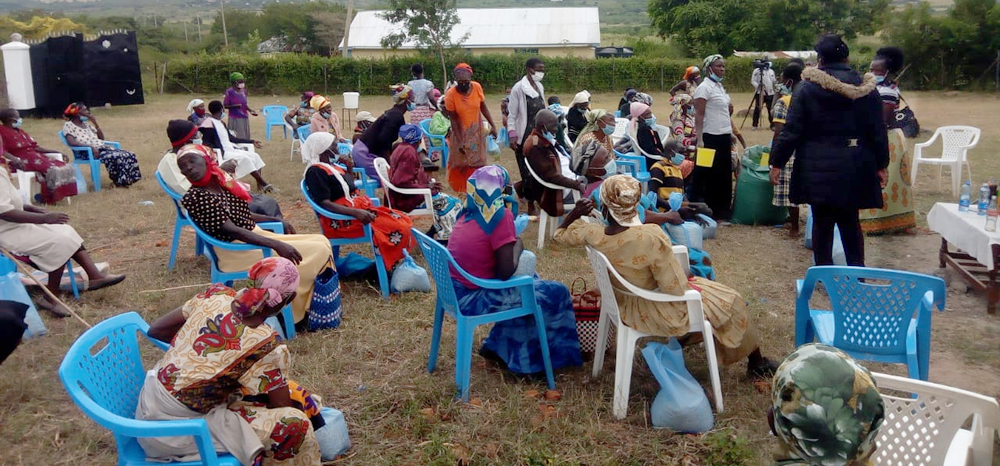
Distributing food relief to project beneficiaries
The project titled Improving the Socio-Economic Wellbeing of The Vulnerable Widows and Orphans is being implemented in Gogo Kosiemo Village, Kanyasa ward, Nyatike Constituency, Homa-Bay County. The project is generously sponsored by Dr. Andre Patrice Carter of the Andre Patrice Carter Foundation, USA; providing funds for the construction of the homes and other social support like food.
The project has so far constructed a total of four (4) residential houses - each comprising two units, a multi-purpose hall, a pharmacy, store, clinic and ablution block. From the advent of the COVID-19 pandemic in March 2020, the donor has been giving foodstuffs to the widows and orphans.
The project has also moved electricity powerlines nearer to the community which has greatly improved quality of life in the area. In future, the development partner intends to improve on a currently dilapidated primary school neighbouring the project.
The beneficiaries are happy with the project and hope for its continuity to make them live decent lives. The project aims at reducing poverty within the Nile Basin since without proper shelter, the widows are not able to be productive in the community. Once they have their peace, they can engage in economically viable ventures to generate income.
Projecting on the future, the project has the potential of opening up more opportunities that will have an impact on the rural village's local economy.
The vision bearers of the project have a dream of turning the area into a small town where jobs and services will be available for the local community rather than travelling to seek jobs and services elsewhere beyond the village.
Video Credit: Migori News (www.migorinews.co.ke)
Author: Joseph Ngome Health and Environmental Media Network (HEMNet) Kenya NDF
Youth are targeted because they are the biggest proportion of the population, they are a better resource to mobilise and are key drivers for change.
Lake Rweru is an important Rwanda – Burundi transboundary water body with a wide biodiversity. It feeds the Akagera River, which feeds into Lake Victoria and the Nile through the Rusumo rapid falls. Lake Rweru is as well regarded as a reservoir for Lakes Mugesera, Sake, Akagera and Nyabarongo, which to some is believed to be the source of the waters of the Nile and therefore very key watershed in the Nile Basin.
The swamps of Kanyaru, Nyabarongo and Akagera Basins where Rweru is found has Organic soils with less developed peat. They are endowed with Paper reed (Cyperus papyrus), wild date palm (Phoenix reclinate), water berry (Syzygium cordatum), and perform the roles of being water reserve, water source, and swamp for ecosystem & biodiversity conservation, and Dam potential for energy (REMA, 2008)
Lake Rweru is threatened by water hyacinth and pollution which reduce fish and further pollutes other water bodies downstream. It is also threatened by poor land use management, that includes encroaching on the otherwise buffer zones to protect the water bodies that have been turned into agriculture land.
After realizing this, Nile Basin Discourse Forum – Rwanda (NBDF-Rwanda) and University of Rwanda have decided to work together again (after initially carrying out the agro-ecology study together) to develop a concept and consequently a proposal to deal with issues surrounding the Rweru basin.
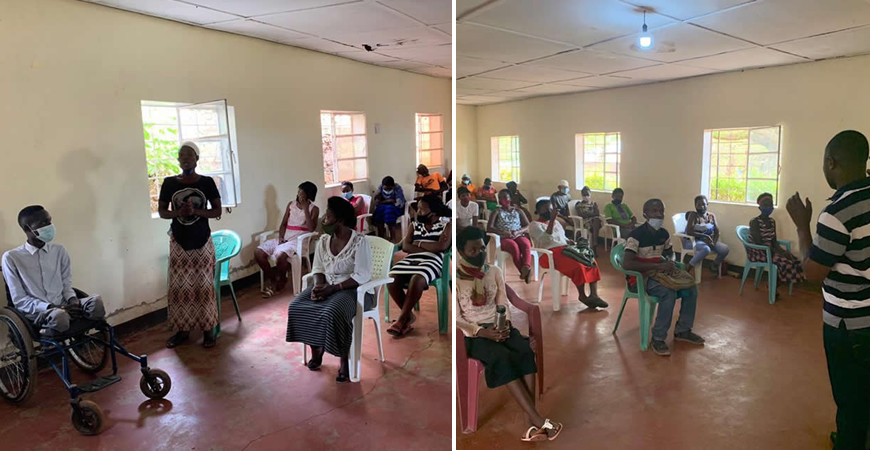
The collaborating duo organised a youth consultative meeting to explore what could be done to protect and conserve the Rweru ecosystem and biodiversity.
The youth were targeted because they are the biggest proportion of the population, they are a better resource to mobilise and are key drivers for change. The criteria for selection of participants majorly targeted youth leaders including: leaders of youth groups at the administrative cell and sector levels; youth in public service; prominent youth in business; and unemployed youth with a university level education.
Objectives of the consultative meeting:
To raise youth awareness of the importance of conserving and managing well the natural resources around them for their personal benefit and for the benefit of the generations to come
To collectively identify potential environment sustainable opportunities that would create jobs for the unemployed youth
Outcomes of the meeting
The participating youth after realizing the importance of protecting the entire Rweru ecosystem and its biodiversity, agreed to become environment activists and advocates for sustainable management of natural resources
Ideas of what needs to be done for potential creation of jobs were generated
Author: UWAMAHORO Lydia National Technical Support Expert – Rwanda NDF
Solid waste management is one of the core functions of the local authorities in Kenya. The management of solid waste however has proved to be a challenge to the concerned authorities due to the continuous increase in population and lack of capacity to collect and effectively manage the solid waste generated.
A CBOs’ Network which brings together different Community Based Organizations handling solid waste ‘stepped’ in to complement what the Kisumu City Council has been doing to control pollution and make the city habitable. The network subscribes to NBD’s Kenya Nile Discourse Forum (NKDF) as Kisumu Waste Collectors and Recyclers Association (K-CORE). K-CORE collects domestic waste door to door with use of gunny bags and pile the waste in a collection centre for sorting. From the sorting process, re-usable items like metal, plastics, paper and bottles are retained and sold off while the rest is taken to dump site.
Waste bags are distributed to clients weekly - during waste collection. Special arrangements are made under an agreement with clients that generate excessive waste and require services more than once a week; taking into account the number of collections per week and the charges that accrue to the client.
With this project, K-CORE contributes to reducing environmental pollution while at the same time generating income through payments from waste collection. This income in-turn helps K-CORE to run its activities.
The project which initially operated within Kisumu Town has now expanded to its peri-urban areas offering services to residents of Kisumu County. According to the coordinator Mr. Ben Alaka, waste management business especially from households is good because people will always generate waste as they consume food and other necessities of life. This means that they are in the business for a long time.
Mr. Alaka notes that the main challenge the project faces right now is lack of appropriate equipment for example a specialised truck to safely transport waste and also allow for easy movement to cover the entire county. He is also of the opinion that it is not sustainable to collect the waste from the outskirts of the town and bring to the current dumpsite that is located within Kisumu Town. There is therefore serious need for effective satellite waste recycling plants within the county to transform the waste into resources through processing. This will create even more employment opportunities.
By James ODUOR National Technical Support Expert – Kenya NDF


 The youth were targeted because they are the biggest proportion of the population, they are a better resource to mobilise and are key drivers for change. The criteria for selection of participants majorly targeted youth leaders including: leaders of youth groups at the administrative cell and sector levels; youth in public service; prominent youth in business; and unemployed youth with a university level education.